Maximize Your .wallet Domain for Branding
Turn your .wallet domain into a brand: domain name strategies, branding best practices and where it works as a crypto wallet identifier.

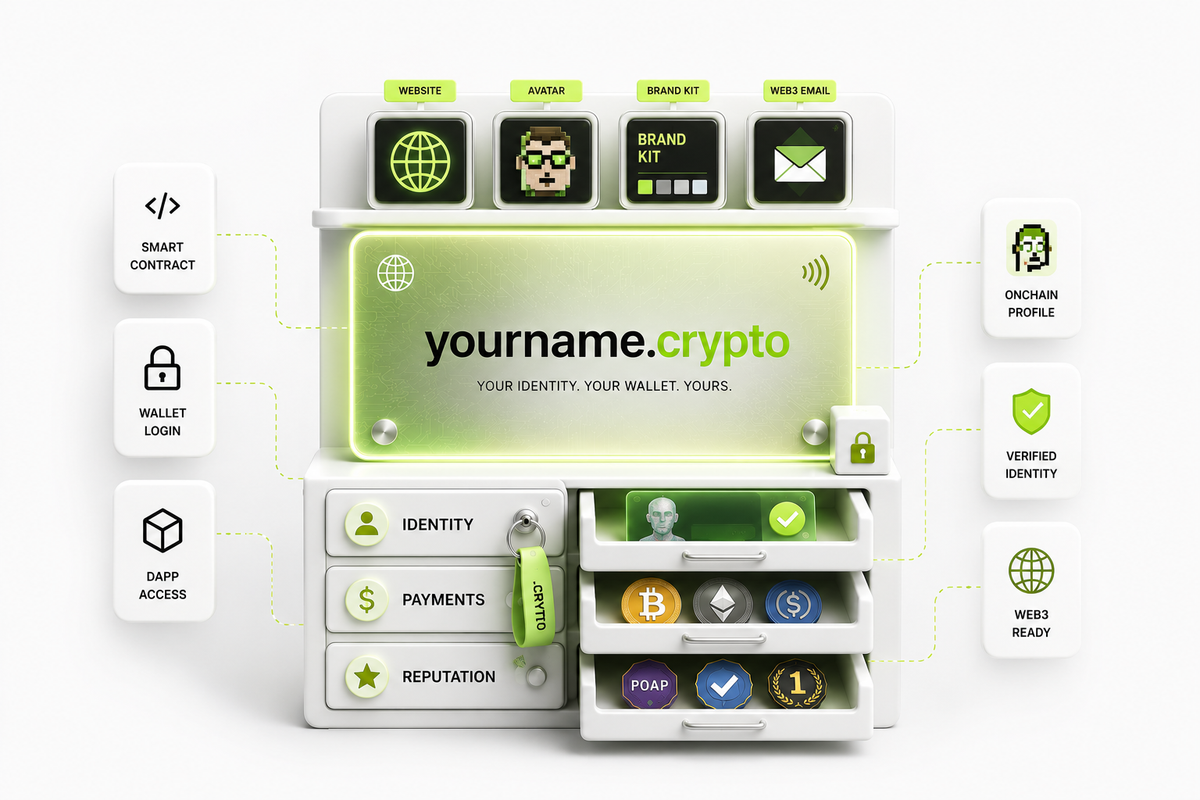
A .wallet domain turns a long crypto address into a name people can remember, like yourbrand.wallet. Used well, it becomes your payment handle, your onchain username and a signal that you are serious about Web3, all in one word that anyone can type.
Most people buy a .wallet domain, link it to their address and stop there. That covers the basics, but it leaves most of the branding value on the table.
This guide shows you how to choose the right .wallet name, put it to work across every channel where your audience meets you, and avoid the limits that catch new owners out. It also explains a recent change: .wallet will stay a Web3 domain rather than becoming a regular web address, and why that matters for how you use it.
What Is a .wallet Domain? Your Readable Crypto Wallet Identifier
A .wallet domain is a Web3 domain issued by Unstoppable Domains, one of the original blockchain naming providers. Instead of sharing a 42-character string, you share yourname.wallet, and the domain points payments to the right address for each coin.
| Feature | What It Means for You |
|---|---|
| One name for many addresses | Link addresses for 300+ coins and tokens to a single name. |
| Pay once, no renewals | Unstoppable sells .wallet as a one-time purchase, so it cannot lapse through a missed payment. |
| Owned in your wallet | The name is minted to your wallet, so you control it rather than renting it. |
| Built for payments | Designed from the start as a username for sending and receiving crypto. |
The extension has a strong payments pedigree. When Unstoppable launched the .Wallet Alliance in October 2021, 32 wallets, including Trust Wallet, MyEtherWallet and Cake Wallet, committed to supporting it, and more than 100,000 .wallet names had already been bought.
.wallet Stays Onchain: What Changed in 2026?
Unstoppable had planned to apply for .wallet as an official internet extension in ICANN's 2026 round, which could have made yourname.wallet load like a normal website.
In August 2026, it confirmed it would not apply for .wallet or eight other original extensions. ICANN's rules would have required every existing name to be registered and paid for in the traditional system, with owners disclosing their details. Unstoppable chose not to impose that on its users.
For branding, that means one thing: treat .wallet as your Web3 identity and payment handle, not your website address. Pair it with a traditional domain for your site.
Why a .wallet Domain Works for Branding
Most extensions describe a category; .wallet describes an action. Anyone who sees yourbrand.wallet instantly understands it is where to pay you, which makes it one of the clearest calls to action in Web3.
- It is memorable. A word sticks where a string of characters never will, so people can find you again without scrolling back through old messages.
- It reduces payment mistakes. Typing a name you recognise is easier than copying a long address that scammers can imitate.
- It builds consistency. The same name on your profile, invoices and social bios makes your brand easy to verify.
- It is yours. With no renewal fees, the name cannot expire out from under your brand.
- It signals Web3 fluency. A .wallet name tells partners and customers that you already work onchain.
How Different Brands Use It
| Who | How .wallet Helps |
|---|---|
| Creators | One handle for tips and payments, shared in every bio. |
| Freelancers | A professional payment name on invoices instead of an address. |
| Businesses | A recognisable name for accepting crypto from customers. |
| Communities and DAOs | A clear, trusted name for treasury or donation addresses. |
Domain Name Strategies for Choosing Your .wallet Name
The name you pick matters more than the extension. These five domain name strategies apply to any crypto domain, and especially to .wallet, where the name is the whole message.
-
Match the Handle People Already Know
If your audience knows you as @brightline on X, brightline.wallet should be your first choice. Consistency means nobody has to wonder whether they are paying the right person.
-
Keep It Short and Spellable
You will say this name out loud on podcasts, at events and in videos. Avoid numbers, double letters and creative spellings. Test it: if someone hears it once, can they type it correctly?
-
Decide Between Personal and Brand Names
Founders and creators often benefit from both: a personal name for individual payments and a brand name for the business. Keeping them separate also keeps business and personal funds in different wallets.
-
Register the Variations
Owning common misspellings and obvious variants protects you against impersonators. Point them all to the same address so mistyped payments still reach you.
-
Secure the Same Name Across Extensions
Your audience may use wallets that favour different naming systems. Claiming the same name on other cryptocurrency domain names, such as .eth, .x or .crypto, keeps your identity consistent everywhere. Our guide to choosing the right Web3 domain TLD compares the main options.
Before you buy, search trademark databases for your brand name, just as you would for a traditional domain.
Domain Branding Best Practices: Putting Your .wallet Name to Work
A name only builds a brand when people see it. Follow these domain branding best practices in your first week of ownership.
-
Link Every Address You Use.
Add your receiving address for each coin and network you accept, so payments work whatever your customer holds.
-
Set It as Your Display Name Where Supported.
Many wallets and apps can show your domain in place of your address once you enable reverse resolution, also called a primary name.
-
Put It Everywhere Your Audience Looks.
Add yourbrand.wallet to your social bios, email signature, website footer, invoices, slides and event badges.
-
Pair It with a QR Code.
Show the name beside a QR code of your address, so people can scan on the spot and recognise the name later.
-
Publish It on Your Official Channels.
Listing your .wallet name on your website and verified social profiles lets people confirm it really belongs to you.
-
Use a Separate Wallet for Your Public Name.
Anyone can see the balance and history of the address behind a public name, so keep your main holdings elsewhere.
-
Review Your Records Regularly.
Update them whenever you change wallets, and remove networks you no longer use.
A public name is a trust signal, not a guarantee. Security researchers at OWASP warn that a displayed name should never be treated as proof of identity on its own, which is why publishing yours on official channels matters. For a full setup walkthrough, see how to use a domain as your wallet address.
Where .wallet Works: Web3 Crypto Wallet Support and Limits
A .wallet name only works when the sender's Web3 crypto wallet can read it. Support has grown since the .Wallet Alliance launched, when MyEtherWallet, Trust Wallet and Cake Wallet were among the first to resolve .wallet names, but it is not universal.
| What You Want to Do | Does .wallet Work? |
|---|---|
| Receive crypto from a wallet that supports Unstoppable Domains | Yes |
| Show your name instead of your address in supporting apps | Yes, once you set your primary name |
| Receive crypto from a wallet without Unstoppable support | No; share your address as a backup |
| Use it as a normal website address in any browser | No; .wallet stays onchain only |
| Use it as an email address | No |
Three Habits That Help You Avoid These Limits
- Always Offer a Fallback. Show your full address, or a QR code, next to your .wallet name.
- Test Before You Promote. Send a small payment to your name from the wallets your audience uses most.
- Pair It with a Traditional Domain. Use a .com or similar for your website and email, and .wallet for payments and onchain identity.
If you are still choosing which Web3 wallet to use, prioritise one that resolves the naming systems you own.
How to Get Your .wallet Domain on Endless Domains
Endless Domains brings .wallet and 70+ other Web3 extensions into one search, so you can check your brand name across every major naming system at once.
- Search your name on the Endless Domains Web3 domains page.
- Compare the results for .wallet alongside .eth, .x, .crypto and other extensions, and decide which you want to own.
- Connect your wallet and complete the purchase. Your name is minted straight to that wallet.
- Add your records: the receiving addresses for each coin and network you accept.
- Set your primary name where your wallet supports it, then add the name to your profiles.
If you ever change direction, you can list unused names for resale on the Endless marketplace.
Frequently Asked Questions
What is a .wallet domain?
A .wallet domain is a Web3 domain from Unstoppable Domains that replaces your crypto wallet address with a readable name, such as yourname.wallet. People can send crypto to the name instead of a long string of characters.
How do I turn my wallet address into a name?
Register a Web3 domain such as yourname.wallet, then add your wallet address to the domain's records for each coin you accept. Anyone using a supporting wallet can then pay you by typing the name.
Is a .wallet domain a one-time purchase?
Yes. Unstoppable Domains sells .wallet names as a one-time purchase with no renewal fees, so the name cannot expire because of a missed payment.
Can I use a .wallet domain as a website address?
Not in a standard browser. In August 2026, Unstoppable Domains confirmed it would not apply to make .wallet an official internet extension, so it remains an onchain name for payments and identity.
Which wallets support .wallet domains?
Wallets that integrate Unstoppable Domains resolution can read .wallet names. Early supporters included Trust Wallet, MyEtherWallet and Cake Wallet. Support changes over time, so test with a small payment before relying on it.
Is .wallet or .eth better for branding?
It depends on your audience. A .wallet name clearly signals payments and needs no renewals, while .eth is closely tied to the Ethereum ecosystem but renews yearly. Many brands secure the same name on both.
Can someone impersonate my .wallet name?
They can register lookalike names, which is why you should own common variations and publish your real name on your website and verified social profiles. For large payments, confirm the address behind the name.
The Bottom Line
A .wallet domain is one of the clearest brand assets in Web3: it tells people exactly where to pay you, in a single word. Choose a short name that matches the handle people already know, publish it everywhere your audience looks, and pair it with a traditional domain for your website.
Ready to claim yours? Search .wallet and 70+ Web3 extensions on Endless Domains, with names starting from $2.
Your Web3 Identity, All in One Place
Search and buy Web3 domains across multiple chains with Endless Domains, starting from $2.
Explore Web3 Domains