The Future of Digital Identity: Why You Need a .x Domain in 2025
.x domains in 2025 redefine digital identity, offering secure, decentralized, and user-owned solutions for navigating the Web3 ecosystem.

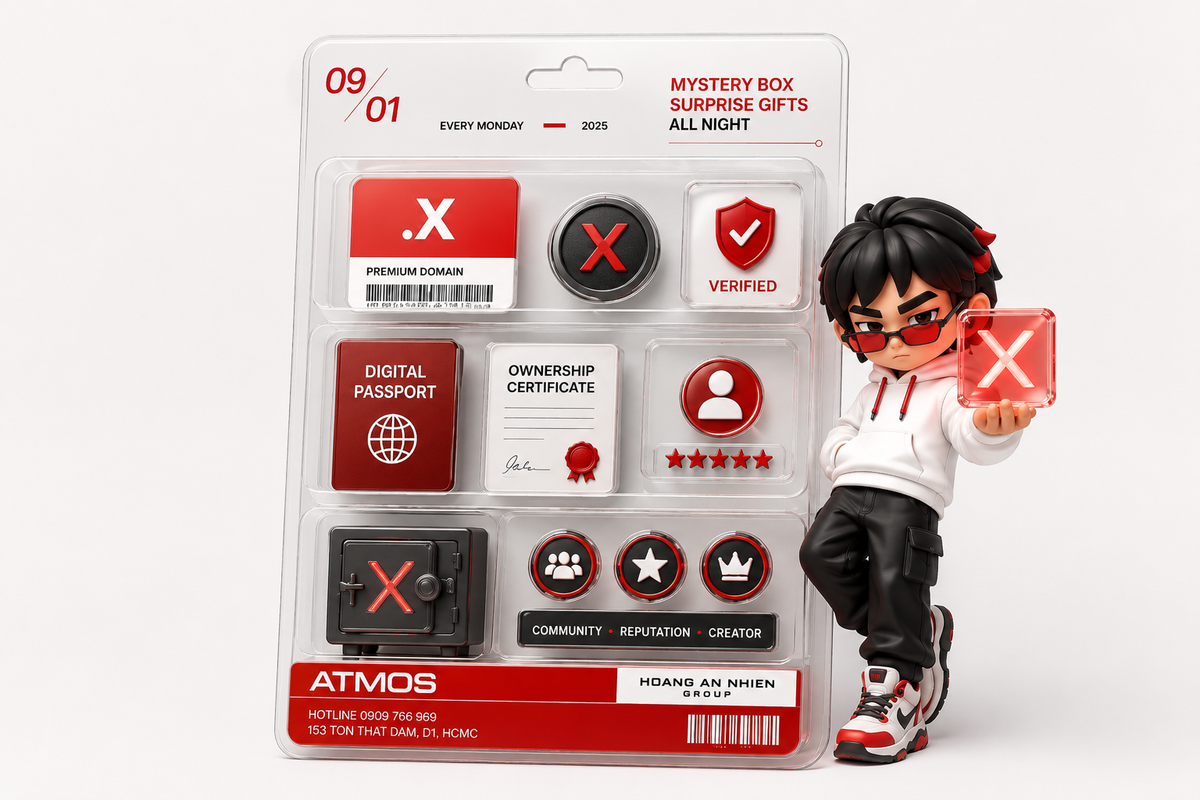
Think about how much of your life runs through your digital identity. Your bank account, your professional profile, your email, your subscriptions, your medical records. Nearly everything you do online is tied to some form of identification, and almost all of it is stored on servers you don't own, managed by companies you don't control, and protected by systems that have proven, repeatedly, to be vulnerable.
This is one of the most underappreciated problems in modern digital life. We've handed over control of our identities to centralized platforms, and most of us didn't really have a choice. Until now.
Web3 is changing the equation. And at the center of that change are .x domains, blockchain-based identifiers designed to give individuals and businesses genuine ownership of their digital identity. In 2025, .x domains are emerging as one of the most practical and versatile tools for navigating the decentralized web, and this blog is going to walk you through exactly why that matters and what you can do with one.
What Are .x Domains?
.x domains are blockchain-based domain names built for the decentralized Web3 world. On the surface, they might sound like a variation on a traditional website address. In practice, they're something fundamentally different.
A traditional domain like yourbusiness.com is registered through a centralized registrar, governed by organizations like ICANN, and ultimately controlled by a system you participate in but don't own. An .x domain, by contrast, lives on the blockchain. When you register Alice.x, that domain belongs to you in a real, verifiable, and permanent sense. No central authority issued it to you conditionally, and no central authority can take it away.
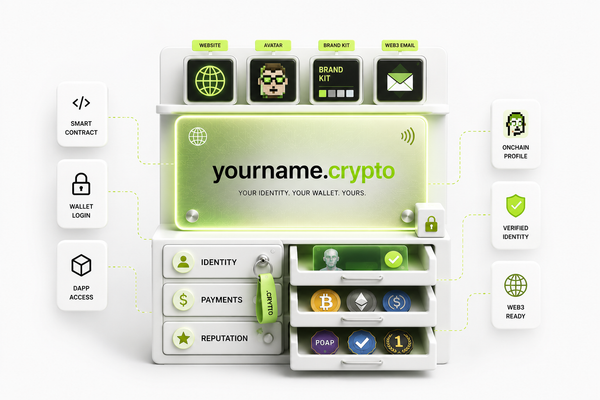
But the ownership piece is just the beginning. .x domains are designed to be functional across the entire Web3 ecosystem. They can replace the long, complicated wallet addresses that make blockchain transactions so error-prone. They can serve as your verified identity across decentralized applications. They can link to your assets, your credentials, your portfolio, and your professional presence, all from a single, memorable identifier.
It's also worth understanding how .x domains compare to other blockchain domain options. Domains like .eth are tied specifically to the Ethereum network, and .sol domains are built for Solana. .x domains are designed with broader cross-chain compatibility in mind, making them a more versatile choice for users who want a single identity that works across multiple blockchain ecosystems rather than just one.
The core features are wallet integration for simple, secure transactions, decentralized data ownership so your information stays yours, and full compatibility with dApps across the Web3 landscape.
Why Digital Identity Is Broken Right Now
Before getting into what .x domains can do, it's worth being honest about the problem they're solving, because the stakes are higher than most people realize.
Traditional digital identity systems have three fundamental problems.
The first is lack of control. Right now, your identity online exists because a company is maintaining it for you. Your Gmail account, your LinkedIn profile, your bank login, none of these belong to you in any meaningful sense. They exist on corporate servers under corporate terms of service. If those terms change, if the company gets acquired, if your account gets flagged by an algorithm, your access can disappear. You have no recourse because you never had true ownership to begin with.
The second problem is security. Centralized systems are enormously attractive targets for hackers, and the track record speaks for itself. Billions of people have had personal information exposed through data breaches at companies they trusted with their data. Every time you hand your information to a centralized platform, you're betting that its security is good enough. That's not a bet that's paid off consistently.
The third problem is privacy. Most centralized platforms collect far more data than they need for the service they're providing. That data gets used for advertising, sold to third parties, shared with governments on request, or simply stored indefinitely in ways that create ongoing risk. You often have no real visibility into what's being collected or how it's being used.
These aren't fringe concerns or hypothetical risks. They're documented, ongoing problems that affect hundreds of millions of people. And the solutions that centralized platforms offer, better passwords, two-factor authentication, and privacy settings, are patches on a fundamentally flawed architecture.
Decentralized identity, anchored by tools like .x domains, addresses these problems at the root rather than applying patches.
What .x Domains Actually Do for You
Let's get practical. Here's what owning an .x domain means in concrete terms.
Secure ownership that nobody can override. Your .x domain is recorded on the blockchain, which means the record of your ownership is immutable and verifiable by anyone. No corporation can revoke it. No government can seize it without going through you. No policy change at a registrar can affect it. This is what genuine digital ownership looks like, and it's a significant departure from how things work today.
Interoperability across Web3 platforms. One of the biggest frustrations of the current internet is fragmentation. You have different accounts on different platforms, each with its own login, each storing a slightly different version of your identity. .x domains work as a universal identifier across multiple blockchain networks and dApps. Whether you're using a DeFi platform, an NFT marketplace, or a decentralized social network, your .x domain travels with you as a consistent, verified identity.
Privacy that you actually control. Traditional identity verification requires sharing personal information with whoever is asking. .x domains enable blockchain-based verification that lets you confirm your identity without exposing unnecessary details. You share what's needed for a specific interaction and nothing more. The sensitive information stays on the blockchain, secured and under your control, not on a company's server.
Transactions that make sense. Blockchain wallet addresses are genuinely difficult to work with. A string like 3Fa4...6bZ is hard to remember, easy to mistype, and intimidating to anyone new to the space. Replacing that with Alice.x makes the whole process more accessible. It reduces errors, simplifies sharing, and makes blockchain technology feel approachable rather than technical and complicated.
Real-World Use Cases Worth Knowing About
The value of .x domains becomes even clearer when you look at how people are actually using them.
Personal branding for creators and professionals is one of the most immediate applications. A content creator, artist, or musician can use a domain like AliceCreator.x as their Web3 home base, connecting their audience to their NFT portfolio, their decentralized content, and their blockchain wallet. The domain functions as a brand identity that they own completely, with no platform able to demonetize, suspend, or restrict it.
For professionals, an .x domain acts as a decentralized business card. A blockchain developer using DevName.x can link directly to their portfolio, their credentials, and their work history in a format that's verifiable and fully under their control. It's a more credible, more secure alternative to a LinkedIn profile that ultimately belongs to LinkedIn.
Business solutions for Web3 companies are another major use case. Startups and established organizations building in the blockchain space use .x domains to create professional, memorable identities that signal legitimacy. A DeFi startup operating under FinTech.x can link that domain to its smart contracts, dApps, and wallet addresses, giving clients and partners a consistent, verified point of contact. That kind of blockchain-verified identity builds trust in a space where trust is still being established.
Decentralized data sharing across industries is where the long-term potential becomes really interesting. In healthcare, hospitals can use .x domains as verified endpoints for managing patient consent and medical record access, keeping sensitive data secure while making it appropriately accessible. In education, institutions can issue diplomas and certifications linked to .x domains, giving graduates verifiable credentials they can share with employers without going through the issuing institution each time. In finance, .x domains can support secure, blockchain-verified transactions and identity authentication at a level that traditional systems struggle to match.
These aren't speculative future applications. Things are happening now, in industries that have real reasons to care about security, privacy, and verifiability.
How to Get Started with Endless Domains
If you're ready to secure your .x domain, Endless Domains is the place to start. It's a dedicated marketplace for blockchain domains, built to make the process accessible whether you're a Web3 veteran or just getting started.
The process is straightforward. You search for the domain name you want, complete the registration through a secure transaction process, and your domain is yours. From there, you can link it to your blockchain wallet, integrate it with your preferred dApps, or use it however best fits your needs within the Web3 ecosystem.
What makes Endless Domains worth using is the combination of simplicity and reliability. The interface is clean and easy to navigate. The registration process doesn't require technical expertise. And the platform ensures that your domain integrates correctly with the blockchain ecosystem from day one, so you're not troubleshooting compatibility issues after the fact.
Final Thoughts
It's easy to get caught up in the technical details of blockchain domains and lose sight of the bigger picture. So here's the simple version of why .x domains matter.
The internet is moving toward a model where users have more control over their own data, their own identity, and their own digital presence. That shift is happening whether or not any individual participates in it. The question is whether you get ahead of it or catch up to it later.
.x domains are one of the most practical ways to establish your place in that decentralized future right now. They're not complicated to acquire, they're genuinely useful today, and their value is likely to grow as Web3 adoption continues to expand.
Whether you're an individual who wants to take back control of your digital identity, a creator building a brand that nobody can take from you, or a business establishing credibility in the Web3 space, an .x domain is a concrete, meaningful first step.
The way we think about identity online is changing. .x domains are how you make sure you're on the right side of that change.