Premium ENS Domains: Are They Worth the Investment? A Comprehensive Analysis
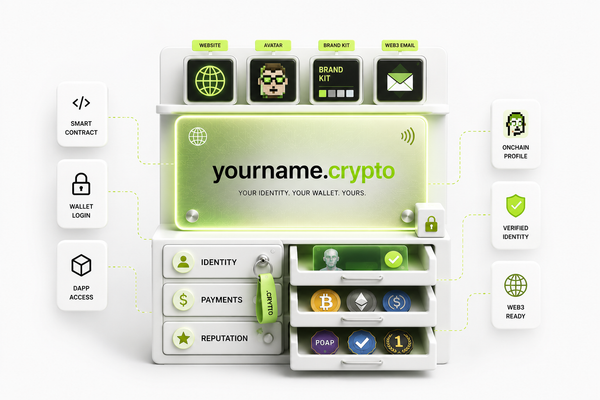
Unstoppable Domains (UD), a leading player in Web3 domain services, recently unveiled Unstoppable Blue, a new premium membership program catering to holders of Ethereum Name Service (ENS) .eth domains. Here are the benefits of it:

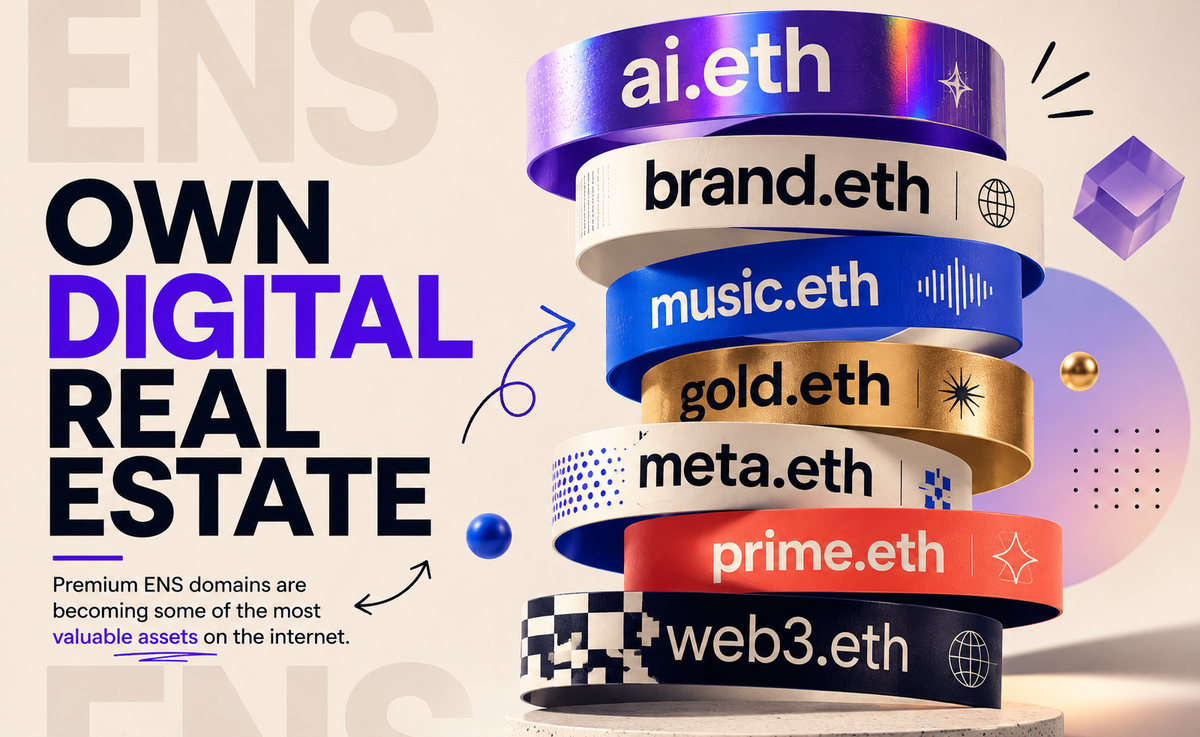
Most domain names are forgettable. You register something available, it does its job as a web address, and nobody thinks twice. Premium domains are different and in the Web3 space, the difference is becoming increasingly significant.
Premium ENS domains are high-quality, highly memorable .eth addresses that either haven't been registered yet or are held by investors and registrars who recognized their value early. They're short, clean, immediately recognizable, and in many cases appreciating in value as the Ethereum Name Service ecosystem grows and the most desirable names become scarcer.
The ENS ecosystem has seen a remarkable surge in registrations over the past few years, driven by genuine utility, growing mainstream awareness, and a community of users who understand what a scarce, high-quality digital identity is actually worth. This blog breaks down what premium ENS domains are, what they're actually good for, what the sales data tells us about their value, and what the risks look like for investors thinking about entering this market.
What Makes a Domain "Premium"?
In the traditional domain market, "premium" typically means a short, generic, highly searched keyword domain think business.com or insurance.com that commands a price well above standard registration fees because of its inherent memorability and commercial relevance.
The same logic applies in the ENS ecosystem, with a few important additions. Premium .eth domains are typically
Short three to five-character commands significantly higher prices than longer names, both at initial registration and on secondary markets. Three-character domains cost $640 per year to register through ENS directly, compared to $5 per year for names with five or more characters. That pricing structure itself signals how the market values brevity.
Generic and broadly relevant names that could apply across industries and use cases are more valuable than niche-specific ones, because they attract a wider pool of potential buyers.
Culturally resonant names tied to major brands, concepts, numbers, or widely recognized terms carry inherent recognition value.
Easily pronounceable and memorable in a space where voice search is growing and word-of-mouth matters, a name that rolls off the tongue has tangible advantages over one that requires spelling out.
The scarcity factor is real and compounding. As more users and businesses enter the ENS ecosystem, the pool of genuinely great names available for standard registration shrinks. What's available today for a modest annual fee may simply not be available in two years and if it is, it might be on a secondary market at a significant premium.
Unstoppable Blue: Premium ENS Domains Just Got a Lot More Useful
One development that's added meaningful utility to holding .eth domains specifically is Unstoppable Domains recent launch of Unstoppable Blue a premium membership program built around ENS .eth domain holders.
This is worth paying attention to because it demonstrates something important: the value of a .eth domain isn't static. As the ecosystem builds more infrastructure around it, what a .eth domain can do grows over time. Here's what Unstoppable Blue unlocks:
Bulk domain management: transfer up to 50 .eth domains in a single transaction, making it significantly easier to manage a portfolio of domains rather than handling each one individually.
Domain marketplace access: list and actively promote your .eth domains for sale within the Unstoppable Domains community, reaching a targeted pool of motivated buyers who are already in the Web3 domain space.
Enhanced rewards: earn 1.5 times the standard Unstoppable Points on eligible activities, redeemable for cash back, free or discounted domain registrations, and various other perks.
Decentralized website builder: create and publish websites directly on the blockchain using UD's native builder tool, without needing separate hosting infrastructure.
Exclusive NFT minting credits: receive monthly credits to mint unique AI-generated NFT avatars that are permanently recorded on the blockchain within the Unstoppable AI Art Collection.
Vaulted domains: access enhanced security and management features for your most valuable domain holdings.
Universal app login: use your .eth domain as a login credential for over 500 integrated apps, metaverses, and games within the Unstoppable ecosystem. That's not a feature list for the future it's available now.
The Unstoppable Blue program is a meaningful signal: major infrastructure players are actively building tools and incentives around .eth domain holders. The more useful holding a .eth domain becomes, the stronger the case for owning a premium one.
What Premium ENS Domains Are Actually Good For
Beyond the investment angle, it's worth being clear about the practical utility of premium ENS domains for businesses and creators who want to use them actively rather than hold them speculatively.
They replace incomprehensible wallet addresses. This is the foundational use case. An Ethereum wallet address is 42 characters of hexadecimal text, completely impractical for sharing verbally, in print, or anywhere a human needs to actually type it. A premium .eth domain like yourname.eth or yourbrand.eth replaces all of that with something memorable and shareable. For any business accepting crypto payments or operating in the Web3 space, this is an immediate, practical improvement.
They serve as decentralized website addresses. A .eth domain can point to a website hosted on IPFS or another decentralized storage system, creating a genuinely censorship-resistant online presence that no registrar, government, or hosting company can take offline. For content creators, activists, and businesses in politically sensitive industries, this has real protective value.
They function as NFTs with market value. .eth domains are NFTs they can be bought, sold, and traded on secondary markets like OpenSea. A premium domain that you register today for a modest annual fee can be listed for significantly more if demand for that particular name increases. This dual utility usable as an active identity and tradeable as an asset is unusual in the domain world.
They're marketing assets in their own right. A short, memorable, clearly relevant .eth domain communicates brand identity instantly. Before a visitor has read a single word of your content, the name they typed has already told them something about who you are. Premium domains do this work more effectively than generic or awkward ones and in a space as crowded as Web3, that immediate communication of credibility matters.
They're voice-search ready. As voice interfaces become more prevalent, the premium on short, clearly pronounceable addresses increases. A two-word .eth domain that Alexa or Siri can parse correctly the first time is worth considerably more than a five-word string that requires multiple attempts to get right.
The Sales Data: What Premium .eth Domains Have Actually Sold For
If you want to understand the investment dynamics of premium ENS domains, the secondary market data is the most honest place to look. The prices being paid for top .eth domains are striking.
paradigm.eth holds the record, selling for 420 ETH over $2 million at the time of the transaction in October 2021. The sale made headlines partly because cryptocurrency firm Paradigm publicly denied any involvement in the purchase, adding an air of mystery to an already remarkable transaction.
pjfi.eth sold for 350 ETH approximately $463,000 in September 2022. What makes this sale particularly notable is that the same domain had been purchased on OpenSea just days earlier for $161. That's not a gradual appreciation story; that's a sudden, dramatic recognition of value.
000.eth fetched 300 ETH roughly $317,000 in July 2022. The domain's history is colorful: it had passed through six different owners, with the very first sale recorded at just $52 back in 2019. From $52 to $317,000 in three years is a return that's difficult to contextualize against any traditional asset class.
abc.eth sold for 90 ETH around $254,000 representing its fourth sale since initially trading hands for $763 in 2019. Three-letter dictionary domains have long commanded premiums in the traditional domain market, and the .eth market is following the same pattern.
09jul.eth sold for 95 ETH approximately $240,000 in May 2022. The seller had purchased it just ten hours earlier for $10. The arbitrage window in this market, for the right name at the right moment, can be extraordinarily short and extraordinarily profitable.
Worth noting: a domain whose identity wasn't publicly disclosed sold for 127 ETH around $249,000 in May 2022. And porno.eth sold for 184 ETH in ETH terms, though the decline in Ethereum's price at the time of the dollar conversion put its USD value at approximately $204,000 a reminder that ETH-denominated prices and USD values don't always move in the same direction.
These numbers aren't representative of the average .eth domain transaction most .eth domains trade for far less. But they establish a ceiling and a precedent. They tell the market what the best names are worth to serious buyers, and they set expectations for what comparable names might be worth as the ecosystem continues to grow.
How ENS Generates and Manages Revenue
Understanding how ENS is financially structured helps put the investment case for premium domains in context.
ENS generates revenue through two primary mechanisms.
Registration fees are paid by users to register and renew their .eth domain names. The pricing structure is tiered by name length and is deliberately designed to make short names expensive:
Three-character names (like abc.eth) cost $640 per year. Four-character names cost $160 per year. Five-character-and-longer names cost just $5 per year.
Users can choose a registration period ranging from a standard annual renewal all the way up to 6,944 years an extreme option that someone has actually used, establishing the current record for longest ENS registration.
All registration fees flow into a wallet controlled by the ENS DAO the Decentralized Autonomous Organization that governs the ENS protocol. The DAO can then allocate those funds to a separate spending wallet for development, grants, and other purposes it votes to approve. This governance structure gives ENS domain holders a meaningful stake in how the protocol evolves.
Premium name fees represent a secondary revenue stream, primarily through the auction mechanism that governs expired domains. When a domain isn't renewed within its 90-day grace period after expiration, it enters a temporary auction process with a dramatically elevated starting surcharge beginning at $100 million USD, a figure deliberately set to prevent instant re-registration and allow the original owner time to reclaim the name.
That surcharge decreases gradually over 21 days until it reaches zero, at which point the domain becomes available at its standard registration price. The structure incentivizes original owners to reclaim valuable domains before prices drop while creating a transparent bidding opportunity for other interested parties.
The DAO is also considering allowing one- and two-character registrations in the future an expansion that would create a new category of ultra-premium domains and likely generate significant market activity when it happens.
Nine Reasons Premium ENS Domains Are Worth the Investment
Let's be specific about the investment case for premium .eth domains rather than leaving it at the general level.
Memorability Drives Traffic
Short, simple premium domain names are easier to remember and easier to type correctly. In practical terms, that means more direct traffic people navigating to your site because they remember the name and lower abandonment rates from failed or mistyped entries.
SEO Contributions
Google doesn't weight domain names as heavily as it once did, but premium domains with relevant keywords still contribute to click-through rates in search results and reinforce brand credibility signals that affect overall rankings. A domain that looks authoritative gets clicked more than one that looks generic.
Brand Recognition Compounds Over Time
Every time someone sees, hears, or types your domain, it's a brand impression. Premium domains make those impressions stickier they're easier to recall correctly and more likely to be associated with the specific brand identity you're building.
Effortless Communication of Positioning
A premium domain tells your audience what you do before you've said a word. That's valuable in any market, but it's especially valuable in Web3, where users are evaluating unfamiliar projects constantly and making quick judgments about credibility.
Cross-Platform Consistency
A premium .eth domain works the same way whether you're putting it on a business card, a billboard, a social media bio, or a blockchain transaction. That consistency across contexts is harder to maintain with longer, more awkward names.
Voice Search Compatibility
Short, pronounceable names are increasingly important as voice-assisted search and navigation grows. A premium domain that voice assistants recognize and repeat correctly the first time is a genuine functional advantage.
Thought Leadership Positioning
Category-defining domain names position their owners as authoritative sources within their niche. If you own the .eth domain that most clearly represents your field, you've claimed the high ground in your community's mental map.
Trust and Credibility Signals
Short, relevant, clearly intentional domain names are perceived as more professional and trustworthy than random-looking strings. In Web3, where trust is hard-won, that perception translates directly into user confidence and conversion.
Long-Term Asset Appreciation
The secondary market data demonstrates that premium .eth domains have appreciated dramatically in some cases. The underlying logic scarce supply, growing demand, increasing utility suggests continued upward pressure on the most desirable names. That said, appreciation is never guaranteed, and this potential should be weighed carefully against real risks.
The Risks: What You Need to Know Before Investing
Any honest assessment of premium ENS domains has to spend real time on the risks because they're significant and the market is still relatively immature.
Market volatility is real and can be severe. The ENS domain market is young, thinly traded compared to traditional assets, and subject to dramatic swings tied to broader crypto market conditions. When ETH prices fall, the dollar value of your domain portfolio can decline even if demand in ETH terms stays constant. There are no guaranteed returns here, and anyone who tells you otherwise isn't being straight with you.
Valuation is deeply subjective. Unlike a rental property or a stock with earnings, premium ENS domains have no standardized valuation methodology. What a domain is "worth" depends entirely on what a willing buyer will pay, and that can change dramatically based on market sentiment, trends, and buyer preferences that are impossible to predict reliably. The pjfi.eth story $161 to $463,000 in a matter of days illustrates both the upside and the instability.
Liquidity can be a problem. Selling a traditional asset stocks, real estate, even most cryptocurrencies is usually straightforward because liquid markets exist for them. Selling a premium ENS domain, especially at a price you're satisfied with, can take considerable time. The pool of buyers for any specific domain is inherently limited, and finding the right buyer willing to pay your asking price may require patience you can't always afford.
The legal landscape is still developing. The regulatory framework governing NFTs and blockchain-based digital assets is evolving sometimes in directions that create uncertainty about ownership rights, tax treatment, and usage restrictions. A domain name that represents a trademarked brand, for instance, could face legal challenges even if it was legitimately registered through ENS. Getting clear on the IP implications before registering or purchasing a domain that resembles an existing brand is genuinely important.
Hype cycles can distort decision-making. The Web3 space is particularly susceptible to hype-driven price inflation. When a prominent figure acquires a domain, when a new use case generates press coverage, or when a bull market creates a generalized sense of optimism, prices for .eth domains can spike in ways that aren't supported by fundamental value. Buying into a hype spike and then holding through the correction is how most speculative investors lose money in this market.
The appropriate response to these risks isn't to avoid the market entirely it's to enter it with clear eyes, a realistic time horizon, and a disciplined approach to valuation that prioritizes fundamental utility over speculative excitement.
Who's Already Using Premium .eth Domains?
The adoption of premium .eth domains by high-profile individuals and organizations is one of the stronger signals of their legitimacy and long-term relevance.
Vitalik Buterin, the co-founder of Ethereum himself uses vitalik.eth as his primary Web3 identity. When the person who built the platform is using its naming system for their own public identity, that's a meaningful endorsement.
Major global brands including Chanel, Nike, and Hermès have registered their brand names as .eth domains primarily as defensive registrations to prevent others from using their names in the ENS namespace, but also as preparation for potential Web3 initiatives. When luxury houses and athletic giants are paying attention to .eth domains, the concept has clearly moved beyond the early-adopter phase.
Three-letter .eth domains the category most analogous to premium single-word .com domains have routinely sold for tens of thousands of dollars on secondary markets, with the most desirable examples reaching six figures. The market is speaking clearly about what it values.
Final Thoughts
Premium ENS domains occupy an interesting position in the digital asset landscape: they're genuinely useful as active identity and payment infrastructure, they have demonstrated value as tradeable assets, they benefit from the compounding growth of the Ethereum ecosystem, and they carry meaningful risks that require careful consideration.
The investment case is strongest for names with clear, broad utility short, generic, widely relevant domains that would attract multiple potential buyers across use cases. The weakest cases are for niche-specific or trend-dependent names that might spike in the short term but lack the fundamental breadth to sustain long-term value.
For businesses and creators, the practical case is often simpler: a memorable, professionally presented .eth domain makes your Web3 presence more credible, more accessible, and more effective at the basic job of representing your brand in a decentralized ecosystem that's not going away.
The decentralized web has a long way to go before it's fully mainstream. But the infrastructure being built right now .eth domains, .sol domains, .polygon domains, .dao domains, and endless domains emerging across different blockchain ecosystems is laying the foundation for what comes next. Premium ENS domains are the most valuable addresses in that infrastructure. The question isn't whether they matter it's whether you act on that knowledge before someone else claims the name you wanted.