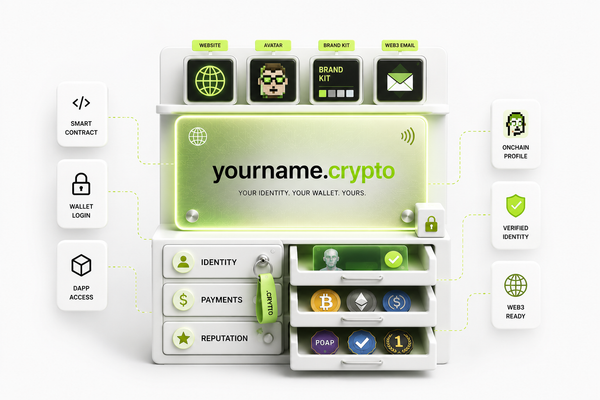
Things to Know to Select the Right Web3 Domain TLD
Web3 domains: Your digital address. Discover how the right TLD can shape your Web3 presence and brand.

If you've been paying attention to the internet lately, you've probably noticed a shift happening beneath the surface. The web most of us grew up with dominated by Google, Meta, Amazon, and a handful of other giants who control your data, your content, and your digital identity is being challenged. Web3 is the name being given to what comes next: a version of the internet built on blockchain technology, where users actually own their piece of the web instead of just renting access to it.
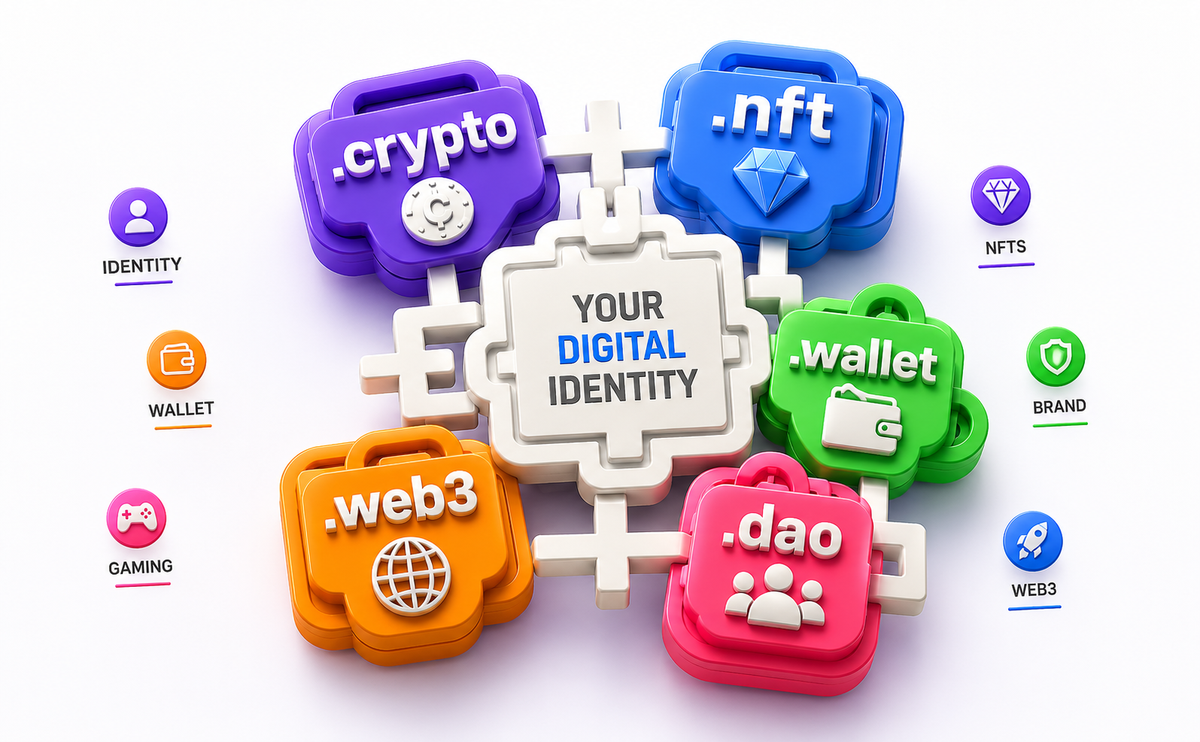
At the center of this shift is something surprisingly fundamental: domain names. Specifically, Web3 top-level domains (TLDs) those suffixes at the end of a web address like .eth, .crypto, or .dao. In the decentralized web, these aren't just technical identifiers. They're statements. They tell the world who you are, what you stand for, and where you belong in the blockchain ecosystem.
If you're building something in the Web3 space or even just thinking about it understanding how TLDs work and how to choose the right one is more important than most people realize.
What Exactly Is a Web3 Domain TLD?
Let's start with the basics. In traditional web terms, a TLD is the ending of a web address — .com, .org, .net. These are managed by a centralized authority called ICANN (the Internet Corporation for Assigned Names and Numbers), which acts as the gatekeeper for who can register what.
Web3 domains operate differently. Instead of being registered through a centralized company and stored on a corporate server, they're recorded on a blockchain. That means no single company controls them. Once you own a Web3 domain, it's genuinely yours no renewal threats, no deplatforming risk, no third party standing between you and your online identity.
The TLD in a Web3 domain works similarly to traditional TLDs in that it signals context and purpose but the signals are different. While .com broadly means "commercial website," .eth specifically means "this project is built on or deeply connected to the Ethereum blockchain." The TLD you choose in Web3 isn't just a formatting decision. It's a brand decision.
Why Your Choice of TLD Actually Matters
A lot of people treat domain selection as an afterthought. In Web3, that's a mistake. Here's why your TLD choice carries more weight than you might expect:
It shapes your brand identity. Your TLD is often the first signal someone receives about what your project is and who it's for. A .crypto domain immediately places you in the cryptocurrency world. A .dao domain says you're running a community-governed organization. These aren't subtle hints they're direct declarations.
It connects you to your audience. The Web3 community is not monolithic. Ethereum developers, NFT collectors, DeFi traders, and DAO governance enthusiasts all have distinct cultures and preferences. Choosing a TLD that resonates with your specific corner of that world helps build credibility and community trust faster than almost anything else you can do.
It can affect your discoverability. While Web3 domains operate differently from traditional SEO, relevance still matters. A TLD that accurately reflects your project's focus helps categorize your presence in the decentralized web, making it easier for the right people to find you. As Web3 search and discovery tools mature, this alignment will only become more important.
What to Think About Before Picking a TLD
Choosing a Web3 domain TLD isn't just about grabbing something that sounds cool. It's a decision that should be made strategically, with your long-term goals in mind. Here are the key factors worth thinking through:
Does it align with your project's vision? Your TLD should reflect not just what your project is today, but what you want it to become. If blockchain technology is central to your mission, something like .blockchain signals that clearly. If your project is Ethereum-specific now but might expand to other ecosystems later, a more niche TLD like .eth could feel limiting down the road. Think about where you're headed, not just where you are.
Who are you actually trying to reach? A technically sophisticated audience developers, crypto traders, DeFi users will respond positively to niche, community-specific TLDs. A broader, less crypto-native audience might be more comfortable with something more recognizable. Know your people before you pick your domain.
Is it keeping up with where the industry is going? Web3 is moving fast. TLDs that feel cutting-edge today might feel dated in two years, while others that seem niche right now could become the industry standard. Keep tabs on which TLDs are gaining momentum in the communities that matter to your project, and factor that into your decision.
Can it handle your technical needs? Not all Web3 TLDs are created equal from a technical standpoint. Some offer better scalability for high-traffic applications. Some have stronger security features. If your project involves smart contracts, high transaction volumes, or sensitive data, make sure the TLD you're considering can hold up to those demands.
What does it cost, and is the name you want even available? This is more practical than strategic, but it matters. Some Web3 TLDs carry a premium price tag because of their popularity or perceived value. And with the most sought-after names already registered under popular TLDs, you might find yourself limited in what's actually available. Do your homework on both cost and availability before you get attached to a specific name.
The Most Popular Web3 TLDs and What They're Best For
The Web3 domain ecosystem has a handful of TLDs that have already established real meaning and community recognition. Here's a breakdown of the major ones:
.crypto
The most widely recognized Web3 TLD, .crypto is the go-to choice for anything directly tied to the cryptocurrency world exchanges, wallet services, blockchain news platforms, and crypto education resources. Its strength is also its limitation: the association with crypto is strong, which makes it a great fit for crypto-native projects but potentially alienating for audiences that aren't already in that world.
.eth
Tied directly to the Ethereum blockchain, .eth is the domain of choice for Ethereum-based applications, smart contract developers, and projects deeply embedded in the Ethereum ecosystem. If Ethereum is your home base, there's no cleaner way to say so. If your project lives across multiple blockchains, though, this TLD might send a signal that's too narrow.
.blockchain
A broader, more inclusive option that works well for companies and platforms that serve the wider blockchain industry rather than one specific community. Think consultancies, educational platforms, and technology providers who want to signal blockchain expertise without locking themselves into a single ecosystem. The trade-off is that it's less distinctive the very breadth that makes it versatile can also make it feel generic in more specialized contexts.
.nft
Built specifically for the NFT world, .nft is the natural home for marketplaces, artist portfolios, collector communities, and NFT project websites. Its relevance to the NFT sector is immediate and undeniable. That said, if your project ever expands beyond NFTs, the TLD might start to feel like a box you're stuck in.
.dao
Designed for Decentralized Autonomous Organizations, .dao signals a project that is community-governed and participatory by nature. It's the right choice for DAO platforms, governance tools, and collaborative community initiatives. If your project doesn't actually function as a DAO, though, using this TLD could come across as misleading to audiences that know what it means.
Where Web3 TLDs Are Headed
The domain landscape in Web3 isn't static it's evolving just as fast as the rest of the ecosystem. Here are a few trends worth keeping an eye on:
New TLDs tied to emerging technologies. As AI, virtual reality, and the Internet of Things become more integrated with blockchain, expect to see new TLDs emerge to serve those intersections. Something like .ai or .vr within a Web3 context isn't far-fetched and positioning your brand on the right side of that curve early could pay off significantly.
A stronger emphasis on privacy. Web3's foundational values of decentralization and user privacy are gaining mainstream appeal. TLDs that explicitly signal a commitment to those values are likely to gain traction, especially as data privacy concerns continue to grow among everyday internet users.
Metaverse-native domains. As virtual worlds and digital-only spaces become more sophisticated, TLDs tailored specifically to those environments think .meta or .virtual are a natural next step. If your project has a metaverse angle, this is a space worth watching closely.
Custom and branded TLDs. Just as major corporations have begun creating their own custom TLDs in the traditional web (think .google or .apple), Web3 is likely to see a similar trend. Brands that want complete control over their digital identity may eventually build their own TLD infrastructure a level of exclusivity that would have been unthinkable in the Web2 era.
More user-friendly options for broader audiences. Right now, Web3 TLDs can feel inaccessible to people who aren't already in the space. As Web3 adoption grows, there's going to be real demand for TLDs that are easier to understand, remember, and trust for general audiences. Brands targeting mainstream users should expect new, more approachable options to emerge.
Final Thoughts
Choosing a Web3 domain TLD isn't a checkbox to tick off your launch list. It's a strategic decision that shapes how your brand is perceived, who finds you, and how much trust you earn from the communities that matter most to your project.
The right TLD signals authenticity. It tells your audience that you understand the space you're operating in and that you've made intentional choices about where you belong within it. The wrong one or a hastily chosen one an undercut your credibility before a potential user ever reads a word of your content.
Take the time to think it through. Consider your vision, your audience, and the direction the industry is heading. In the decentralized web, your domain is more than an address. It's your identity and in Web3, identity is everything.