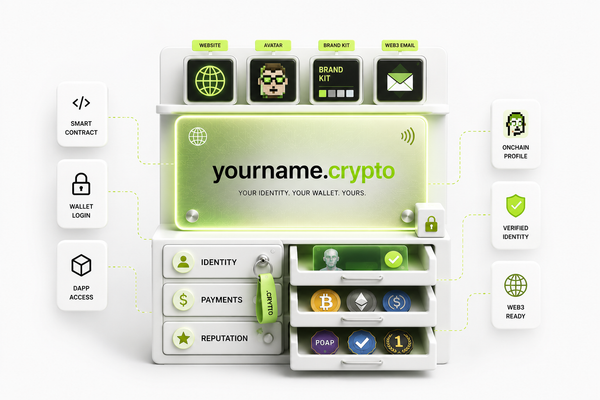
The Future of Online Branding: Why Polygon Domain Names Are Here to Stay
Polygon operates with different components contributing to its overall functionality. Think of them as the ".com" or ".org" addresses of the Web3 world, but built on the Polygon blockchain instead.

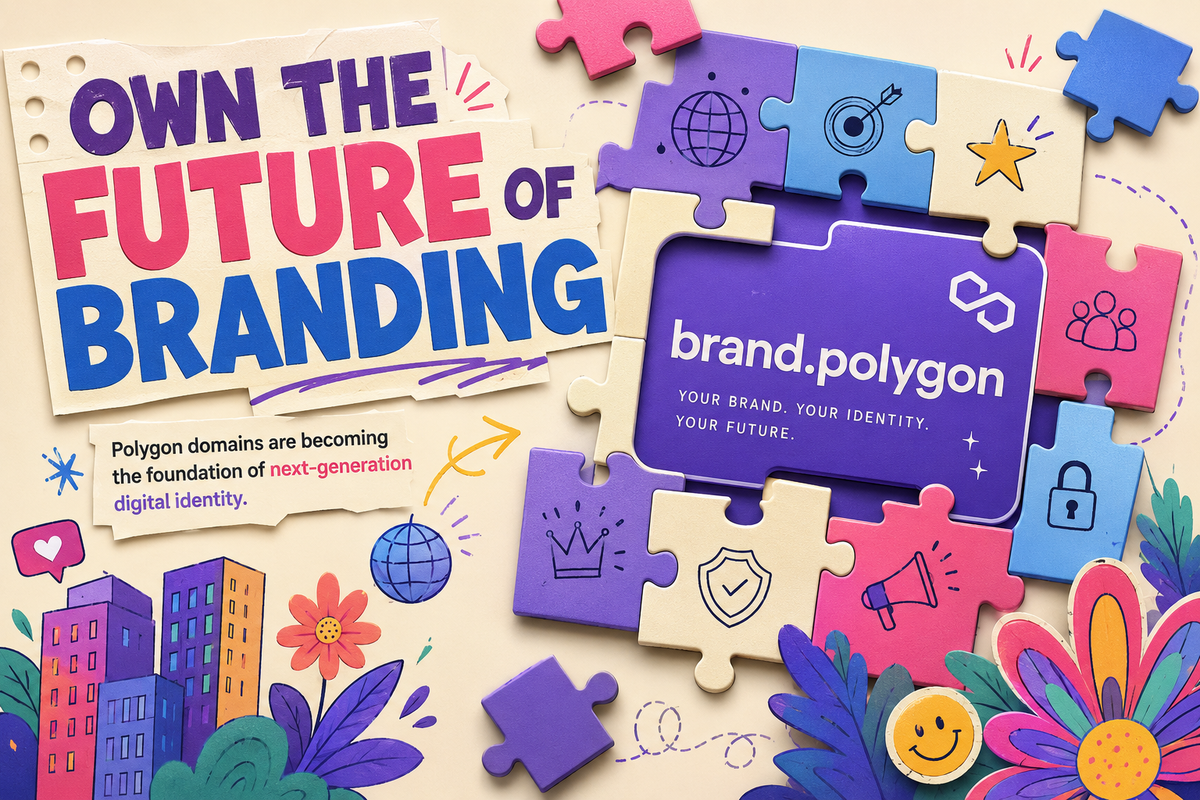
The internet has always evolved in waves. First came static websites, then social media, then mobile-first everything. Each wave brought new infrastructure, new behavior patterns, and new ways for brands and individuals to establish their presence online. Web3 is the next wave and the domain name infrastructure being built for it is going to matter just as much as .com domains mattered in the 1990s.
Polygon and Unstoppable Domains just made a move that signals exactly how serious this is getting.
The two have partnered to launch .polygon domain names a collaboration that opens up the Polygon blockchain's ecosystem of roughly 180 million users and 40,000 services to a new class of Web3 identity. Zero gas fees for minting. Permanent ownership. And built on one of the most developer-friendly, brand-trusted blockchain networks in the world.
If you've been watching Web3 from the sidelines and wondering when to get involved, this is worth paying close attention to.
What Are Polygon Domains, and Why Do They Exist?
Let's start with the basics before getting into why this partnership matters.
A Polygon domain is a blockchain-based domain name that lives on the Polygon network think of it as the Web3 equivalent of a .com address, but with a set of capabilities that traditional domains simply can't offer. Like all blockchain domains, Polygon domains are issued as NFTs, which means they're owned assets rather than licensed names. You buy one, you own it permanently, with no annual renewal fees and no registrar that can revoke it.
Over 2.7 million domains have already been registered on Polygon, which tells you there's genuine demand behind this, not just speculation. And with Unstoppable Domains now managing the creation and distribution of .polygon domains specifically, the infrastructure for mainstream adoption is firmly in place.
Polygon itself originally known as Matic Network was built to solve one of Ethereum's most persistent problems: scalability. As a Layer 2 solution, Polygon sits on top of Ethereum and processes transactions significantly faster and cheaper, without sacrificing the security and ecosystem depth that make Ethereum valuable in the first place. For domain names, this means minting is fast, fees are low or nonexistent, and the underlying network is mature and battle-tested.
How Polygon Works Under the Hood
You don't need to be a developer to understand the basics of what makes Polygon tick and understanding it helps you appreciate why it's become the blockchain of choice for so many major companies.
Polygon operates as a multi-layered architecture, with each component playing a specific role:
The Ethereum base layer is where the foundational work happens. Built on Ethereum smart contracts, this layer handles the critical functions: ensuring smooth interaction between Ethereum and Polygon chains, resolving disputes, managing staking, and confirming transaction finality through checkpointing. It's what keeps Polygon tightly connected to and ultimately secured by Ethereum.
The security layer operates alongside the base layer, providing an additional line of defense through a "validators as a service" model. Networks building on Polygon can tap into this shared security rather than bootstrapping their own validator sets from scratch a significant advantage for smaller projects and developers.
The developer layer is where Polygon earns its reputation as a builders' platform. It gives developers a full-featured environment to launch compatible blockchains within the DeFi ecosystem, combining the strengths of Ethereum's established network with dramatically improved transaction speeds and lower fees. The result is a multi-chain architecture that gives developers the best of both worlds Ethereum's credibility without Ethereum's current limitations.
This combination is why Polygon has become the go-to scaling solution for projects that need to operate at real-world scale without asking their users to absorb high gas fees.
The Companies Already Betting on Polygon
One of the strongest signals of a technology's long-term viability is who's building on it. And the list of major companies that have chosen Polygon as their blockchain platform is genuinely impressive.
Disney selected Polygon for its 2022 Accelerator Program making Polygon the only blockchain network to gain access to Disney's brand, leadership resources, and growth investment through that program. When the most valuable entertainment brand in the world picks your blockchain, that means something.
Meta chose Polygon as its primary blockchain for integrating NFTs on Instagram. The decision was reportedly influenced in part by Polygon's "Green Manifesto"its commitment to environmental sustainability through energy-efficient consensus mechanisms. For a company of Meta's scale and public scrutiny around environmental impact, that alignment matters.
Starbucks built its Web3 loyalty program "Starbucks Odyssey" on Polygon, using it to offer customers exclusive NFT-based rewards and experiences that go well beyond traditional points programs. Starbucks' customers can earn and trade digital stamps that have real value, creating a loyalty experience that's genuinely new.
Mercedes-Benz launched Acentrik, a secure data-sharing platform built on Polygon that enables decentralized data exchange between businesses across multiple sectors. It's a sophisticated enterprise application that demonstrates Polygon's utility beyond consumer NFTs.
Reddit built its collectible avatar marketplace on Polygon, allowing users to purchase unique blockchain-based profile pictures with genuine ownership rights meaning the asset belongs to the user, not the platform. Reddit's blockchain avatar program has become one of the most successful NFT onboarding initiatives in history, introducing millions of mainstream users to digital ownership for the first time.
Adidas and Instagram have also used Polygon to introduce their audiences to NFTs and digital collectibles, drawn by the same combination of user-friendliness, low costs, and ecosystem depth that's attracting enterprise clients.
The pattern here is clear: Polygon has made itself the practical choice for brands that want to engage with Web3 seriously without asking their users to navigate high fees, slow transactions, or a confusing developer ecosystem.
Why Polygon Domains Specifically?
With all of that context established, the case for .polygon domains becomes straightforward. Here's what they actually offer.
No gas fees for minting. This is the headline feature of the Unstoppable Domains partnership, and it's a genuine game-changer for accessibility. Gas fees have been one of the biggest friction points in Web3 adoption they're unpredictable, can be expensive during periods of high demand, and add a layer of complexity that discourages newcomers. Zero gas fees for minting .polygon domains removes that barrier entirely.
Permanent ownership with no renewals. Unlike traditional domain names that charge you every year to keep your name, a Polygon domain is a one-time purchase. Pay once, own it forever. Unstoppable Domains estimates that this model combined with the move away from Ethereum's gas fees has already saved users approximately $100 million in cumulative costs. For businesses managing multiple digital properties, that's a meaningful financial consideration.
True ownership, not a license. Your .polygon domain lives in your crypto wallet as an NFT. It can't be revoked by a registrar, suspended by a platform, or transferred without your authorization. If you want to sell it, you can on secondary markets, at whatever price the market will bear. This is what ownership of a digital asset actually looks like, and it's fundamentally different from the rental model that traditional domain names use.
Built-in ecosystem compatibility. Because Polygon domains are part of Polygon's broader ecosystem which includes over 750 integrated dApps, games, and metaverse environments your domain works across that entire landscape from day one. It's not just a name; it's your identity across a network of interconnected platforms and applications.
Ethereum compatibility. Here's a practical feature that matters for people already invested in the Ethereum ecosystem: if you own an Ethereum domain through Unstoppable Domains, you can convert it to a Polygon domain. You get the benefits of Polygon's lower costs and zero renewal fees while keeping the name you already registered. That kind of backward compatibility reduces the switching cost significantly.
An affordable entry point. Polygon domains start at $15 a low enough price point that experimenting with Web3 identity doesn't require a significant financial commitment. Compare that to the speculative prices being asked for premium ENS domains or early NFTs, and Polygon domains look like one of the most accessible on-ramps into Web3 identity available today.
Where and How to Buy Polygon Domains
The purchasing process varies depending on which platform you use, but it's generally more accessible than most people expect.
Most platforms accept MATIC Polygon's native token as the primary payment method. Some also accept Ethereum (ETH), given Polygon's close relationship with the Ethereum network. PNS, for example, offers both MATIC and ETH payment options.
Unstoppable Domains stands out for its payment flexibility, accepting MATIC, ETH, Bitcoin, Tether, other major stablecoins, and even traditional credit and debit cards. That last option is particularly significant for newcomers who haven't yet converted any savings into cryptocurrency it means you can buy a Polygon domain with a regular card, exactly the way you'd buy a .com domain through GoDaddy.
One thing to watch for: even when the domain minting itself is free, gas fees can still apply depending on your payment method. If you're paying with ETH, for instance, you'll still be subject to Ethereum's gas fees for that transaction. Paying with MATIC or using a platform that explicitly offers zero-fee minting avoids this.
HSBC and Polygon ID: Decentralized Identity Goes Mainstream
One of the more significant developments in Polygon's recent history that often gets overlooked in discussions about domain names is HSBC's collaboration with Polygon ID a move that signals just how seriously traditional financial institutions are taking decentralized identity.
Polygon ID specializes in Decentralized Identity (DID) solutions technology that allows users to create verifiable digital identities that they control completely, without relying on a centralized platform to authenticate or manage their data.
The implications for banking and financial services are significant. Currently, Know Your Customer (KYC) processes the identity verification requirements that banks and financial institutions use to comply with anti-money laundering regulations are repetitive, time-consuming, and handled differently by every institution. You verify your identity with one bank, then do the same thing again with the next financial service you use, and again with the next.
Polygon ID's decentralized approach changes this. A user verifies their identity once, stores the verifiable credentials in their own digital wallet, and can then share those credentials selectively with any institution that accepts them without handing over their complete personal data to every service. HSBC's embrace of this model, and specifically its adoption of open standards for DID, positions it at the front of a shift that could eventually affect how every financial institution handles customer identity.
For Polygon domain holders, this development is meaningful context: the blockchain you're building your Web3 identity on is the same one that HSBC is using to reimagine financial identity. That's not a coincidence it reflects Polygon's credibility at the institutional level.
Hosting a Website on Your Polygon Domain
Let's address something that confuses a lot of people new to blockchain domains: what does it actually mean to host a website on a .polygon domain, and how does it work in practice?
The honest answer is that it's currently more technically involved than setting up a traditional website primarily because most mainstream web browsers don't natively support blockchain domain names. You can't simply point your .polygon domain at a web host the way you'd point a .com domain at Squarespace.
There are two main approaches that work today:
Redirection is the simplest option. You set up your .polygon domain to redirect visitors to a traditional domain (.com, .org, etc.) that already hosts your website. This preserves the branding value of your .polygon domain while keeping the actual hosting infrastructure familiar and accessible.
IPFS hosting is the more fully decentralized approach. The InterPlanetary File System is a distributed storage network that can host your website's content without relying on centralized servers. When combined with a Polygon domain, you get a genuinely censorship-resistant website no hosting company to pull the plug, no server to hack. The current limitation is that IPFS works best for static websites (portfolios, informational pages, documentation) rather than complex, dynamic applications. But the technology is advancing, and those limitations are narrowing.
Browser support for blockchain domains is gradually improving MetaMask's built-in browser, Brave, and several other Web3-native browsers already support .polygon domain resolution natively. As mainstream browsers like Chrome and Safari add support, the friction of hosting on a blockchain domain will decrease significantly.
The Future of Polygon Domains: A Grounded Look
It's always tempting to either oversell or undersell new technology, so let's try to be realistic about where Polygon domains are headed.
The tailwinds are real. Web3 adoption is accelerating, and the infrastructure supporting it including domain naming systems is maturing. Polygon's ecosystem of 750-plus dApps, combined with the high-profile brand partnerships it's attracted, gives .polygon domains a live, active ecosystem to integrate with from day one. That's not nothing it's actually one of the most important factors in whether a domain namespace gains lasting value.
The interoperability advantage is genuine. Polygon domains work across different blockchains and applications in ways that traditional domain names simply can't. In a multi-chain future which is where the blockchain space is clearly heading a domain that isn't tied to a single platform is more valuable than one that is.
The identity use case is increasingly practical. With Polygon ID gaining institutional adoption and the broader push toward decentralized identity gaining momentum, the role of a .polygon domain as an identity anchor is becoming more concrete. It's not just a wallet shortcut it's the foundation of a verifiable, portable, self-sovereign digital identity.
The challenges are real too. Browser support is still limited. Competition from other blockchain naming systems ENS, Handshake, Solana's SNS, and others means .polygon domains will need to continue earning relevance through ecosystem growth and practical utility. And as with all blockchain technology, regulatory developments could affect how these assets are treated in various jurisdictions.
But on balance, the trajectory is clearly positive and the cost of entry is low enough that the risk of establishing a .polygon presence today is minimal compared to the potential upside of having done so early.
Final Thoughts
Polygon domains represent one of the most practical, accessible, and strategically well-positioned entry points into Web3 identity available today. Zero gas fees for minting, permanent ownership, a thriving ecosystem, and the backing of major global brands all point in the same direction.
The Polygon-Unstoppable Domains partnership isn't just a product launch it's an infrastructure milestone. It brings .polygon domain registration to a platform trusted by 180 million ecosystem participants and adds it to a naming service that's already become the default for millions of Web3 users.
Whether you're a brand looking to establish a Web3 presence, a developer building decentralized applications, an investor looking for undervalued digital assets, or simply someone who cares about owning their online identity rather than renting it a .polygon domain is a reasonable, low-cost, high-potential move.
The decentralized web has a long way to go before it's fully mainstream. But the infrastructure being built right now .polygon domains, .eth domains, .sol domains, .dao domains, and endless domains emerging across different blockchain ecosystems is laying the foundation for what comes next.
Your piece of that foundation starts at $15.