Future-Proof Your Online Presence: Web3 Domains: Are They Actually Worth the Hype?
Web3 domains are gaining traction as the future of online identity, offering decentralized, blockchain-powered ownership. But are they worth the investment? This article covers the key benefits, potential drawbacks, and why you should consider securing your own Web3 domain today.

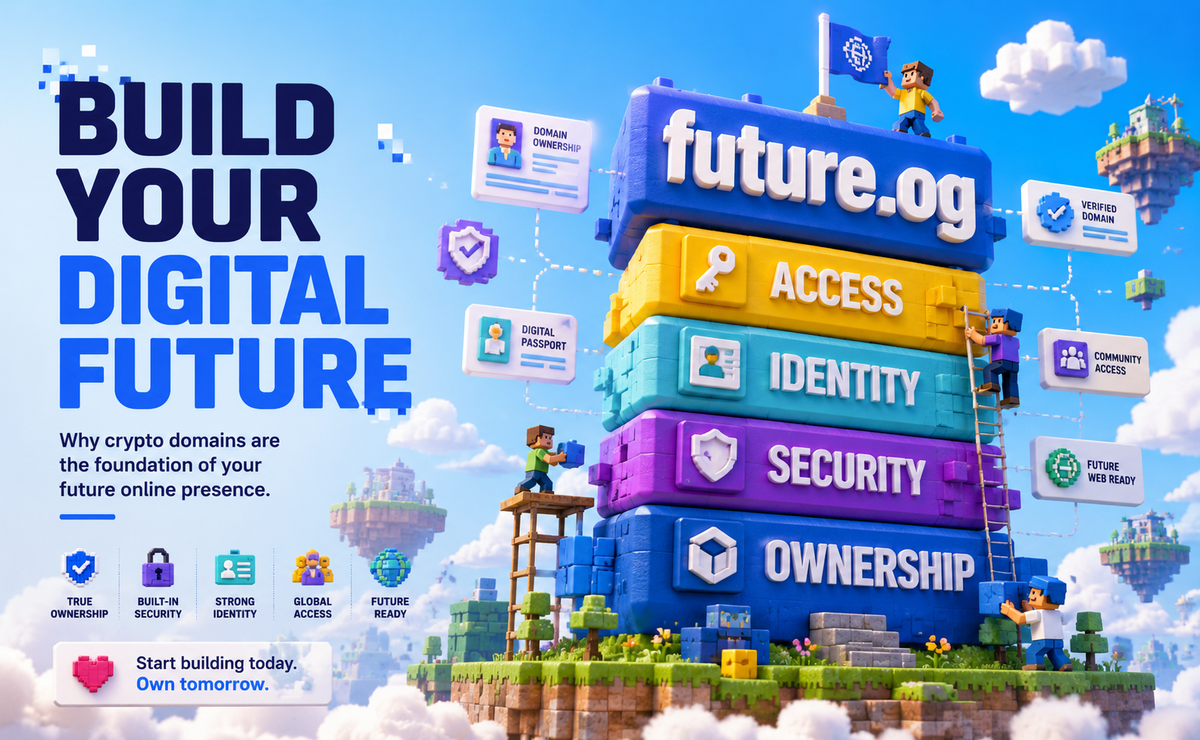
Every few months, something new in the crypto space gets labeled "the future of the internet." Most of those claims don't age well. So when Web3 domains started generating serious attention, attracting not just developers and DeFi enthusiasts but celebrities, major brands, and mainstream investors, it's fair to ask whether this is genuine infrastructure or another speculative bubble dressed up as innovation.
The honest answer is it's both, depending on how you approach it. Web3 domains have real, demonstrable utility that justifies serious consideration. They also exist in a volatile, rapidly evolving market where the wrong decisions choosing the wrong registrar, registering the wrong names, or misunderstanding what you're actually buying can lead to genuine disappointment.
This blog gives you the balanced perspective you need to make an informed decision. We'll cover what Web3 domains actually are, the specific advantages that make them genuinely useful, the real downsides that too many enthusiasts gloss over, and what to look for when choosing where to register yours.
What Web3 Domains Actually Are
Let's get the definition right, because there's a lot of loose language around this topic.
Web3 domains are NFT-based, blockchain-powered addresses that function as unique digital identifiers. Unlike traditional domain names which are essentially licenses rented from centralized registrars under rules set by ICANN Web3 domains are owned outright by their holders, recorded on a blockchain, and stored in a crypto wallet like any other digital asset.
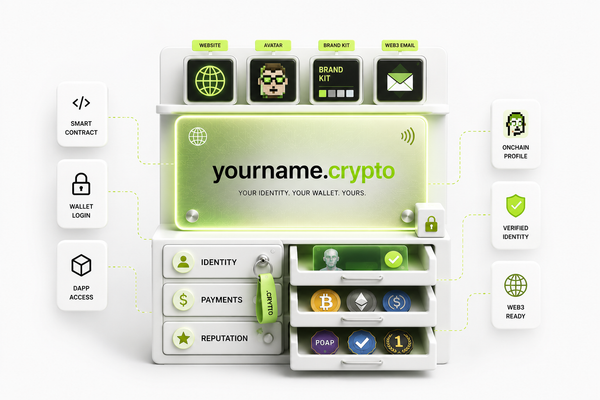
The "domain name" framing is accurate but incomplete. Web3 domains can function as website addresses, but they can also serve as replacements for crypto wallet addresses, as social identity profiles, as login credentials across Web3 applications, as NFT display platforms, and as building blocks for a verifiable digital identity in the decentralized web. The specific capabilities depend partly on the registrar you use and the integrations they've established.
What draws most people to Web3 domains is the combination of ownership and versatility. In the traditional web, your domain is rented and your online identity is distributed across platforms you don't control. A Web3 domain consolidates elements of that identity into a single asset that's genuinely, permanently yours. That's a meaningfully different proposition and it explains why the interest extends well beyond the crypto-native community.
The Real Advantages of Web3 Domains
Let's be specific about what Web3 domains actually do well, because the benefits are concrete rather than theoretical.
They do more than one thing and that matters.
The multifunctionality of Web3 domains is their most underappreciated characteristic. When you register a Web3 domain, you're not just getting a web address you're getting an identity layer that can work across multiple contexts simultaneously.
As a website address, your Web3 domain can point to a decentralized site hosted on IPFS, creating a genuinely censorship-resistant online presence that no hosting company or registrar can take offline. As a wallet address substitute, it replaces incomprehensible hexadecimal strings with something human beings can actually remember and type correctly. As a social identity hub, it can aggregate your NFT collection, your crypto credentials, your social media links, and your professional accomplishments into a single verifiable profile.
The depth of that multifunctionality depends on your registrar. Unstoppable Domains, for example, currently maintains over 700 integrations and nearly 900 industry partnerships which means a domain registered there works across a wide ecosystem of applications, wallets, and platforms from day one. A less-established registrar might offer the same basic domain but with a fraction of the integrations, significantly limiting what you can actually do with it.
They solve a genuine security and usability problem.
Anyone who has used cryptocurrency for more than a few transactions knows the anxiety of wallet addresses. A typical Ethereum address 0x4bE6...f92A is 42 characters long, case-sensitive in some contexts, and absolutely unforgiving of errors. Sending funds to a wrong address means permanent, irreversible loss. There are no chargebacks, no customer service calls, no way to get the money back.
This isn't a hypothetical risk. Throughout the history of crypto, misdirected transactions caused by address errors have resulted in significant financial losses for newcomers who were confused by the complexity and for experienced users who simply moved too fast. The problem is structural, not behavioral. Asking people to reliably copy and type 42-character strings is asking more than humans can consistently deliver.
Web3 domains address this at the root. When you associate a domain like yourname.crypto with your wallet address, anyone sending you funds types yourname.crypto instead of the raw address. The domain resolves to the correct address automatically. The error rate drops dramatically. The user experience improves meaningfully. And new users who would have been intimidated by wallet address complexity have a much lower barrier to entry.
This isn't just a convenience upgrade it's a genuine safety improvement that has real financial implications for anyone transacting regularly in crypto.
They give you a personal brand in the Web3 world.
Identity matters online. In Web2, your identity is distributed and platform-dependent your Twitter handle, your Instagram username, your LinkedIn profile, your email address. None of these are truly yours. Each platform controls your identity within its walls, can change the rules at any time, and can remove you without warning.
Web3 domains create a different kind of identity one you own outright and carry across platforms rather than building separately within each one. Think of it as the difference between having a permanent home address versus living in a series of rental apartments where the landlord decides the rules.
For public figures, creators, and professionals building a presence in the Web3 space, a Web3 domain is the primary handle through which the community knows and recognizes them. Vitalik Buterin uses vitalik.eth. Major brands have registered their names as .eth domains. In the Arbitrum ecosystem, .arb domains are becoming the standard identity signal for serious participants.
Even for casual users, the analogy to gaming usernames is apt. Just as you create a character in an online multiplayer game and build a reputation through that identity across servers and seasons, your Web3 domain becomes the handle through which you're known in the decentralized ecosystem persistent, portable, and genuinely yours.
Certain platforms, including Twitter, allow users to display their Web3 domain names as handles, making it immediately clear to followers and the broader community that this account belongs to a verified Web3 identity. As more platforms add similar functionality, the branding value of a well-chosen Web3 domain will continue to grow.
Additionally, because Web3 domains function as wallet address substitutes, they naturally become showcases for your digital asset portfolio. Platforms that support Web3 identity profiles can display your NFT collections, your transaction history, your community badges, and your verified credentials all linked to the single domain name that represents you. It's a comprehensive digital identity that no single Web2 platform can offer.
The Downsides You Need to Know About
Here's where most Web3 domain coverage gets dishonest through omission. The benefits are real, but so are the limitations and going in without understanding them leads to exactly the kind of disappointment that fuels "crypto is a scam" narratives.
You're more dependent on centralized infrastructure than the pitch suggests.
There's a meaningful irony at the heart of Web3 domain ownership that nobody in the sales funnel is eager to highlight: despite being built on decentralized blockchain domains, Web3 domains are deeply dependent on the centralized companies that issue and support them.
Here's how it actually works. You purchase a Web3 domain from a registrar. The registrar mints it as an NFT on a blockchain and transfers it to your wallet. At that point, you have genuine, sovereign ownership of the NFT itself nobody can take it from you without your authorization.
But here's the catch: for the domain to actually work as a functional domain name to resolve to a website, to substitute for a wallet address, to integrate with applications the registrar's infrastructure and partnerships have to remain operational and supportive. The domain's utility is entirely dependent on the registrar maintaining its systems, honoring its integrations, and continuing to operate as a business.
If your registrar goes bankrupt, pivots away from domains, or simply stops maintaining its integration network, your domain becomes a non-functional NFT a blockchain record of ownership with no practical utility. You'd still own the token, but it would no longer work as the functional domain you paid for.
This is not a remote hypothetical. The Web3 space has seen companies fold, projects abandoned, and products pivoted away from without warning. Choosing a registrar with a strong track record, a sustainable business model, and a large, established integration network significantly reduces this risk but it doesn't eliminate it.
The lesson here isn't to avoid Web3 domains. It's to be realistic about what "decentralized ownership" means in practice, choose your registrar with genuine care, and understand that the functional value of your domain is tied to an ongoing business relationship, not just a blockchain record.
Mass adoption is not guaranteed and the path there is genuinely uncertain.
Web3 domains currently exist in a regulatory and technical no-man's-land. ICANN the organization that governs traditional domain names, does not recognize Web3 domains as legitimate domain names. Standard web browsers like Chrome, Firefox, and Safari don't natively resolve .eth, .crypto, or .sol addresses. Users who want to access a Web3 domain-hosted site typically need a browser extension or a compatible Web3 browser.
This is a real barrier. The mainstream internet user doesn't install browser extensions to visit websites. Until Web3 domain resolution is built into major browsers natively or until browser-alternative infrastructure reaches mainstream scale Web3 domains are primarily accessible to users who are already inside the Web3 ecosystem.
That's not nothing. The Web3 ecosystem has millions of active users and significant financial activity. But it's important to be clear-eyed about the gap between current adoption and the "universal internet identity" vision that Web3 domain marketing often implies.
The trajectory is positive browser support is gradually improving, awareness is growing, and institutional interest is legitimizing the space. But the pace of progress is uncertain, and the specific standards that ultimately prevail are still being contested. The .eth domain from ENS, the .crypto domain from Unstoppable Domains, and the .sol domain from Solana's naming service are all competing for relevance. Not all of them will win equally.
If you're buying a Web3 domain primarily as a long-term speculative investment, the uncertainty around which registrars and extensions will dominate is a real risk factor that deserves serious weight in your decision.
Where to Buy Your Web3 Domain
If you've weighed the pros and cons and decided to move forward, choosing the right registrar is the most important decision you'll make. Here's how to think about it.
Unstoppable Domains is the most established general-purpose Web3 domain registrar and is generally considered the safest choice for users who prioritize integration depth and long-term reliability. With over 700 integrations and nearly 900 industry partnerships, it offers the broadest ecosystem compatibility of any registrar currently operating. Domains registered through Unstoppable are sold as one-time purchases with no renewal fees you pay once and own permanently.
Ethereum Name Service (ENS) is the dominant registrar for .eth domains specifically, and it benefits from deep integration with the Ethereum ecosystem virtually every major Ethereum wallet, application, and marketplace recognizes ENS domains natively. The trade-off is that ENS domains require annual renewal fees, unlike the one-time purchase model offered by competitors. For businesses and individuals with a strong Ethereum ecosystem focus, ENS is often the best choice.
Freename offers a diverse range of top-level domains and has a particularly interesting model for domain registrants the ability to potentially earn passive income through royalties on domains registered within their TLD ecosystem. For users interested in both owning a domain and participating in the revenue side of the naming infrastructure, Freename is worth exploring.
Other platforms worth awareness include Namecheap (which has added some Web3 domain options alongside its traditional offerings), various NFT marketplaces where secondary market domain purchases are available, and blockchain-specific naming services like Solana's SNS (.sol) and Arbitrum's ARB ID (.arb) for ecosystem-specific needs.
What to Look for in a Web3 Domain Registrar
Regardless of which registrar you ultimately choose, evaluate any option against these four criteria before committing.
Supported extensions. Different extensions serve different purposes and communities. .eth connects you to the Ethereum ecosystem and benefits from ENS's deep integrations. .crypto is a general-purpose Web3 identity extension with broad application support. .nft is specifically associated with NFT collections and digital asset businesses. Choose an extension that aligns with how you plan to use the domain and which community you want to signal membership in.
User experience and feature depth. A registrar's interface needs to be clear and functional especially if you're managing multiple domains or configuring complex settings. Look for straightforward purchasing and management flows, integration with the crypto wallets you already use, tools for managing multiple domains in one place, marketplace functionality for buying and selling domains, and strong security features like two-factor authentication and domain locking.
Security practices and reputation. Web3 domains are valuable assets, and the registrar you choose is responsible for the infrastructure that makes them function. Research their security practices: Do they use secure login protocols? Do they communicate transparently about security incidents? What does their community reputation look like in relevant forums and discussions? The Web3 community has a long memory for both trustworthy and problematic registrars, and that community knowledge is one of your best research tools.
Integration ecosystem and compatibility. A domain that works in isolation is worth far less than one that integrates across the applications, wallets, and platforms you actually use. Before registering, verify that your chosen registrar's domains are compatible with your primary crypto wallet, the dApps you use most frequently, and any specific platforms where you want your Web3 identity to be visible. The registrar's integration count is a useful proxy, but checking specific integrations relevant to your use case is more valuable.
Making the Decision: A Framework
Here's a practical framework for deciding whether Web3 domains make sense for your specific situation.
If you're actively transacting in cryptocurrency receiving payments, sending funds, interacting with DeFi protocols a Web3 domain will immediately improve your daily experience. The wallet address substitution alone justifies the registration cost for regular crypto users.
If you're building a brand, project, or community in the Web3 space, a Web3 domain is close to essential. It signals credibility, establishes your identity in the ecosystem, and provides infrastructure that supports your community's growth. The sooner you register, the better the name you'll be able to secure.
If you're primarily interested in the investment angle, be honest with yourself about the risk profile. Premium Web3 domains have appreciated significantly in some cases, but the market is speculative, valuations are subjective, and liquidity is limited. Treat domain investment as a higher-risk asset class rather than a reliable store of value.
If you're completely new to crypto and considering a Web3 domain as your entry point, the most important step is understanding the technology before committing money to it. The usability gap between Web3 domains and the traditional internet is real, and managing that gap requires a baseline level of crypto literacy that's worth building before you register.
The Bottom Line
Web3 domains are not hype without substance. They solve real problems: wallet address complexity, identity fragmentation, and platform dependency, and they do it in ways that create genuine, durable value for users who understand what they're getting.
But they're also not risk-free, universally applicable, or as decentralized as the marketing sometimes implies. The dependence on registrar infrastructure is real. The uncertainty around mass adoption is real. The importance of choosing the right registrar cannot be overstated.
Go in with clear eyes; choose your registrar with care, pick a name that reflects how you actually want to use it, and treat your Web3 domain as what it is a useful, versatile digital asset in a still-maturing ecosystem rather than a guaranteed path to either decentralized utopia or instant financial returns.
The decentralized web has a long way to go before it's fully mainstream. But the infrastructure being built right now .eth domains, .sol domains, .polygon domains, .arb domains, and endless domains emerging across different blockchain ecosystems is laying the foundation for what comes next. Whether Web3 domains become the universal identity layer of the internet depends on decisions being made right now by registrars, by developers, by regulators, and by users like you.