The Future of Website Registrars: How Web3 is Changing the Game
Web3 is transforming the Internet with decentralization, blockchain security, and user control. This shift is set to revolutionize website registrars, replacing traditional domain management with decentralized DNS, reducing costs, and enhancing privacy.

The internet has reinvented itself before and each time it did, the businesses built around the old model had a choice to make. Adapt or become irrelevant.
Web3 is setting up that same choice for website registrars.
For decades, domain registrars have been the gatekeepers of online identity. Want to put something on the internet? You go through them. You pay an annual fee, follow their rules, and accept that a centralized organization ultimately accountable to governments and regulatory bodies holds the keys to your domain. For most of the internet's history, that was just the cost of doing business online.
Web3 changes the underlying assumption. Blockchain-based domains don't need registrars the way traditional domains do. Ownership is recorded on a public ledger. There's no central authority to petition if something goes wrong or to comply with if a government demands a domain be taken down. The model is fundamentally different, and the implications for the domain industry are significant.
Here's a clear-eyed look at what's actually happening and where it's all heading.
A Quick History: How We Got Here
To understand where Web3 is taking domain registration, it helps to understand the arc of the internet itself.
Web 1.0 was static. A relatively small number of publishers created content, and everyone else read it. There was almost no interaction between users and websites you visited pages the way you'd read a newspaper, not the way you'd have a conversation.
Web 2.0 changed that dynamic completely. Social media, user-generated content, dynamic web applications suddenly, everyone was both a consumer and a producer. The internet became participatory and interactive. The tradeoff, as it turned out, was centralization. The platforms that made Web 2.0 possible Facebook, Google, Twitter, Amazon accumulated enormous control over data, identity, and access. Users created the content; the platforms owned the infrastructure and, by extension, the users themselves.
Web3 is the response to that bargain. Built on blockchain technology, it distributes control across decentralized networks rather than concentrating it in the hands of a few corporations. The goal is an internet where users own their data, control their identities, and transact directly with each other without intermediaries taking a cut or exercising gatekeeping power.
Key technical features that distinguish Web3 from what came before:
- Decentralization Data is distributed across many nodes rather than stored on centralized servers, so no single party controls the system
- Cryptographic security Transactions and identities are secured through cryptography rather than institutional trust
- User sovereignty Digital wallets and private keys give users direct control over their identities and assets
- Smart contracts Self-executing agreements coded directly onto the blockchain eliminate the need for intermediaries in many transaction types
- Interoperability Different blockchain networks can communicate and work together, creating the potential for a more connected ecosystem
These aren't just philosophical ideals. They have direct, practical implications for how domain names work.
What Traditional Registrars Actually Do and Where They Fall Short
Website registrars are, at their core, accredited intermediaries. They sit between users and the Domain Name System (DNS) the infrastructure that translates human-readable domain names like example.com into the IP addresses that computers actually use to find each other.
The services they provide are real and valuable: domain search and registration, DNS configuration tools, SSL certificates, email hosting, privacy protection, domain locking to prevent unauthorized transfers. For most of the internet's history, there was no practical alternative to this model.
But the model has inherent weaknesses that have become harder to ignore as the internet has matured.
Centralization creates single points of failure. When a registrar's systems go down whether from a technical failure or a cyberattack the domains they manage can become temporarily inaccessible. The 2016 DDoS attack on Dyn, a major DNS provider, took down a significant portion of the internet for hours. That kind of vulnerability is structural, not incidental.
Centralization also creates targets. Centralized databases of domain ownership information are valuable targets for hackers. Data breaches at registrars have exposed user information and, in some cases, enabled domain hijacking attackers gaining control of a domain by compromising the registrar's systems rather than the user's own credentials.
Governments can and do exercise control. Because domain registrars operate within national jurisdictions and are subject to regulatory oversight, governments can compel them to seize or suspend domains. This has legitimate uses taking down sites engaged in fraud or illegal activity but it also creates a mechanism for censorship that has been used in ways that raise serious free expression concerns in various countries.
Users don't really own their domains. This is the fundamental issue. When you register a domain through a traditional registrar, you're purchasing a lease, not ownership. The registrar can revoke it. The relevant regulatory body can intervene. If you stop paying the annual renewal fee, it's gone. The domain lives in the registrar's systems, not yours.
How Web3 Changes the Domain Equation
Decentralized Domains the Web3 alternative to traditional domain registration addresses these weaknesses by removing the centralized intermediary entirely. Instead of a registrar holding your domain in their database, your domain is recorded on a blockchain that no single party controls.
This has cascading effects on every aspect of domain ownership:
You actually own it. A blockchain domain recorded in your wallet is yours in the same way cryptocurrency in your wallet is yours. No registrar can revoke it. No government can compel a registrar to seize it (though they can still make life difficult for you through other means). You don't pay annual renewal fees. It's a one-time purchase of a permanent asset.
Censorship becomes significantly harder. Because there's no central authority with override power, taking down a blockchain-based domain requires something much more difficult than serving a legal notice to a registrar. This is genuinely valuable in contexts where speech and access to information are under pressure.
Security is fundamentally different. The attack vectors that threaten traditional domains compromising a registrar's centralized database, exploiting DNS infrastructure vulnerabilities don't apply in the same way to blockchain domains. The security model shifts from trusting institutional infrastructure to trusting cryptographic proof and distributed consensus.
Costs can be lower. Eliminating intermediaries means eliminating the fees those intermediaries charge. The cost savings vary by platform and domain type, but the structural removal of middlemen from the equation creates real potential for cheaper domain ownership over time.
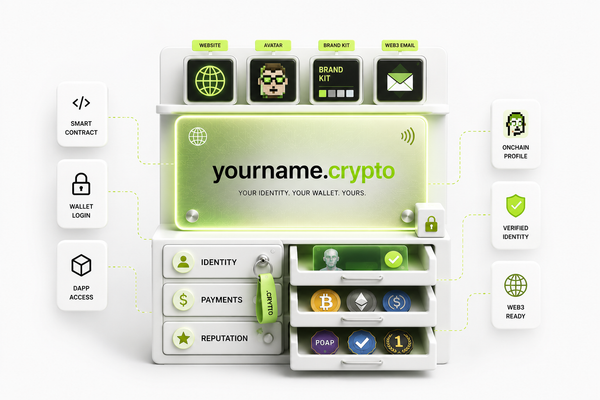
Functionality extends beyond web addresses. Blockchain domains don't just point to websites. They can serve as cryptocurrency wallet addresses, login credentials for decentralized applications, and components of decentralized identity systems all under a single, user-owned name.
The Platforms Leading This Shift
Three platforms in particular have established meaningful positions in the decentralized DNS space, each with a somewhat different approach.
Ethereum Name Service (ENS)
ENS is the most established decentralized naming system in the Web3 ecosystem. It allows users to register .eth domains and link them to their Ethereum wallet addresses, enabling people to send and receive cryptocurrency using a readable name rather than a long hex string. ENS domains also work as login credentials for dApps and can be configured to point to decentralized websites. The platform's deep integration with the Ethereum ecosystem has given it a head start in user adoption among the crypto-native community.
Handshake
Handshake takes a more ambitious and foundational approach. Rather than creating a new set of domain extensions that sit alongside the traditional DNS, Handshake aims to decentralize the root DNS zone itself the foundational layer that traditional root servers, controlled by central authorities, currently manage. Users can bid on and register top-level domains (TLDs) through Handshake, creating a more open and competitive domain name market. If it gains broad adoption, Handshake could change the architecture of the internet's naming system at its deepest level.
Unstoppable Domains
Unstoppable Domains offers blockchain-based domain extensions including .crypto and .zil, with a focus on making decentralized domains accessible to mainstream users. The platform has prioritized integration with popular browsers and cryptocurrency wallets, lowering the technical barrier to using blockchain domains in everyday contexts. Its emphasis on censorship-resistant websites and simplified crypto transactions reflects the broader Web3 ethos and its relatively user-friendly approach has helped it build a substantial user base beyond just hardcore blockchain enthusiasts.
What Traditional Registrars Need to Do
Here's the honest reality for established registrars: the ground is shifting, and waiting to see how it plays out is itself a strategic choice and not necessarily a good one.
The companies that will come out of this transition in a strong position are the ones that treat Web3 as an opportunity to expand their offerings rather than a threat to be managed. Here's what that looks like in practice:
Integrate blockchain domain offerings. Registrars that offer both traditional and decentralized domain registration give users a single place to manage their entire domain portfolio. This is the path of least resistance for mainstream users who are curious about Web3 domains but don't want to navigate a separate ecosystem to access them.
Partner with decentralized DNS providers. Rather than building blockchain infrastructure from scratch which is technically demanding and expensive traditional registrars can partner with established platforms like ENS or Unstoppable Domains to offer their capabilities through a familiar interface. This gets the product to market faster and leverages existing technology.
Upgrade security infrastructure. The security expectations of Web3-aware users are higher than those of the typical Web2 domain customer. Registrars that invest in advanced security protocols, transparent practices, and robust protection against domain hijacking will be better positioned regardless of how the Web3 transition unfolds.
Educate users, not just market to them. The biggest barrier to Web3 domain adoption isn't technology it's awareness and understanding. Registrars that take a genuine educational approach, explaining what decentralized domains are, what they offer, and when they make sense, will build more durable customer relationships than those that simply add new SKUs to their catalog.
Explore decentralized hosting and storage. Domain registration is just one piece of a user's web presence. Registrars that develop decentralized hosting and storage solutions create a more complete Web3 offering that keeps users in their ecosystem rather than sending them to specialized platforms for each service.
The Challenges Are Real
None of this transition is going to be smooth or fast. The challenges are genuine and deserve clear-eyed acknowledgment.
Regulatory uncertainty is significant. Governments are still figuring out how to approach decentralized technology. The absence of a clear regulatory framework creates uncertainty for both users and the businesses building in this space. Registrars operating across multiple jurisdictions face the particularly complex task of navigating rules that haven't been written yet and that could look very different from country to country when they are.
Technical complexity is a real barrier for smaller players. Blockchain integration isn't a plug-and-play upgrade. It requires technical expertise, infrastructure investment, and ongoing maintenance. For smaller registrars without large engineering teams, this is a meaningful hurdle that could accelerate consolidation in the industry.
User adoption is slower than technology adoption. The technology for decentralized domains is already functional and improving. The rate-limiting factor is awareness and comfort most internet users don't know what a blockchain domain is, let alone why they might want one. Changing that requires sustained education and, frankly, compelling use cases that make the benefits obvious rather than theoretical.
Interoperability between Web2 and Web3 systems is still imperfect. Blockchain domains don't automatically work in traditional web browsers the way .com domains do. Getting a decentralized website to load in Chrome without special configuration requires browser support or extension workarounds a friction point that limits everyday usability. This is improving, but it's not solved.
Governance: Who Runs the Decentralized Web?
One of the more interesting questions raised by Web3 domain systems is governance. If there's no central authority, who makes decisions about how the system evolves? Who handles disputes? Who sets the rules?
The emerging answer in Web3 is Decentralized Autonomous Organizations, or DAOs community governance structures where stakeholders vote on proposals using tokens or other mechanisms. In the context of decentralized DNS, DAOs could manage protocol upgrades, dispute resolution processes, and policy decisions in a way that's transparent and auditable on the blockchain.
This model has genuine appeal. Decisions are made by the community rather than a corporation, and the record of those decisions is publicly verifiable. But it also has real limitations voter participation in DAOs is often low, large token holders can exert disproportionate influence, and making decisions by committee is inherently slower than centralized decision-making.
Getting Web3 governance right is one of the more difficult unsolved problems in the space. The stakes are high: a poorly governed decentralized DNS system could have problems just as serious as a centralized one, just differently distributed.
Lessons From the Projects Already Doing It
The good news is that decentralized domain systems aren't theoretical anymore. ENS has been running since 2017 and has registered millions of .eth domains. Handshake has built a functioning alternative root DNS zone. Unstoppable Domains has integrated with major browsers and wallets and built a meaningful user base. These aren't proofs of concept they're live systems with real users.
The lessons from these early movers are instructive. ENS's success demonstrates that deep integration with an existing ecosystem (Ethereum) dramatically accelerates adoption. Unstoppable Domains' growth shows that accessibility and browser integration are critical for reaching users beyond the crypto-native community. Handshake's approach illustrates the ambition possible when you're willing to challenge foundational infrastructure rather than just building on top of it.
The common thread is this: the projects gaining traction are the ones that make decentralized domains useful in people's actual workflows, not just technically possible.
Final Thoughts
Web3 doesn't make traditional website registrars obsolete overnight. The vast majority of the internet still runs on traditional DNS, and that's not going to change in the next few years. The .com domain isn't going anywhere.
But the direction of travel is clear. Ownership models are shifting. User expectations around control and privacy are rising. Blockchain-based alternatives are moving from fringe to mainstream, slowly but consistently. The registrars that recognize this and act on it now will be the ones that matter in ten years. The ones that don't will find themselves increasingly peripheral in a world that's moved on.
The transition to Web3 isn't just a technology upgrade. It's a fundamental rethinking of who gets to control digital identity on the internet and the answer Web3 gives is that users do. For an industry that has always sat between users and that control, that's a significant shift.
How registrars respond to it will define the next chapter of the domain industry.