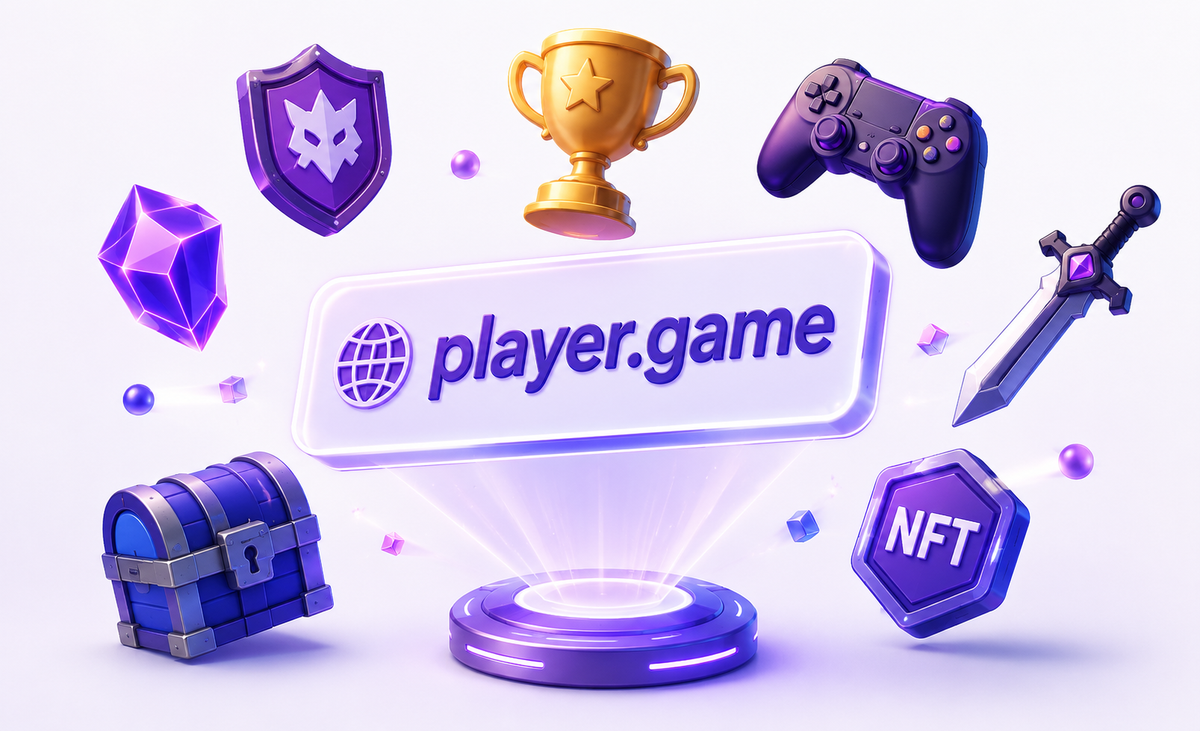
The Intersection of Gaming and Web3: Leveraging .Game Domains
Level up your gaming presence! A .game domain is your key to connecting with players. Let's explore why.

If you've spent any real time in gaming whether you're a developer shipping titles, an esports org building a fanbase, or just someone who runs a community Discord and wants a proper website to go with it you've probably noticed that the internet still feels weirdly generic for such a massive, passionate industry.
Most gaming websites are still sitting on .com addresses, sandwiched between insurance companies and recipe blogs in search results. That's starting to change. The rise of .game domains is giving everyone in the gaming world from indie developers to tournament organizers to individual streamers a way to plant their flag somewhere that actually makes sense.
Let's dig into what .game domains are, who they're built for, and whether the hype is actually justified.
What Is a .game Domain, Anyway?
A .game domain is simply an internet address that ends in ".game" instead of ".com" or ".net." The key difference is what that extension communicates. The moment someone sees a .game address, they know exactly what kind of site they're about to visit. There's no ambiguity, no mental translation required.
Think about it from a user's perspective: legendsofcraft.game tells you everything before you've clicked a single link. You know it's gaming-related. You know it's intentional. You're already in the right headspace when you land on it.
That kind of immediate clarity is genuinely useful in an industry as crowded and competitive as gaming. The domain isn't just an address it's the first line of your pitch.
The Features That Actually Matter
Before we get into who should use .game domains and how, it's worth understanding what makes them technically and functionally distinct.
It Says Exactly What It Is
This sounds simple, but it's more valuable than it seems. In SEO terms, having a domain extension that directly matches your industry signals relevance to search engines. For gaming-related keywords "best RPGs 2024," "esports news," "indie game downloads" a .game domain reinforces that your site belongs in those results. It doesn't guarantee top rankings, but it helps search engines and users alike recognize what your site is about at a glance.
It's Built for Branding
Short, punchy, immediately recognizable .game domains check every box for strong brand identity. When a gamer tells a friend about your site, "check out stormrider.game" is a lot more natural than rattling off a long .com address. The domain becomes part of the brand, not just a technical necessity.
It's Open to Everyone
Unlike some domain extensions that require proof of eligibility or have strict geographic restrictions, .game domains are open registration. A solo developer building their first game has exactly the same access as a major publisher. A teenage speedrunner who wants to document their runs has the same opportunity as an esports organization with a full marketing team. That kind of openness matters it keeps the playing field level and allows the gaming community to define what the extension means through the diversity of people using it.
It's Versatile Enough for the Whole Industry
Video games are just the start. Board game cafes, tabletop RPG publishers, esports teams, gaming news outlets, game jam organizers, speedrunning communities, game streaming platforms all of them fit naturally under a .game domain. The extension isn't trying to pigeonhole anyone into a single format. If it's related to games in any meaningful way, .game works.
It's Future-Proof
The global gaming industry is currently valued at over $200 billion and keeps growing year over year. Mobile gaming, cloud gaming, VR, and the continued explosion of esports mean gaming isn't a niche it's mainstream entertainment. A domain extension tied specifically to this industry isn't going to become irrelevant. If anything, its value will only increase as the ecosystem grows.
Who Should Actually Be Using a .game Domain?
The short answer: if gaming is central to what you do online, a .game domain deserves serious consideration. Here's a more specific breakdown:
Game developers and publishers can use .game domains as the official home for their titles patch notes, community forums, download links, press kits. It keeps everything in one branded, obviously gaming-specific location.
Esports teams and organizations benefit enormously from the instant credibility a .game domain provides. Fan pages, match schedules, merchandise stores, player rosters a .game address makes all of it feel more legitimate and purpose-built.
Gaming news and review sites can use the extension to establish authority. In a space where trust matters a lot readers need to know if a review is credible a domain that signals genuine specialization in gaming carries real weight.
Streaming platforms and individual content creators can build their whole online presence around a .game domain. If you're a streamer with a YouTube channel, Twitch page, and a growing community, [yourname].game is a much stronger personal brand anchor than a generic .com.
Gaming communities and forums whether you're running a wiki, a fan community, or a subreddit-style discussion board benefit from the instant signal that says "this is a space for people who love games."
Retailers and hardware brands targeting gamers can use a .game domain to speak directly to their audience. A controller brand or gaming chair company with a .game domain communicates "we're part of your world," which is worth more in marketing than most people realize.
Individual hobbyists people who want to build a personal gaming blog, document a game collection, or share a passion project absolutely have a place here too. You don't need to be a company to benefit from a domain that fits your identity online.
How to Register a .game Domain: The No-Nonsense Version
The registration process is pretty painless. Here's how it works:
Step 1 Pick your name. Brainstorm options that reflect your brand, game title, team name, or personal handle. Keep it short if you can. Think about how it'll look in a URL bar, on a business card, and spoken aloud.
Step 2 Find a registrar. GoDaddy, Namecheap, Google Domains, Hover, and Cloudflare all support .game domain registration. Compare pricing fees can vary more than you'd expect and look at what's included (SSL certificates, privacy protection, DNS management tools).
Step 3 Check availability. Use the registrar's search bar. If your first choice is taken, try variations: add a word, adjust the spelling, or rethink the name entirely. Don't settle for something awkward just because your first pick was gone.
Step 4 Register and choose your term. Most registrars offer one-to-ten-year terms. Registering for multiple years often saves money and, more importantly, removes the anxiety of annual renewal deadlines.
Step 5 Add domain privacy. This hides your personal contact information from the public WHOIS database, which lists registrant details for every domain. It's inexpensive and worth it especially if you're an individual rather than a company.
Step 6 Set up your DNS and go live. Once registered, you'll manage your domain through your registrar's control panel. Point it at your hosting provider, configure your DNS records, and set up any email you want tied to the domain.
One last practical note: enable auto-renewal the moment you register. Letting a domain expire accidentally is one of those frustrating, completely avoidable disasters that happens more often than it should.
A Few Technical Rules to Know
Domain names must be between 3 and 63 characters. You can use letters, numbers, and hyphens but hyphens can't appear at the very beginning or end of the name, and you can't stack two hyphens consecutively. Special characters like & or # aren't allowed. Internationalized Domain Names (IDNs) are supported, meaning non-Latin characters from languages like Arabic, Chinese, or Japanese are fair game.
How to Actually Use a .game Domain Well
Registering the domain is just step one. What you do with it determines whether it's a valuable asset or just a URL you're paying for annually. Here are the strategies that tend to work:
Build around community. The gaming industry runs on community. Use your .game domain as the central hub not just for content, but for interaction. Forums, leaderboards, fan art submissions, tournament registration anything that gives your audience a reason to come back and bring friends.
Be consistent across platforms. Your .game domain should anchor your online presence across YouTube, Twitch, Twitter, Discord, and anywhere else you operate. When everything points back to the same memorable address, it builds brand recognition over time.
Lean into the SEO advantages. Write content that your target audience is actually searching for. If you're a game developer, that might be patch notes and dev diaries. If you're a gaming news site, it's coverage of what's happening in the industry. The .game extension signals relevance; quality content builds authority.
Use it for e-commerce if you sell anything. Merchandise, digital downloads, in-game items, event tickets a .game domain gives your store an immediate sense of legitimacy with a gaming audience. They're more likely to trust a checkout page at [yourbrand].game than a generic storefront with no obvious connection to the industry.
Monetize thoughtfully. Gaming-adjacent advertisers peripheral brands, game publishers running campaigns, streaming services targeting gamers are actively looking for platforms with genuinely engaged gaming audiences. A .game domain helps them find you and signals that your audience is exactly who they want to reach.
The Challenges Worth Being Honest About
.game domains are not a magic solution. Here are the real friction points you should know going in:
Most internet users still default to .com. It's a deeply ingrained habit. Some visitors will type your domain name and instinctively add .com at the end, then get confused when they land on the wrong page or nothing at all. This is a real traffic leakage problem, especially early on. Some brands address this by registering both the .game and .com versions and redirecting one to the other.
Good names are increasingly taken or expensive. Single-word domains, short names, and anything tied to popular gaming terms have largely been snapped up. If you want warrior.game or quest.game, you'll probably be paying a premium on the secondary market. This is more of a challenge for businesses than individuals a personal handle or a specific game title has a much better chance of being available.
Lower public awareness outside gaming circles. If your audience includes people who aren't regular internet users or aren't part of gaming culture, .game might cause a moment of hesitation. This is less of a concern than it used to be as the extension becomes more common, but it's worth considering if your reach extends beyond core gaming audiences.
Some older systems have compatibility issues. Legacy enterprise software, older email clients, and certain network configurations occasionally struggle with newer TLDs. If you're building something that needs to integrate with older infrastructure, it's smart to test compatibility before going fully public.
SEO isn't instant. New domains in any extension take time to build authority. .game isn't a shortcut past that process. The good news is that it doesn't hurt your SEO either it's a neutral starting point that you build on with content, backlinks, and time.
Final Thoughts
The gaming industry has grown into one of the largest entertainment sectors in the world, and it deserves its own space on the internet not just a corner of the .com namespace. .game domains are a direct response to that reality.
They're not perfect, and they're not right for every situation. But for developers, esports organizations, gaming communities, content creators, and businesses whose identity is genuinely tied to games, a .game domain offers something meaningful: a home on the internet that says, without any further explanation, this is where gamers belong.
If gaming is your world professionally, creatively, or just as something you care deeply about it's worth having a domain that reflects that.