Hard Wallets vs. Soft Wallets: Understanding the Differences, Benefits, and Drawbacks
Cryptocurrency wallets are essential tools for managing and securing digital assets. They come in two primary types: hard wallets (hardware wallets) and soft wallets (software wallets). Hard wallets offer enhanced offline security, while soft wallets provide easy online access. This blog compares bo

If you've spent any time in the crypto space, you've probably heard people argue passionately about how to store their digital assets. Some swear by hardware wallets. Others can't be bothered to carry around a physical device and stick to their phone apps. And honestly? Both sides have a point.
The truth is, there's no single "right" answer it all comes down to who you are as a crypto user, how much you're holding, and what you actually do with your assets on a day-to-day basis. This guide breaks it all down so you can make a smarter, more informed decision.
What Is a Hard Wallet?
A hard wallet more commonly called a hardware wallet is a physical device that stores your private keys completely offline. Think of it like a USB drive, but purpose-built for crypto security. Because it never connects to the internet on its own, it's far less vulnerable to the kinds of online threats that can wipe out a digital portfolio: phishing attacks, malware, remote hacks, you name it.
How It Works
When you want to make a transaction, you plug your hardware wallet into a computer or smartphone. The device uses your stored private key to sign the transaction locally meaning your key never actually touches the internet. Once signed, the transaction is sent online for validation. It's a clever system: you get to interact with the blockchain without ever exposing your most sensitive credentials.
Popular Examples
Ledger — One of the most recognized names in the space, Ledger offers the Nano S and Nano X, both known for strong security and a relatively beginner-friendly interface.
Trezor — Often credited as the original hardware wallet, Trezor's lineup includes the Trezor One and the Trezor Model T, which support multiple cryptocurrencies and come loaded with advanced security features.
What Is a Soft Wallet?
A soft wallet short for software wallet is a digital application that lets you store and manage your crypto entirely online. These wallets live on your phone, your desktop, or as a browser extension. They're fast, they're free, and they're incredibly easy to use, which is exactly why they're so popular.
The trade-off, of course, is security. Because a soft wallet is always connected to the internet, it's more exposed to potential attacks than its hardware counterpart.
How It Works
Soft wallets generate and store your private keys within the app itself. When you initiate a transaction, the wallet signs it digitally using those stored keys and processes it in real time. This makes soft wallets excellent for day-to-day crypto activity buying, selling, trading, or interacting with decentralized applications (dApps) but it also means that if your device is compromised, so are your assets.
Popular Examples
MetaMask — A browser extension and mobile app primarily built for Ethereum and ERC-20 tokens. If you've done anything in the DeFi or NFT world, you've almost certainly come across MetaMask.
Trust Wallet — A mobile-first wallet with broad multi-chain support, allowing users to store a wide range of cryptocurrencies and NFTs in one place.
Coinbase Wallet — A standalone app (separate from the Coinbase exchange) that supports various assets and integrates smoothly with Coinbase for users who want both convenience and a familiar brand.
Pros and Cons of Hard Wallets
The Upside
Rock-solid security. Because your private keys are stored offline, they're essentially out of reach for hackers. No internet connection means no remote attack surface and that's a massive advantage when you're holding significant value.
Cold storage for the long haul. Hardware wallets are the go-to choice for "HODLers" people who buy crypto and plan to sit on it for months or years. If you're not actively trading, keeping your assets in cold storage is just plain smart.
Built-in phishing protection. Since transactions can only be initiated and signed when the device is physically connected to another device, it's much harder for bad actors to trick you into authorizing something you didn't intend to.
The Downside
You can lose it. This is the big one. If you misplace your hardware wallet and you haven't safely stored your recovery phrase, your crypto could be gone forever. There's no "forgot my password" option in the blockchain world.
It'll cost you upfront. Hardware wallets aren't free. Depending on the model, you're looking at anywhere from $50 to $250. For someone just dipping their toes into crypto, that can feel like a steep entry point.
It's not exactly grab-and-go. If you're the type who wants to make quick trades throughout the day, the process of physically plugging in a device, confirming transactions on a small screen, and unplugging it again is going to get old fast. Hardware wallets prioritize security, not speed.
Pros and Cons of Soft Wallets
The Upside
Convenience is king. Soft wallets are on your phone or browser always there, always ready. Whether you're at your desk or standing in line at a coffee shop, you can check your balance or send a transaction in seconds.
Free (or close to it). The vast majority of software wallets cost nothing to download. Some charge small transaction or service fees, but there's no hardware to buy. This makes them especially attractive for beginners who aren't ready to invest in a physical device.
Perfect for the DeFi and Web3 ecosystem. If you're interacting with dApps, yield farming, minting NFTs, or hopping between DeFi protocols, a soft wallet is pretty much essential. Tools like MetaMask were built specifically for this kind of real-time, chain-native activity.
The Downside
Security is the weak point. Because soft wallets live online, they're a target. Malware, phishing sites, SIM-swapping attacks there are a lot of ways a bad actor can try to get to your keys. If your device is compromised and you haven't taken proper precautions (like enabling two-factor authentication), you could lose everything.
You're trusting the developers. When you use a soft wallet, you're placing a lot of trust in the team that built it. If they stop maintaining the software, miss a critical vulnerability, or simply disappear, that's a problem you can't fully control.
No cold storage means higher long-term risk. If you're planning to hold a substantial amount of crypto for years, a soft wallet isn't the safest home for it. Being permanently connected to the internet is a liability when it comes to long-term storage.
Hard Wallet vs. Soft Wallet: Head-to-Head
Security
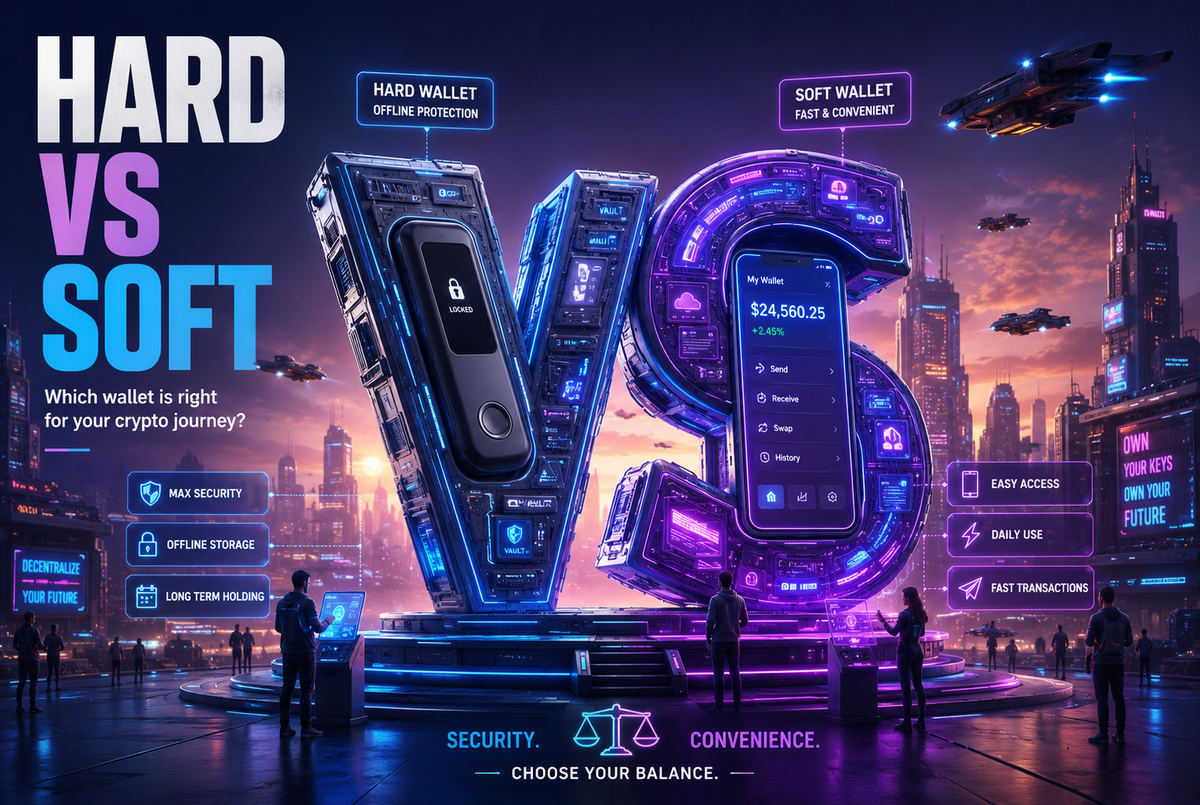
This is where the two wallet types diverge most sharply. Hard wallets keep your private keys offline, making them essentially immune to remote attacks. Soft wallets, on the other hand, store keys on internet-connected devices, which introduces real risk especially for users who aren't particularly security-conscious in their day-to-day habits.
That said, soft wallets have improved significantly over the years. Encryption, biometric authentication, and two-factor verification have all raised the baseline. But no amount of software security fully closes the gap that cold storage naturally creates.
Convenience
If you need to move fast, a soft wallet wins every time. Open the app, confirm a transaction, done. Hardware wallets require a physical connection, manual confirmation on the device, and an extra step or two at every turn. For active traders or DeFi users, that friction adds up.
Cost
Soft wallets are free. Hardware wallets are not. It's that simple and for new users still figuring out whether crypto is for them, a $150 upfront purchase can be a real barrier.
Best Use Cases
Hard wallets are ideal for long-term holders with meaningful amounts of crypto who don't need frequent access. If your goal is "buy and secure," a hardware wallet is your best bet.
Soft wallets are better suited for active traders, DeFi participants, NFT collectors, and anyone who needs real-time access to their assets. They're also the practical choice for beginners working with smaller amounts.
So, Which Should You Choose?
Here's the honest answer: it depends on what you're doing with your crypto.
If you're holding a significant amount that you don't plan to touch for a while, a hardware wallet is worth every penny. The peace of mind alone justifies the cost.
If you're actively trading, using DeFi apps, or just getting started with smaller amounts, a software wallet is probably the more practical choice just make sure you're following good security hygiene: strong passwords, two-factor authentication, and never storing your seed phrase digitally.
The Smart Move: Use Both
Many experienced crypto users don't pick one or the other they use both. The strategy looks like this: store the bulk of your holdings in a hardware wallet for maximum security. Then keep a smaller working amount in a soft wallet for day-to-day transactions, trading, and DeFi activity. You get the security of cold storage where it matters most, and the convenience of instant access where you need it.
It's a bit like keeping most of your money in a savings account while carrying a bit of cash in your wallet common sense, really.
Final Thoughts
Hard wallets and soft wallets aren't competitors so much as they are complementary tools. Understanding what each one does well and where each one falls short is what lets you build a setup that actually fits your life.
The crypto space moves fast and the stakes are real. Whether you're protecting a nest egg or navigating the latest DeFi opportunity, the right wallet setup can make all the difference.