Legal Services in Web3: The Importance of .Law Domains in Web3
Want a powerful online presence for your law firm? A .law domain can build trust and credibility. Let's explore why.

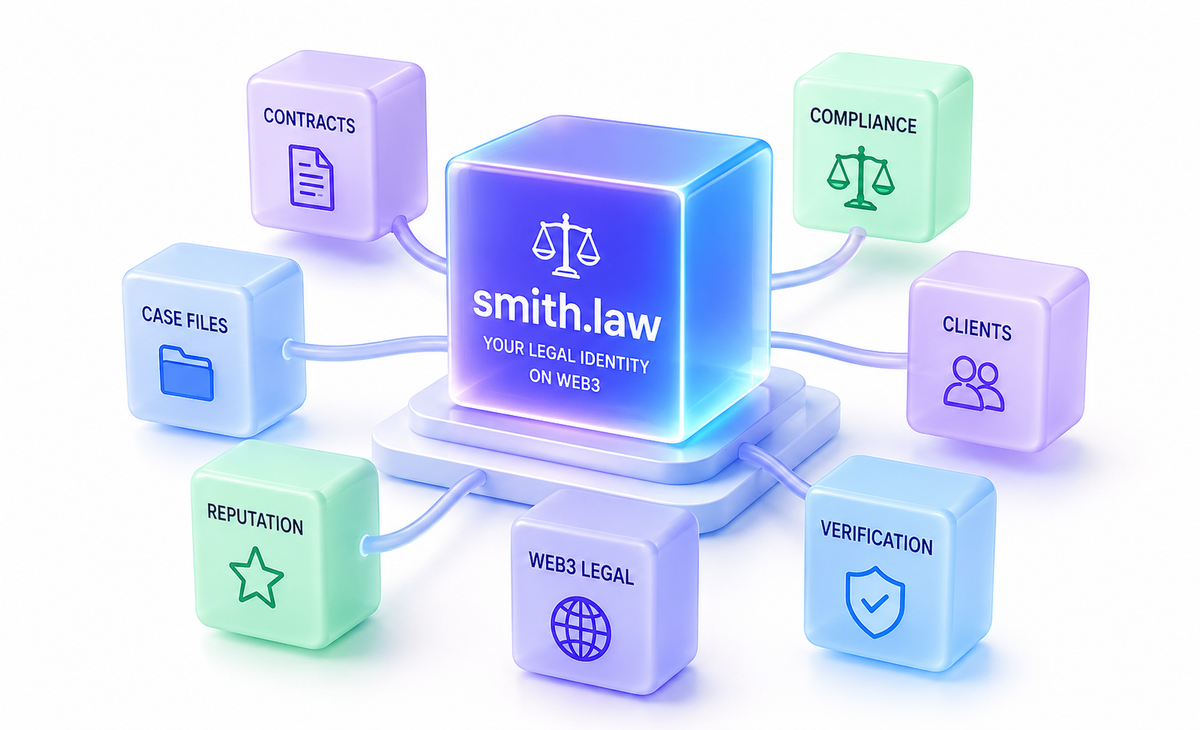
If you've been setting up your law firm's website lately, chances are you've already lost a few hours going down the rabbit hole of domain names. Which extension is best? Should you use your full firm name? What if the domain you want is already taken?
These are all valid questions and they matter more than most attorneys realize. According to recent research, roughly one in three clients now starts their search for a lawyer online. That means before a potential client ever reads your bio, sees your credentials, or picks up the phone to call your office, they've already made a snap judgment based on your web address.
So let's break it all down from why your domain name matters to how to choose one and actually buy it.
Why Lawyer Domain Names Matter
Think of your website as your firm's storefront on the internet. Just like the name above a brick-and-mortar office signals what kind of business operates inside, your domain name does the same thing in the digital world. It's often the very first impression a prospective client gets of your firm.
A strong domain name isn't just a marketing checkbox it's a genuine business investment. Clients will mentally associate your web address with your brand, your reputation, and the quality of service they expect. A clear, professional domain name invites people to click; a confusing or generic one sends them straight to a competitor.
The Case for a .Law Domain
In recent years, a newer domain extension has been gaining traction in the legal world: .law. Unlike the crowded .com space, this extension was designed specifically for verified legal professionals. Here's why it might be worth the extra investment:
Trust and Credibility
Only licensed attorneys and legitimate legal entities can register a .law domain the registry verifies credentials before granting access. That built-in vetting process sends a clear message to potential clients: this is a real law firm, not a scam site. In an industry where trust is everything, that matters.
Branding and Visibility
A .law domain is clean, easy to remember, and instantly communicates your industry. It also helps differentiate your firm from the sea of generic .com addresses that dominate search results. While search engine optimization (SEO) gains aren't guaranteed, many experts believe that a highly relevant domain extension can contribute positively to your online visibility.
Client Confidence
The verification process alone reassures clients that they're dealing with a credentialed professional. It also makes it straightforward for people searching for legal help to immediately understand what you do and who you serve.
Competitive Advantage
Most law firms still operate on .com or .net domains. Claiming a .law address now positions you ahead of that curve and as the legal industry continues its digital transformation, that early positioning could pay real dividends.
What Does a Domain Name Actually Cost?
For most new registrations, purchasing a domain name typically runs anywhere from $9 to $14.99 per year, according to major hosting platforms like Bluehost. However, that's for fresh, unclaimed domains.
If a domain you want is already owned by another firm or individual, the price is entirely up to the current owner and they can charge whatever the market will bear. A highly desirable domain like "NYCDivorceLawyers.com," for instance, could command a premium price if you tried to buy it outright from its current owner.
.Law domains generally cost more than .com domains due to the verification process and the exclusivity of the extension, so factor that into your budget if you're considering that route.
How to Pick the Right Domain Name for Your Law Firm
This is where a lot of attorneys get stuck. Here are the principles that matter most:
Keep It Relevant and Clear
Your domain should leave zero ambiguity about what your firm does. "SmithLawServices.com" works. "SmithSolutions.com" doesn't it could be a tech company or a plumbing service for all anyone knows.
Skip the Puns and Personal Touches
"TheDogLovingLawyer.com" might be charming in person, but it tells a stranger nothing about your legal services. Save the personality for your About page.
Keep It Short
Aim for under 25 characters if at all possible. Shorter domains are easier to type, easier to remember, and less prone to spelling errors. "NYDivorceLaw.com" is far more effective than "NewYorkDivorceAndFamilyLawAttorneys.com."
Ditch the Legal Jargon
Terms like "civil litigation" or "tortious interference" mean something to lawyers but they can confuse a first-time visitor who's just looking for help after an accident or a bad breakup. Plain language wins.
Avoid Hyphens and Special Characters
"NYC-Divorce-Lawyer.com" looks organized on paper, but in practice, people skip or misplace hyphens all the time. Stick with "NYCDivorceLawyer.com" and eliminate the guesswork.
Match Your Branding
If your firm is formally named "Henderson & Associates," something like "HendersonAssociatesLaw.com" creates consistency across your business cards, letterhead, and online presence. That consistency builds recognition and trust over time.
Think Long-Term
It's a real headache to switch domain names once your firm is established. Try to choose something that will still make sense if you expand your practice areas, add partners, or open additional offices down the road.
Lock Down Your Social Media Handles
Before you finalize any domain, search your top choices on LinkedIn, Facebook, Instagram, and X (Twitter). Ideally, you want the same handle available across all platforms consistent usernames make it much easier for clients to find and follow you.
Use Location and Practice Keywords Wisely
A domain like "ChicagoFamilyLaw.com" does double duty: it tells visitors what you do and where you do it, which is exactly the kind of information search engines reward. Just don't cram in so many keywords that the domain becomes a mouthful.
Protect Yourself From Trademark Issues
Before you get attached to a name, run it through the U.S. Patent and Trademark Office's (USPTO) database to make sure it doesn't infringe on an existing trademark. The last thing you need as a lawyer is a trademark dispute over your own domain.
3 Steps to Buying Your Law Firm's Domain Name
Once you've landed on the right name, here's how to make it yours:
Step 1: Check Availability
Use a domain name search tool most hosting providers offer one for free right on their homepage. These tools instantly show you whether your preferred domain is available and often suggest close alternatives if it's already taken.
Once you've confirmed availability, run a quick trademark search (USPTO.gov is a good starting point) to make sure you're in the clear legally.
Step 2: Choose a Hosting Provider
It's generally easiest to purchase your domain name directly through the same company that hosts your website. Many providers include a free domain name with a hosting plan, which saves you money and simplifies management.
Some well-regarded options for law firm websites include:
Do a bit of research before you commit look at uptime reliability, customer support responsiveness, and pricing for renewal years (not just the first year, which is often steeply discounted).
Step 3: Complete Your Purchase and Registration
Once you've chosen a provider, the actual purchase is usually a straightforward checkout process. One critical thing to remember: you don't own your domain name outright. You're essentially leasing it on an annual basis. Stop paying, and you lose the domain.
Most hosting providers send renewal reminders by email, but it's worth setting your own calendar reminder as a backup. A lapsed domain can get snatched up by someone else within days. Also note: keep your login credentials secure. Domain account access is sensitive treat it like you would any other important business credential.
What's Next for .Law Domains?
The .law extension is still relatively young, but the trajectory looks strong. A few trends worth watching:
More attorneys are making the switch
As digital marketing becomes a bigger part of law firm strategy, demand for .law domains is expected to grow significantly over the next few years.
Tighter security protocols are coming
There's ongoing discussion in the registry space about incorporating blockchain-based verification tools to make .law domains even more fraud-resistant.
Integration with legal tech is on the horizon
As case management platforms, e-filing systems, and client portals become more sophisticated, .law domains may eventually connect directly with those tools streamlining the experience for both attorneys and clients.
Niche specialization will increase
Expect to see more domain names that combine .law with specific practice areas or geographic markets, making it easier for clients to find exactly the legal help they need.
Challenges to Keep in Mind
That said, .law domains aren't without drawbacks. Registration fees are higher than standard .com domains. Popular name combinations in the .law space may already be claimed. The extension is still less recognized by the general public than .com. And the verification process, while valuable, does add an administrative step that some attorneys find time-consuming.
If you're switching from an existing domain to a .law address, factor in the cost of website redesign, updating marketing materials, and setting up redirects so you don't lose the traffic you've already built.
Final Thoughts
Your domain name is often the first thing a potential client sees and first impressions in the legal industry carry enormous weight. Take the time to choose a name that's clear, professional, and aligned with your firm's identity. Then secure it through a reputable hosting provider, stay on top of renewals, and protect your credentials carefully.
Done right, a strong domain name isn't just a web address. It's the foundation of your firm's entire online presence.