Metaverse and Web3: The Future of Virtual Reality
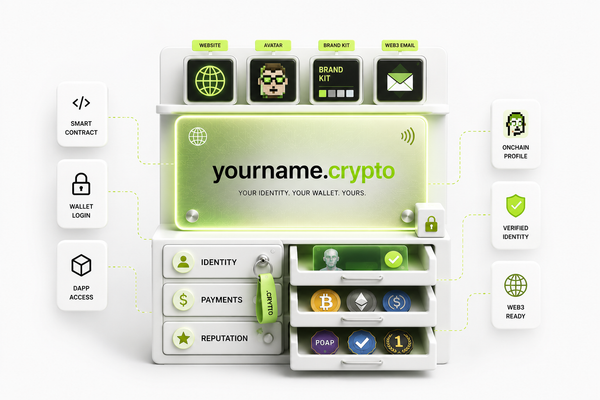
Web3 domains: Your key to a decentralized future. Explore how they're changing online interactions and ownership.

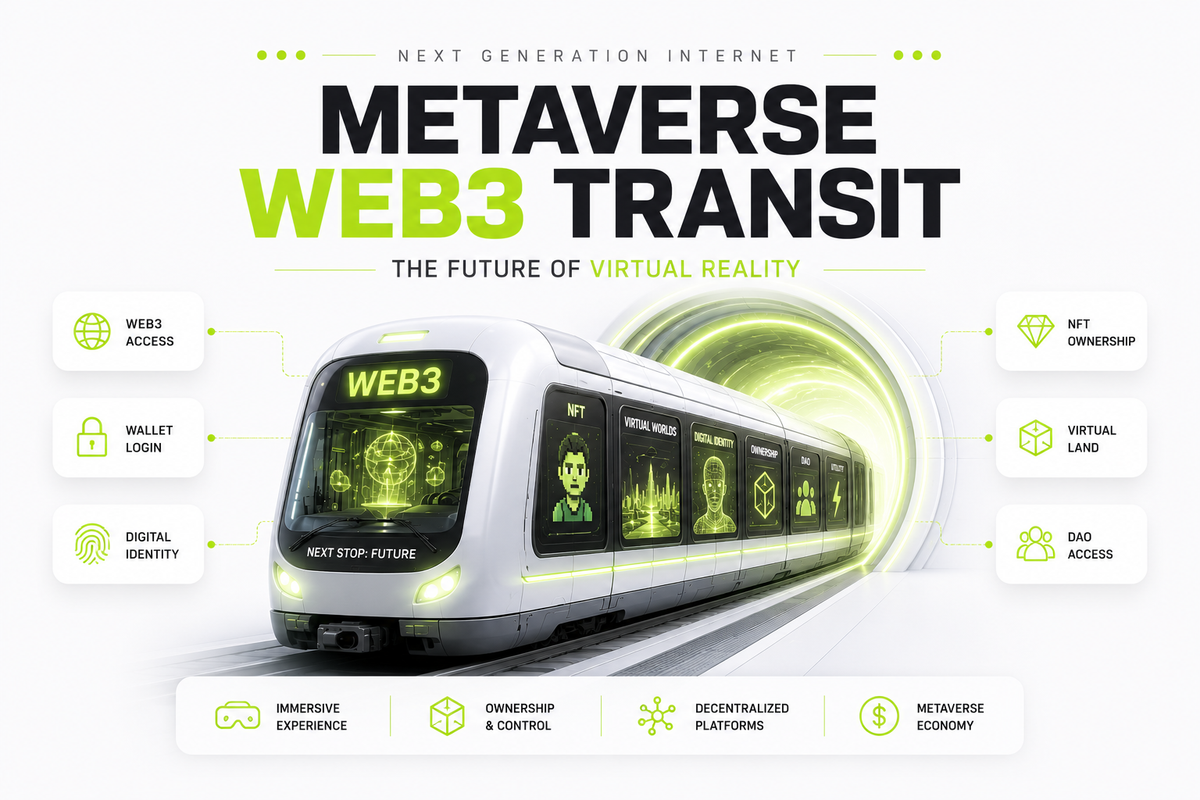
The internet has reinvented itself before. We went from static web pages to social media, from desktop browsers to smartphones. Each shift changed how we live and work in ways that felt unimaginable just a few years earlier. What's happening now feels just as significant maybe more so.
Web3 and the metaverse are no longer fringe concepts debated in tech forums. They're being actively built by some of the largest companies in the world Meta (formerly Facebook), Microsoft, Epic Games, and Roblox among them and they're quietly reshaping what the internet could look like for the next generation. For businesses, the window to get ahead of this shift is open right now. But it won't stay open forever.
Let's break down what's actually going on, why it matters, and what businesses should be thinking about.
What Is Web3, Really?
Strip away the jargon, and Web3 comes down to one core idea: giving users control over their own data instead of handing it to corporations.
The internet most of us use today sometimes called Web2 is built around centralized platforms. When you post on Instagram, store files in Google Drive, or sell products on Amazon, those companies hold your data. They decide how it's used, who sees it, and what happens to it. You're a tenant in someone else's building.
Web3, built on technologies like blockchain, flips that model. Instead of centralized companies managing databases and making decisions, Web3 uses decentralized networks where control is distributed among users. In these systems, the people using a platform have real influence over how it operates including governance decisions, pricing, and data ownership. Automated systems handle many of the rules that would normally require a company or intermediary to enforce.
It's a fundamentally different philosophy about who the internet belongs to and increasingly, the technology to make it real exists.
What Is the Metaverse?
If Web3 is about who controls the internet, the metaverse is about how we experience it.
Think of the metaverse as a persistent, three-dimensional online world where you don't just browse content you inhabit it. You could attend a work meeting as an avatar, walk through a virtual store before buying a product, take a class with students from around the world, or hang out with friends in a shared digital space, all without leaving your home.
It sounds futuristic, but the building blocks are already here. Millions of people spend hours a day in virtual environments through gaming platforms like Roblox and Fortnite. Remote work has normalized the idea of showing up somewhere digitally instead of physically. Augmented and virtual reality hardware is improving rapidly. The metaverse isn't a single product being launched on a specific date it's an evolution that's already underway.
Why These Two Things Are Happening Together
Web3 and the metaverse are distinct concepts, but they're developing in parallel for a good reason they need each other.
The metaverse creates rich, immersive digital environments. Web3 provides the infrastructure to let users actually own things within those environments: digital land, virtual goods, in-game assets, creative work, and more. Without Web3, the metaverse risks becoming just another centralized platform where a single company controls everything you own and experience online. With Web3, it becomes something genuinely new a digital world where users have real stakes and real rights.
Our existing digital habits are accelerating this convergence. Younger generations in particular are already deeply comfortable in virtual environments. Some studies suggest that many people now spend more time online than outside. The comfort with avatars, online socializing, remote collaboration, and digital ownership that's developed over the past decade is laying the cultural groundwork for what comes next.
The Real Business Opportunity
For companies paying attention, the opportunity here is substantial and it spans industries far beyond tech and gaming.
New products and services
The metaverse creates entirely new categories of offerings. Virtual real estate, digital fashion, immersive brand experiences, online events, NFT-based loyalty programs these are real revenue streams that forward-thinking businesses are already exploring. If your company sells physical products, there may be a version of that business that makes sense in a virtual world too.
Deeper customer relationships
Web3 gives consumers more control over their data but that also creates an opportunity for businesses that earn trust rather than just harvest data. Brands that build genuine, transparent relationships with their customers in this new environment could develop a kind of loyalty that's hard to replicate.
Operational efficiency
Smart contracts self-executing agreements built on blockchain can automate many business processes that currently require manual oversight, legal intermediaries, or slow settlement times. Finance, supply chain management, and contract administration are all areas where this technology could meaningfully cut costs and reduce errors.
Data at an unprecedented scale
The metaverse will generate enormous amounts of behavioral data how people move through virtual spaces, what they buy, how they interact. Businesses that build the analytical capability to make sense of this data responsibly will have a genuine competitive edge.
The Challenges Are Real, Too
It would be dishonest to paint this picture without acknowledging the significant obstacles involved. Anyone telling you this transition will be smooth is either naive or selling something.
Security is a serious concern
New technology always comes with new vulnerabilities, and the stakes in Web3 can be high. Crypto theft, smart contract exploits, and data breaches have already cost billions of dollars. As more of everyday life moves into these environments, the consequences of security failures grow proportionally. Businesses entering this space need to invest heavily in security infrastructure from day one not as an afterthought.
Regulation is still catching up
Governments and regulators around the world are genuinely struggling to figure out how to handle decentralized systems. Questions about taxation, data privacy, consumer protection, and financial oversight in the context of Web3 and the metaverse remain largely unresolved. The rules are being written in real time, which creates uncertainty for businesses trying to plan long-term.
Interoperability is a genuine technical challenge
Right now, most metaverse platforms and Web3 ecosystems don't talk to each other particularly well. Assets from one platform often can't be used in another. Standards are fragmented. For the metaverse to reach its potential, the industry needs to agree on common protocols a challenge that requires cooperation between companies that are, in many cases, direct competitors.
Social and ethical questions deserve serious attention
The metaverse has the potential to amplify both the best and worst aspects of social media. Misinformation, addiction, hate speech, and the blurring of physical and digital realities are all legitimate concerns. Companies building in this space have a responsibility to think carefully about the environments they're creating and the communities they're shaping.
What Businesses Should Actually Do
Given all of this, what's the right move for a business trying to navigate this transition intelligently?
Audit your current operations with fresh eyes
Where could decentralized protocols genuinely improve what you do? Where might a metaverse presence create real value for your customers? Don't force it but do ask the question honestly.
Invest in infrastructure before you need it
Building the capacity to operate in these new environments takes time. Network upgrades, cloud infrastructure, and talent with expertise in blockchain and immersive technologies aren't acquired overnight. The companies that start building now will be better positioned when demand accelerates.
Be willing to share control
This is perhaps the most counterintuitive shift for established businesses. Web3 is fundamentally about distributing power including power over customer data. Companies that learn to collaborate with their users rather than simply extracting value from them will thrive in this environment. Those that cling to old models of control will find themselves increasingly at odds with where the market is heading.
Think in terms of years, not months
Not every aspect of Web3 and the metaverse will develop on the same timeline. Some applications will scale quickly; others will take longer than anyone expects. The businesses that will come out ahead are those that take a long-term view, stay curious, experiment thoughtfully, and treat early missteps as learning opportunities rather than reasons to walk away.
Final Thoughts
Web3 and the metaverse represent the most significant shift in how the internet works since the rise of social media. That shift creates real opportunities for businesses willing to engage with it seriously and real risks for those that ignore it or approach it without thinking critically.
The technology is imperfect and still evolving. The regulatory landscape is unsettled. The cultural change required is significant. But the direction of travel is clear: toward a more decentralized, immersive, and user-owned internet. The businesses that understand that now, and start adapting their strategies accordingly, will have a meaningful advantage as this new landscape takes shape.
The question isn't really whether Web3 and the metaverse will matter for business. It's whether your business will be ready when they do.