What Are NFT Domains? Importance, Benefits, and Everything You Need to Know
NFT domains have emerged as a relatively new concept in the evolving landscape of Web 3.0. They have become an important starting point for anyone delving into web3.

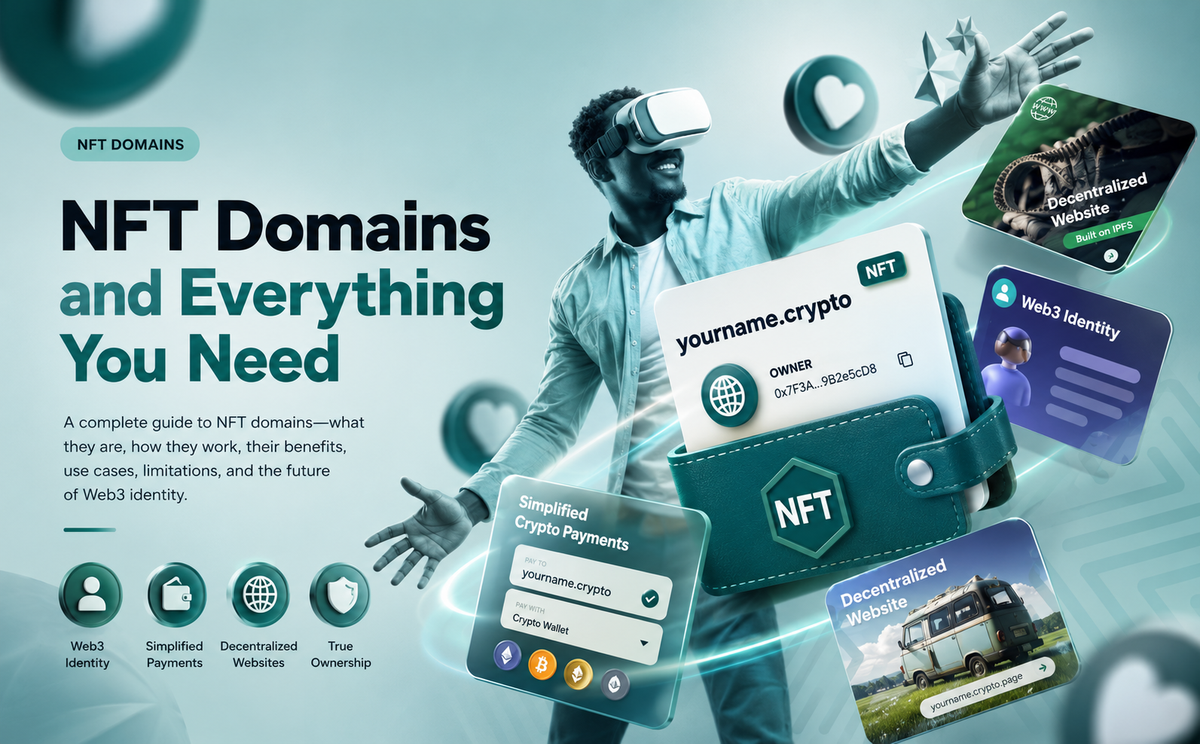
NFT domains have emerged as one of the most talked-about concepts in the evolving Web3 landscape. They've become an essential starting point for anyone exploring decentralized technology. But before diving in, it helps to understand where they came from and what problems they're designed to solve. So what exactly is an NFT domain? How does it work? And is it right for you? Let's break it all down, starting with what most of us already know: traditional web domains.
Understanding Web2 Domains
Domain names serve as the digital addresses for websites the text you type into your browser to reach a site. Under the hood, every website is identified by a numeric IP (Internet Protocol) address. The Domain Name System (DNS) was designed to make those addresses human-readable.
Think of IP addresses as GPS coordinates precise and functional but not easy to remember. Domain names are the street addresses: simple, memorable, and user-friendly. DNS servers act like phone books, translating domain names into IP addresses so your browser knows exactly where to go.
Problems With Traditional Domains
Web2 domains work well for most people, but they come with some notable drawbacks:
Centralized Control: All traditional domain names fall under the authority of ICANN (the Internet Corporation for Assigned Names and Numbers), an American nonprofit. ICANN can suspend or restrict any domain that violates its policies, meaning your digital address is never truly yours to control.
Leased, Not Owned: Purchasing a traditional domain doesn't mean you own it. You're essentially renting the right to use that name, typically on a one-to-ten-year basis. Miss a renewal payment, and your domain goes back on the market where anyone can grab it.
Cybersquatting and Scams: Bad actors monitor expiring domains and snap them up the moment they lapse. They then resell them to the original owners at inflated prices, or auction them off to the highest bidder.
Single Point of Failure: Because ICANN is a centralized system, a failure at the top can have cascading effects on the broader DNS infrastructure.
This is where NFT domains enter the picture.
What Is an NFT?
Before unpacking NFT domains specifically, it helps to understand NFTs in general. An NFT (Non-Fungible Token) is a unique digital asset recorded on a blockchain. Unlike a dollar bill or a Bitcoin, which are interchangeable with identical units each NFT is one of a kind. NFTs can represent artwork, virtual real estate, collectibles, or, in this case, domain names. They provide verifiable, tamper-proof proof of ownership stored directly on the blockchain.
What Is an NFT Domain?
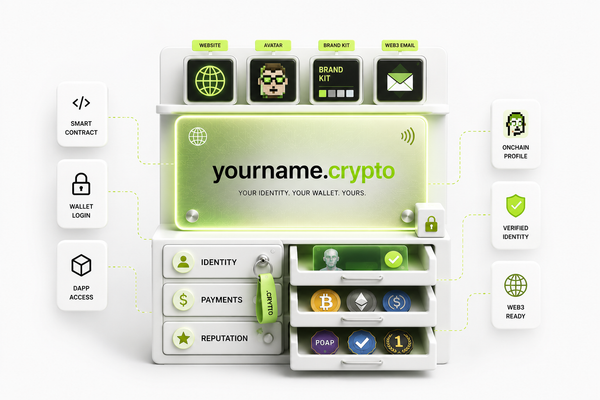
An NFT domain is a blockchain-based domain name that you actually own stored as an NFT in your crypto wallet. Rather than pointing to an IP address (as in web2), NFT domains typically map to cryptocurrency wallet addresses. That means instead of sending crypto to a string like 0x7f3A9B2e5cD8..., someone can simply send funds to yourname.crypto.
NFT domains use Top-Level Domains (TLDs) that are distinct from traditional web extensions. Common examples include .crypto, .eth, .nft, .blockchain, .bitcoin, .wallet, .sol, and .x.
How NFT Domains Actually Work
NFT domains are registered and managed through smart contracts on blockchain networks not through ICANN or traditional registrars. Here's how the process works, step by step:
1. Registration: You purchase an NFT domain through a marketplace like Endless Domains, Ethereum Name Service (ENS), or Unstoppable Domains. Different providers operate on different blockchains ENS runs on Ethereum, Bonfida's .sol domains run on Solana, and Unstoppable Domains primarily uses Polygon.
2. Minting: Your domain is minted as an NFT on the blockchain, creating a permanent, verifiable record of ownership tied to your crypto wallet (such as MetaMask or Phantom).
3. Wallet Mapping: Once minted, you link your domain to one or more cryptocurrency wallet addresses. This allows anyone to send you crypto using your readable domain name instead of a long alphanumeric string.
4. Decentralized Resolution: When someone enters your NFT domain into a supported browser or wallet, the system queries the blockchain to resolve the destination. Unlike traditional DNS which relies on centralized servers this lookup is verified across decentralized nodes on the network.
It's worth noting that most mainstream browsers (Chrome, Safari, Edge) don't natively support NFT domains yet. Users typically need a browser extension, a Web3-enabled browser, or a compatible gateway to access NFT-based websites.
What Can You Do With an NFT Domain?
NFT domains are far more versatile than a standard web address. Here are their three main use cases:
As a Wallet Address: NFT domains replace long, error-prone crypto wallet addresses. Instead of copy-pasting a 42-character string, you or others can simply send funds to something like alex.eth or trader.crypto.
As an Actual Website Address: NFT domains can host decentralized websites through distributed storage systems like IPFS (InterPlanetary File System) or Arweave. These sites are stored across decentralized networks, making them significantly harder to take down than traditional hosted websites.
As a Web3 Identity: As Web3 matures, NFT domains are increasingly used as universal usernames linking your crypto wallet, NFT profile, gaming identity, and decentralized social media presence under a single, verifiable handle.
Like any NFT, you can also buy, sell, and hold them as digital assets.
Benefits of NFT Domains
True Ownership: When you hold an NFT domain, you own it full stop. There's no registrar who can revoke it, no annual renewals to forget, and no risk of a centralized authority suspending it.
Simplified Crypto Transactions: Sending crypto to a human-readable name dramatically reduces the risk of errors. It's one of the most practical quality-of-life improvements NFT domains bring to everyday blockchain use.
Decentralized Web Hosting: NFT domains make it possible to host websites on distributed networks like IPFS, where content isn't stored on a single server that can be targeted or shut down.
Web3 Identity Integration: NFT domains connect seamlessly with crypto wallets, NFT marketplaces, decentralized finance (DeFi) platforms, blockchain games, and decentralized social networks creating a cohesive digital identity across the Web3 ecosystem.
Censorship Resistance: Because they exist on decentralized networks, NFT domains and the sites they host are much harder to suppress than traditional domains. That said, censorship resistance isn't absolute governments can still restrict access through regulations, browser-level controls, or gateway blocking.
Digital Asset Value: Premium NFT domain names can hold significant resale value, similar to how valuable traditional domain names are bought and sold. Some are treated as long-term digital investments.
Disadvantages of NFT Domains
Limited Browser Support: This is the biggest barrier to mainstream adoption today. Chrome, Safari, and Edge don't natively resolve most NFT domains. Users need browser extensions, Web3 browsers, or third-party gateways which creates friction for everyday users.
Technical Learning Curve: Despite the promise of simplicity, NFT domains still require familiarity with crypto wallets, private keys, gas fees, NFTs, and blockchain transactions. For non-technical users, setup can feel overwhelming.
Security Risks: Blockchain technology is secure by design, but users are entirely responsible for protecting their own wallets and private keys. If you lose wallet access or fall victim to a phishing attack, recovering your domain may be impossible there's no customer support line to call.
Privacy Trade-Offs: NFT domains are often marketed as private, but blockchain transactions are publicly visible. Wallet activity linked to your domain can potentially be traced on-chain, which is a meaningful trade-off compared to the expectations many users bring.
Blockchain Dependence: Your NFT domain exists on a specific blockchain. If that blockchain is deprecated or shut down, your domain may become inaccessible or worthless.
Scalability Challenges: As Web3 domains grows, blockchain networks can face congestion resulting in slower transactions and higher fees, especially on networks like Ethereum.
No Universal Legal Framework: Traditional domains have ICANN and the UDRP (Uniform Domain-Name Dispute-Resolution Policy) to handle trademark disputes. NFT domains have no equivalent yet. If someone registers your brand name as an NFT domain, your legal options are murky at best. Questions around intellectual property, illegal content on decentralized websites, and government regulation are all still being worked out.
How to Purchase an NFT Domain
Buying an NFT domain follows a process similar to purchasing any other NFT:
- Choose a Marketplace: Select a reputable NFT domain provider such as Endless Domains, Ethereum Name Service (ENS), or Unstoppable Domains. You can also find NFT domains listed for resale on broader marketplaces.
- Create an Account: Sign up on your chosen platform if you don't already have one.
- Browse Available Names: Search for your desired domain name and explore available extensions (.eth, .crypto, .nft, .bitcoin, etc.). Pricing varies by TLD and name popularity.
- Complete Payment: Depending on the marketplace, you can pay with cryptocurrency, credit card, or other accepted payment methods.
- Mint Your Domain: This is the key step. Minting registers your domain on the blockchain, creating a permanent record that establishes you as the verified owner. After minting, you'll have both a web address and a cryptocurrency wallet address tied to your domain stored securely in your crypto wallet.
Should You Buy an NFT Domain?
NFT domains are still a relatively new technology, and they're not for everyone right now.
If you're just starting a personal blog or a small online business, a traditional domain is likely all you need for the foreseeable future. The Web3 infrastructure to make NFT domains work seamlessly simply isn't mainstream yet.
However, if you run an established business and want to accept cryptocurrency payments, build a Web3 brand presence, or get ahead of the curve in decentralized identity, exploring NFT domains makes sense. They can simplify your payment flows and signal your engagement with the Web3 ecosystem to a growing audience.
They're also worth considering as a digital asset investment premium names in popular TLDs have appreciated significantly in some cases.
Final Thoughts
NFT domains represent a meaningful shift in how digital identity and ownership can work. By replacing centralized registrars with blockchain-based ownership, they give users true control over their online presence and simplify the way people interact with crypto ecosystems.
That said, the technology is still maturing. Browser compatibility, technical complexity, regulatory uncertainty, and the absence of legal dispute frameworks remain real obstacles to widespread adoption. Projects like Ethereum Name Service, Unstoppable Domains, and Endless Domains are pushing the space forward, but NFT domains are still early-stage compared to the global DNS infrastructure that's been in place for decades.
As blockchain literacy grows and Web3 infrastructure improves, NFT domains are likely to become a much bigger part of how people manage digital identity, receive payments, and publish content online. Understanding both their promise and their limitations is the best place to start.