How On-Chain Reputation Systems Are Revolutionizing Professional Networking
On-chain reputation systems revolutionize professional networking by enabling transparent, tamper-proof, and verifiable digital credentials through blockchain technology.

Professional networking has always come down to one thing: trust. Can I trust that your credentials are real? Can I trust that your endorsements are genuine? Can I trust that the person I'm about to hire, collaborate with, or do business with is exactly who they say they are?
For years, we've relied on centralized platforms to answer those questions. And for years, those platforms have come up short. Fake profiles, inflated resumes, and recommendations written by friends rather than colleagues have quietly eroded the reliability of online professional networking. The systems we depend on were simply never built with verification in mind.
That's changing now, thanks to on-chain reputation systems. Built on blockchain technology, these systems are creating a new standard for professional credibility, one where your skills, achievements, and endorsements are stored permanently, verified independently, and owned entirely by you. No middlemen, no manipulation, no guesswork.
This blog breaks down what on-chain reputation systems are, why they matter, and how they're already starting to reshape the way professionals connect and build trust in a digital world.
What Are On-Chain Reputation Systems?
At their core, on-chain reputation systems are a way of storing and verifying professional information directly on the blockchain. Instead of trusting a company or platform to vouch for your credentials, the blockchain itself becomes the source of truth.
Here's how it works. When you earn a certification, complete a project, or receive an endorsement, that information is recorded as a verifiable entry on the blockchain. It's permanent, tamper-proof, and accessible to anyone who needs to confirm its authenticity. No phone calls to HR departments, no chasing down former employers, no wondering whether a recommendation is real.
Three principles drive these systems. Decentralized Domains storage means information lives across a distributed network of computers rather than on a single server, making it nearly impossible to alter or delete. Transparency means anyone with access can verify the data, so there's genuine confidence in what's being shared. And user control means individuals own their records and decide who gets to see them.
The contrast with traditional systems is stark. Right now, your professional data lives on servers owned by companies whose interests don't always align with yours. They decide how your profile is ranked, what's visible, and what gets collected. On-chain systems flip that dynamic entirely. Your credentials belong to you, full stop.
In a world where remote work, cross-border hiring, and freelance collaboration are becoming the norm, having a professional identity that's universally verifiable and genuinely trustworthy isn't just a nice idea. It's a practical necessity.
The Real Problems with Traditional Professional Networking
It's worth being specific about what's broken, because the problems with platforms like LinkedIn go deeper than most people realize.
Fake profiles and inflated credentials are more common than the platforms like to admit. Anyone can claim to have managed a team of 50 people or led a product launch worth millions. There's no mechanism to verify it. Recruiters have learned to take resumes with a grain of salt, which wastes everyone's time and introduces doubt into relationships that should be built on confidence.
Centralized control over your data is another serious issue. The platform decides how your profile is ranked. It decides what's visible to whom. It decides what data gets collected and how it's used. Want more visibility? Pay for the premium. This creates an uneven playing field where your professional opportunities depend less on your actual abilities and more on your willingness to pay for algorithmic favor.
Unverifiable endorsements round out the problem. Recommendations and skill endorsements sound great in theory, but in practice, they're largely meaningless. A glowing review from a colleague could reflect genuine expertise or it could be a favor between friends. There's no way to tell. That uncertainty chips away at the value of the entire endorsement system.
Put these three issues together, and you get a professional networking environment where trust is fragile, opportunities are distorted by algorithms, and the people who genuinely deserve recognition often get lost in the noise. It's a real problem, and it's one that traditional platforms have shown little appetite for solving.
How On-Chain Reputation Systems Fix This
Blockchain-based reputation systems don't just patch these problems. They address them at the root.
Immutable records mean that once a credential is on the blockchain, it stays there unchanged. A university issues a blockchain-based Names diploma, and it's permanently linked to your profile. A certification program records your completion on-chain, and any employer can verify it in seconds without contacting the institution. There's no room for embellishment because the record speaks for itself.
Decentralized and verifiable endorsements change the recommendation game entirely. In on-chain systems, endorsements are tied to the verified identity of the person giving them. A recommendation from a teammate on a completed project isn't just a written statement. It's a verifiable, blockchain-recorded entry linked to a real person with a real track record. That's a fundamentally different level of credibility than a LinkedIn recommendation that could have been written by anyone.
User control over data is one of the most practically important benefits. You decide which credentials to share, with whom, and when. A freelancer can show a client their relevant skills and project history while keeping other details private. There's no platform sitting in the middle making those decisions for you.
A few platforms are already putting this into practice. Lens Protocol is a blockchain-based social network where users build verifiable digital identities, complete with skills, endorsements, and permanent professional profiles. The Open Badges project on Ethereum issues verifiable certificates stored entirely on-chain. BrightID helps users link their real-world identity to blockchain-based systems, establishing trust without sacrificing privacy.
These aren't hypothetical tools. They're working products that professionals are using right now.
Building a Verifiable Professional Identity
One of the most compelling aspects of on-chain reputation systems is how they change the very concept of a professional profile.
Traditional profiles are, essentially, self-reported. You write down your degrees, your jobs, your skills, and hope that whoever reads it believes you. On-chain profiles work differently. Every entry is backed by verified data, which means your profile isn't just a description of who you are. It's a proof.
For professionals across fields, this opens up real possibilities.
A job seeker can point an employer directly to a blockchain-verified diploma, removing any need for the employer to contact the university independently. A freelancer can build a portfolio where every completed project is linked to a verifiable record of delivery and client satisfaction. A developer can display certifications that were issued directly on-chain by the training program, making their skills instantly credible to any technical hiring manager.
For remote workers and cross-border collaborations, this is especially valuable. Verifying credentials internationally is slow and frustrating under the current system. It often involves translating documents, contacting foreign institutions, and waiting days or weeks for confirmation. On-chain verification collapses that process to a matter of seconds. A software developer in India can prove their qualifications to a client in the US without either party jumping through bureaucratic hoops.
Creatives and freelancers also benefit in ways that go beyond credentials. An artist can link their completed work to their blockchain profile as NFT Domains, creating a portfolio that is both authentic and permanently accessible. A writer can store published work on decentralized platforms and connect it directly to their professional identity. The portfolio becomes part of the reputation, not just a separate website that could go down or be altered.
Decentralization Is Changing How Professionals Actually Connect
Beyond individual profiles, on-chain reputation systems are changing the structure of professional networking itself.
Traditional networking happens through platforms that control the connections. They decide what you see, who sees you, and how visible your profile is. Decentralized networking removes that layer entirely. You connect directly, peer-to-peer, with the blockchain, providing the trust layer that makes those connections meaningful.
This has practical implications across a range of industries.
In freelancing, a designer or developer can use their on-chain profile to prove their skills, share their portfolio, and negotiate contracts without a platform taking a cut or controlling the relationship. A domain like JaneDesign.eth becomes their professional identity, one they own completely and can take anywhere.
In consulting, verified records of past projects and client endorsements create instant credibility with new prospects. A marketing consultant with a solid on-chain reputation doesn't need to spend half of every sales call trying to establish trust. The blockchain does that work upfront.
In remote hiring, employers and candidates can verify each other's credentials before a single conversation takes place. This is especially useful in international hiring, where traditional verification methods can drag on for weeks and still leave both sides uncertain.
The through line in all of these cases is the same: trust that used to depend on a platform or an intermediary now lives on the blockchain, where it can be verified by anyone, at any time, without asking anyone's permission.
Challenges Worth Acknowledging
On-chain reputation systems have real promise, but it would be misleading to present them as a finished solution. There are genuine obstacles to widespread adoption.
Scalability is one. Blockchains like Ethereum can get congested during periods of heavy use, which drives up transaction fees and slows processing times. For a system that needs to handle millions of credential verifications globally, that's a significant limitation. Solutions like Layer 2 networks are helping, but it's still a work in progress.
Awareness is another. Most professionals have never heard of on-chain reputation systems, and the ones who have often aren't sure how to use them. LinkedIn has decades of brand recognition and hundreds of millions of users. Decentralized alternatives are starting from a much smaller base.
Integration with existing systems is the third hurdle. Most employers and HR departments are set up to use traditional platforms and verification tools. Until on-chain credentials can plug seamlessly into those existing workflows, adoption will remain limited to early movers in the Web3 Domain space.
These are real challenges, not excuses to dismiss the technology. They're the kinds of friction that every transformative technology has had to work through, and the progress being made on each of them is steady.
Where This Is Headed
The future potential here is significant and worth thinking through carefully.
As decentralized autonomous organizations (DAOs) become more common, on-chain reputation systems become essential infrastructure. DAOs need reliable ways to evaluate members for voting rights, project roles, and resource allocation. A verified on-chain reputation is the natural answer.
As the metaverse develops into a genuine professional space, virtual hiring, collaboration, and networking will need trusted identity systems. On-chain profiles can bridge the gap between real-world credentials and virtual professional environments in ways that no centralized platform can match.
And as cross-industry recruitment continues to globalize, the ability to verify skills and credentials instantly, across borders and across institutions, will become a competitive advantage for any organization that adopts it. Healthcare, education, technology, and finance are all fields where credential verification matters enormously and where the current process is frustratingly slow.
Final Thoughts
On-chain reputation systems aren't solving a small problem. They're addressing one of the most fundamental challenges in professional life, which is that the systems we use to establish trust were never built to be trustworthy.
Fake profiles waste everyone's time. Unverifiable endorsements undermine the value of genuine recommendations. Centralized control over professional data creates unfair advantages and real privacy risks. These aren't minor inconveniences. They're structural flaws that affect how careers are built, how talent is found, and how professional relationships are formed.
Blockchain-based reputation systems fix these flaws at the foundation. They don't just make existing processes slightly better. They create a fundamentally different model, one where trust is built into the architecture rather than assumed.
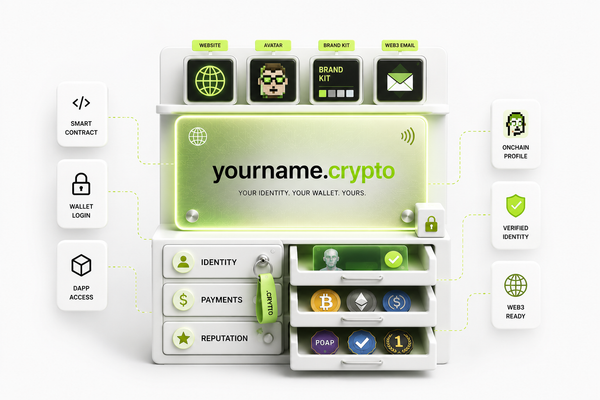
For professionals who want to get ahead of this shift, the first practical step is establishing a presence in the decentralized web. Securing a Web3 domain through a platform like Endless Domains is one of the simplest ways to do that, giving you a verifiable digital identity that you own outright and can carry with you as this ecosystem grows.
The future of professional networking is decentralized. The tools are already here. The question is simply who moves first.