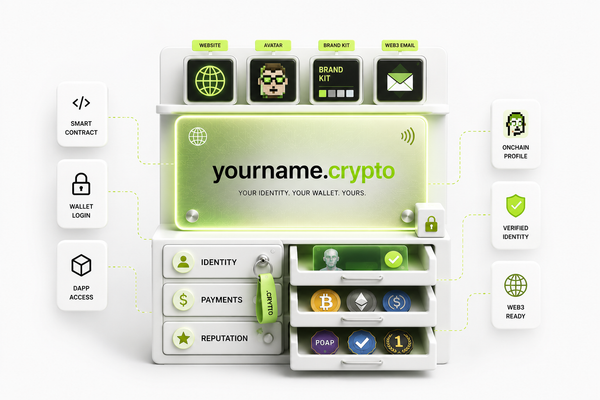
How Parked Domains Can Generate Passive Income in 2025
In 2025, parked domains will offer lucrative passive income opportunities through ad monetization, affiliate links, and premium domain leasing.

Most people think of a domain name as something you buy when you're ready to build a website. You register it, you build something on it, and that's the end of the story. But there's a whole other way to think about domain names, one that a growing number of investors and business owners are quietly using to generate steady income without building anything at all.
It's called domain parking, and in 2025, it's becoming one of the more accessible and underappreciated strategies in the digital investment space.
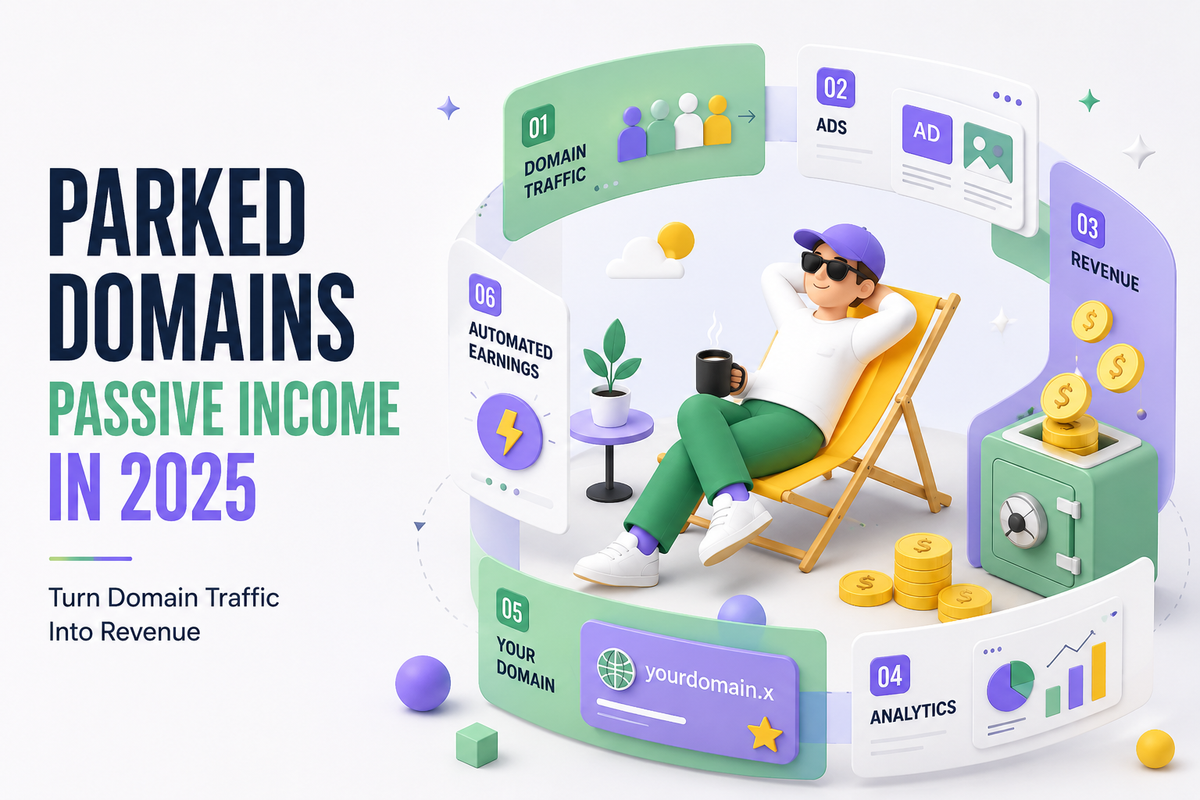
The concept is straightforward. You register a domain name, or you already own one that isn't being actively used, and instead of letting it sit idle, you put it to work. A simple landing page displays ads, affiliate links, or lead capture forms. Visitors land on the page, interact with the content, and you earn money, typically through pay-per-click advertising or commission-based programs. No product to sell, no content to create, no customer service to manage.
That's the appeal. But like any investment strategy, the results depend heavily on which domains you choose, how you monetize them, and whether you stay on top of how the market is evolving. This blog covers all of it.
What Is a Parked Domain, Exactly?
A parked domain is a registered domain name that isn't being used to host an active website. Instead of a full site with pages, products, and regularly updated content, a parked domain typically displays a minimal landing page designed to generate revenue passively or hold the domain's value until it's developed or sold.
The distinction from an active website is important. An active website like OnlineShop.com might have a full e-commerce platform, a blog, and dozens of pages. A parked domain like OnlineShoppingDeals.com shows a simple page with relevant ads while the owner waits to develop it, sell it, or lease it to someone else.
Domain parking fits into a broader practice called domain investing, where individuals and businesses acquire domain names strategically with the intent of profiting from them over time. There are a few different ways this plays out in practice.
Some domain investors register names they believe will be valuable in the future, parking them while they wait for the right buyer or the right moment to develop them. Others focus on domains that already attract natural traffic, monetizing that traffic through ads or affiliate programs from day one. Still others lease their parked domains to businesses that want a professional web address for a marketing campaign or a temporary project without committing to a full purchase.
Each of these approaches has its own logic, and often a single domain can cycle through several of them over its lifetime.
How Parked Domains Actually Make Money
There are four main ways domain owners monetize parked domains, and most experienced investors use a combination of them depending on the domain's characteristics and the traffic it attracts.
Pay-per-click advertising is the most common starting point. Parking services like Sedo, GoDaddy, and Namecheap allow domain owners to display targeted ads on their parked pages. Every time a visitor clicks an ad, the domain owner earns a small amount. The parking service handles the ad placement automatically, analyzing visitor behavior to serve relevant ads that are more likely to get clicks.
The key to making this work well is owning domains that attract organic visitors. A domain like LuxuryWatches.com is going to attract people already interested in luxury watches, which means the ads displayed will be highly relevant, and the click-through rate will be meaningfully higher than a generic domain with random traffic. A domain investor holding EcoVacations.com can earn a steady income through ads promoting eco-friendly travel services without doing anything beyond registering the domain and setting up the parking page.
Affiliate links offer a more targeted approach. Instead of displaying broad advertising, the domain page features direct links to specific products or services through affiliate partnerships. When a visitor clicks through and makes a purchase or signs up for a service, the domain owner earns a commission.
This works especially well for domains with a clear niche audience. BestFitnessGear.com, pointing visitors toward gym equipment or fitness app subscriptions, or CryptoInvestments.com linking to trading platforms and wallet services, are both examples of domains where the name itself does a lot of the work in attracting the right visitors and converting them into affiliate revenue.
Lead generation is another effective monetization method, particularly for domains tied to high-value industries. Instead of ads or affiliate links, the landing page hosts a simple form where visitors submit their contact information or request a quote. Those leads are then sold to businesses actively looking for potential customers in that space.
A domain like WeddingPlanners.com, collecting inquiries from couples looking for vendors, or RealEstateDeals.com generating leads for property agents, can be surprisingly lucrative when the leads are sold to multiple buyers. Industries with high customer acquisition costs, including real estate, legal services, financial planning, and healthcare, are particularly well-suited to this model because the leads are genuinely valuable to the businesses buying them.
Domain leasing is the fourth major strategy and offers something the others don't: recurring, predictable income without giving up ownership. A business that wants to test a new brand, run a temporary marketing campaign, or simply needs a professional web address for a limited period can lease a domain for a monthly or annual fee. The domain owner collects the rent and retains full ownership when the lease ends.
A premium domain like TechSolutions.com leased to a tech startup for branding purposes generates reliable income while the owner holds onto an asset that may be worth considerably more in the future.
Why 2025 Is a Particularly Good Time for Domain Parking
Domain parking has existed for decades, but several converging trends are making it more profitable and more accessible right now than it has been in the past.
The demand for premium domain names is genuinely rising. As more businesses, creators, and organizations move their operations online, the competition for memorable, relevant domain names increases. Short, catchy, industry-specific domains are becoming harder to find and more expensive to acquire. That scarcity drives up the value of domains that are already registered, which benefits anyone sitting on quality names.
The e-commerce boom is a significant driver of this demand. Online retailers launching new product lines actively seek out domains that align with their branding, and they're willing to pay meaningful sums for the right name. Web3 and blockchain industries add another dimension, with startups competing for blockchain-based domains like .crypto and .x to establish their presence in the decentralized ecosystem.
On the technology side, domain parking services have become significantly more sophisticated. AI-powered ad targeting now allows parking platforms to match visitor intent with highly relevant ads, which increases click-through rates and, by extension, revenue for domain owners. Enhanced analytics give owners detailed visibility into traffic patterns and performance metrics, making it much easier to identify which domains are performing well and which need a different strategy. Dynamic, customizable landing pages improve user engagement in ways that static placeholder pages never could.
Taken together, these developments mean that domain parking in 2025 is a more data-driven, more profitable, and more scalable strategy than it was even a few years ago.
Platforms Worth Knowing About
Choosing the right parking platform makes a real difference in how much you earn and how easily you can manage your portfolio.
Sedo is one of the most established names in domain parking globally. It offers PPC ad integration, strong analytics, and broad international reach, making it a solid choice for high-value domains with traffic from multiple regions.
GoDaddy combines domain registration with parking services and is particularly user-friendly for beginners. Its localized support and traffic insights make it a practical choice for owners in markets like India and the UAE.
Namecheap is a good option for those just starting out or managing smaller portfolios. It's affordable, reliable, and accessible without requiring a steep learning curve.
Hilco Streambank caters specifically to domain brokerage and monetization in markets like the UAE, offering tailored strategies for investors focused on that region.
Alibaba Cloud Domains serves the Chinese market specifically, providing parking solutions optimized for local regulations and consumer behaviour.
For domain owners interested in blockchain-based domains specifically, Endless Domains operates as a trusted marketplace for buying, selling, and trading Web3 domains. While it isn't a traditional parking service, it plays an important role in the domain monetization ecosystem by connecting blockchain domain owners with buyers in the Web3 space. Domains like .eth and .sol acquired through Endless Domains can be held, resold, or positioned for future development as the blockchain domain market continues to mature.
Practical Tips for Getting the Most Out of Your Parked Domains
Owning parked domains is the easy part. Maximizing what they earn requires a bit more intentionality.
Start with high-value keywords and niches. Not all domain names are created equal when it comes to parking income. Domains associated with popular search terms in high-spending industries, such as finance, technology, health, real estate, and e-commerce, attract more valuable ads and more motivated visitors. Tools like Google Keyword Planner and SEMrush can help you identify niches where advertiser demand is strong, and competition for clicks drives up the per-click value.
Prioritize domains with traffic potential. A parked domain that nobody visits isn't generating any income. The most profitable parked domains are ones that attract natural, organic visitors, either because the name is a commonly searched phrase, because it's a memorable brand-style name that people type directly, or because it previously hosted an active site with an existing audience. Use tools like Ahrefs or Moz to evaluate a domain's traffic history before investing in it.
Track performance consistently. Most parking platforms provide analytics dashboards that show visitor numbers, click-through rates, and revenue over time. Use that data actively rather than setting up your domains and forgetting about them. If a domain isn't performing well with one monetization approach, it might do better with another. Testing different ad formats, landing page layouts, or affiliate programs can reveal meaningful differences in revenue.
Diversify across monetization methods. Relying entirely on PPC ads caps your earning potential. The most effective domain portfolios combine multiple monetization approaches. A domain like LuxuryVillas.com could display vacation rental ads while also hosting a lead generation form for real estate inquiries and including affiliate links to booking platforms. Each layer adds incremental revenue from the same underlying traffic.
Is Domain Parking Right for You?
Domain parking sits at an interesting intersection of digital investment and passive income. It doesn't require technical skills, it doesn't demand ongoing content creation, and it scales reasonably well once you understand which types of domains perform best.
The honest caveat is that not every domain earns meaningful income. Generic names with no traffic and no obvious audience won't generate much through parking alone. The strategy works best for investors who are thoughtful about which domains they acquire and who stay engaged with performance data over time.
But for those willing to do that work upfront, domain parking offers something genuinely valuable in 2025: a way to hold digital assets that generate returns while you decide what to do with them long-term. Whether that means earning passive income from ad clicks, building a lead generation business, leasing to companies that need temporary web addresses, or holding premium names until the right buyer comes along, the options are real, and the market for quality domain names is only growing.
If you're interested in exploring the blockchain domain side of this market, Endless Domains is a practical starting point. The platform makes it easy to discover, acquire, and eventually monetize blockchain-based domains in a space that's still early enough for well-positioned investors to get ahead of the curve.
The digital real estate market is open. The only question is whether you're going to participate in it.