Polygon Domains: A Beginner's Guide to Web3 Identity on Polygon
Polygon domains: Your Web3 identity, simplified. Own your online presence in the decentralized future.

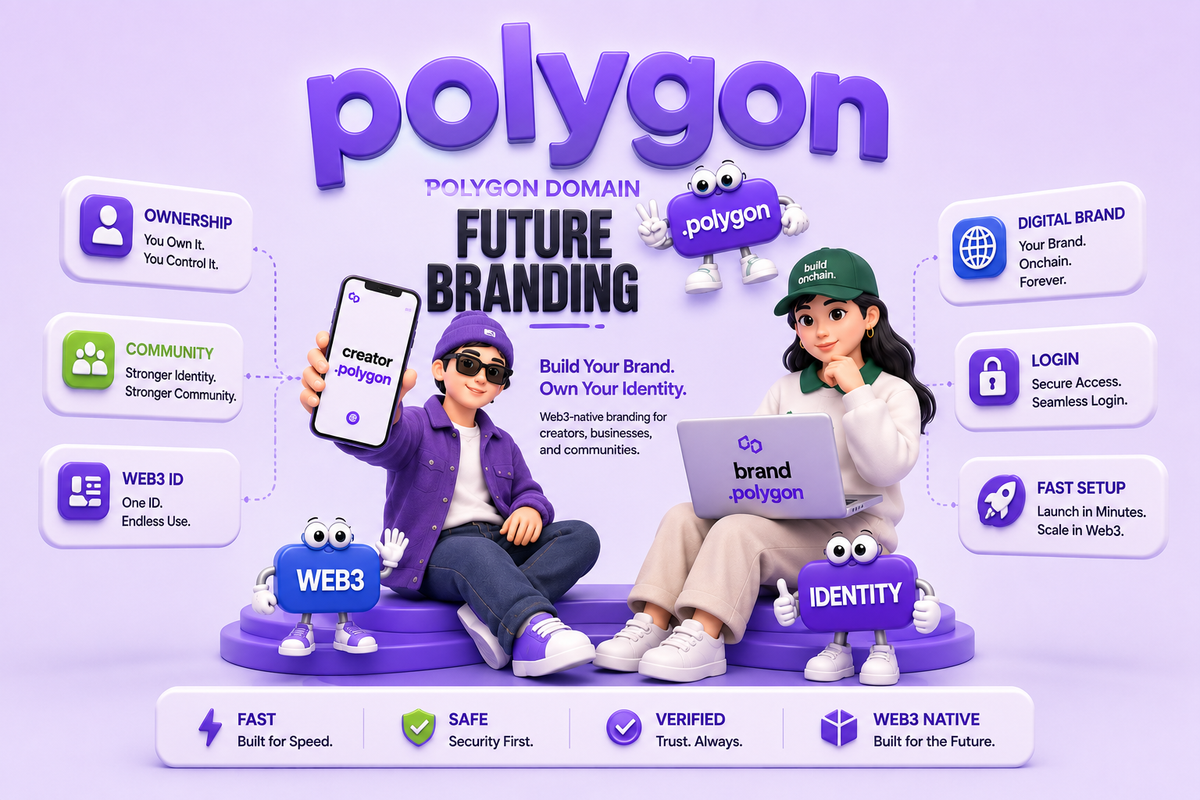
If you've been anywhere near the Web3 space lately, you've probably heard the buzz around ".polygon" domain names. Unstoppable Domains and Polygon Labs teamed up to launch the extension, and the pitch is simple: make navigating Web3 as easy as typing a username instead of a 42-character wallet address. The partnership taps into Polygon's sprawling ecosystem hundreds of dApps, games, and metaverses and, thanks to Polygon's low-cost network, minting one of these domains doesn't have to cost you a dime in gas.
Let's break down what Polygon domains actually are, why people are excited about them, and what to watch out for before you buy one.
What Exactly Is a Polygon Domain?
With millions of domains already minted on the Polygon network, ".polygon" names are shaping up to be a meaningful upgrade to how people experience Web3. A bit of background: Polygon started life as Matic Network before rebranding, and its core mission has always been the same solve Ethereum's scalability problem. Polygon works as a "layer two" network, processing transactions faster and cheaper while still settling back to Ethereum for security.
Polygon domains are the Web3 equivalent of a ".com" or ".org" address, except instead of being registered with a domain registrar, they live on the blockchain as NFTs. One important detail: Polygon Labs doesn't actually run the domain registration itself. Unstoppable Domains, an independent company, handles the minting and distribution.
How Polygon Actually Works Under the Hood
Polygon's architecture is built around three layers that each handle a different job:
- The Ethereum layer is a set of smart contracts deployed on Ethereum itself. This is where staking, dispute resolution, and "checkpointing" (the process that finalizes Polygon transactions back on Ethereum) all happen.
- The Heimdall layer is Polygon's proof-of-stake validation layer. Validators here stake MATIC (now POL) tokens, monitor the network, and periodically bundle up Polygon's transaction history into a "checkpoint" that gets committed to Ethereum.
- The Bor layer is where the actual transaction processing happens. Bor nodes are the workhorses that produce blocks and execute transactions quickly, while Heimdall handles the consensus and security side of things.
Put together, this setup lets Polygon offer Ethereum-level security with far better speed and far lower fees which is exactly why something like a free-to-mint domain name is possible in the first place.
Why People Are Choosing Polygon Domains
Polygon has carved out a reputation as one of the more developer- and user-friendly chains in the space, and that reputation is a big part of the appeal here.
It's accessible. Polygon has prioritized ease of use from day one, which is part of why major brands have chosen it to introduce their audiences to NFTs and digital ownership.
It's NFT-friendly. Polygon positioned itself early as an NFT-first network, and that focus has made it a natural home for digital collectibles, profile pictures, and now domain names.
It's built for the long haul. Between its scalability and its interoperability with other chains like BNB Smart Chain and Optimism, Polygon is designed to keep working as the broader ecosystem grows.
It's cheap. Unstoppable Domains has estimated that moving its domain business onto Polygon has saved users somewhere in the neighborhood of $100 million in gas fees compared to minting the same domains on Ethereum mainnet. Add in the fact that there are no renewal fees, and the cost savings start to add up fast.
Where and How to Buy One
The buying process depends on which platform you use. Most marketplaces accept MATIC (Polygon's native token, recently rebranded as POL) and many also accept ETH, given how closely tied Polygon is to Ethereum.
Unstoppable Domains is the most flexible option, accepting MATIC, ETH, Bitcoin, several stablecoins, and even credit or debit cards. That last option matters a lot if you're new to crypto and haven't converted any money into a token yet.
One thing to keep in mind: even though minting itself can be free, your payment method might still trigger a gas fee. If you pay with ETH, for example, you'll eat the Ethereum network's gas cost on that transaction the "free minting" applies to Polygon's side of things, not necessarily every step of the purchase.
Can You Actually Host a Website on a Polygon Domain?
Technically, yes but it's more involved than registering a normal domain and pointing it at a server. The core issue is that most web browsers still don't natively resolve blockchain domains, so you can't just type "yourname.polygon" into Chrome and expect it to load your site.
There are a couple of workarounds:
- Redirect to a traditional domain. Point your Polygon domain at a ".com" or ".org" address that's already hosting your site.
- Use IPFS. The InterPlanetary File System is a decentralized storage network that can host your content and serve as a target for your Polygon domain. The catch is that IPFS works best for static sites think portfolios or simple landing pages rather than dynamic, full-featured web apps.
Neither option is as plug-and-play as traditional hosting, but both get the job done if you're willing to put in a little extra setup work.
Decentralized Identity: HSBC's Bet on Web3 Tools
Domains aren't the only identity play tied to the Polygon ecosystem. A few years back, HSBC began experimenting with decentralized identity (DID) tools that originated as Polygon ID a project built to let people hold verifiable credentials and prove things about themselves (like KYC status) without handing over raw personal data every time.
Worth noting: that project has since evolved. In 2024, Polygon ID spun out of Polygon Labs to become an independent company called Privado ID, and it has continued to expand its bank partnerships, including further work with HSBC and Deutsche Bank on identity verification. The underlying idea hasn't changed, though give users a single, portable, verifiable digital identity instead of forcing them to repeat the same identity checks across every app and institution they interact with.
The benefits driving interest in this kind of tech include:
- Convenience one verified identity that works across multiple platforms instead of separate logins and KYC checks everywhere.
- Privacy users decide what gets shared and with whom, rather than handing over a full data profile by default.
- Security credentials are cryptographically verifiable, which makes them harder to fake or tamper with.
- Efficiency repetitive KYC processes get replaced by a credential you can reuse.
Big Brands That Have Explored Polygon
Polygon has spent the last few years building relationships with companies well outside the usual crypto-native crowd:
- Disney selected Polygon for its 2022 Accelerator Program, giving the project rare access to Disney's brand, leadership, and investment support.
- Meta chose Polygon as its primary chain for bringing NFTs to Instagram, a decision partly tied to Polygon's lower environmental footprint compared to proof-of-work networks.
- Starbucks built its Web3 loyalty program, Starbucks Odyssey, on Polygon, using NFT-based "stamps" to unlock exclusive rewards and experiences for members.
- Mercedes-Benz used Polygon to power Acentrik, a data-sharing platform that lets businesses exchange data securely and on their own terms.
- Reddit ran a collectible avatar marketplace on Polygon that let users mint and trade blockchain-based profile pictures. It's worth flagging that Reddit wound the program down in 2025, retiring the in-app wallet and shifting all resale royalties to the original artists a reminder that even well-funded Web3 experiments from major platforms don't always stick around long-term.
These partnerships, taken together, say less about any single product succeeding or failing and more about how seriously large companies have been willing to experiment with Polygon's infrastructure.
What You Actually Get With a Polygon Domain
Strip away the jargon, and the pitch for Polygon domains comes down to a handful of practical perks:
- Seamless integration with the broader Ethereum and Polygon developer ecosystem, so the tooling and support base is already large.
- Scalability as both a Layer-2 network and a standalone chain, which keeps things fast even as adoption grows.
- Free or near-free minting, a sharp contrast to the often-expensive process of minting an equivalent domain directly on Ethereum.
- True ownership no annual renewal fees, since the domain is an NFT that lives in your wallet rather than a subscription you have to keep paying for.
- Proof-of-stake security, which is both more energy-efficient and less centralized around large mining operations than proof-of-work chains.
- Cross-chain compatibility, letting your identity travel across different blockchain ecosystems rather than being locked into one.
- A low barrier to entry, with basic domains often available for well under $20 depending on the name and platform.
Is This the Future of Online Identity?
Nobody can say for certain where Web3 domains end up in five years, but there are a few reasons to think Polygon's approach has staying power:
Web3 adoption keeps inching forward, and as it does, the demand for identity systems that are portable and user-owned (rather than locked to one platform) tends to grow with it.
The ecosystem is already substantial. Polygon supports hundreds of dApps, games, and metaverse projects, and a domain that works across all of them is more useful than one tied to a single app.
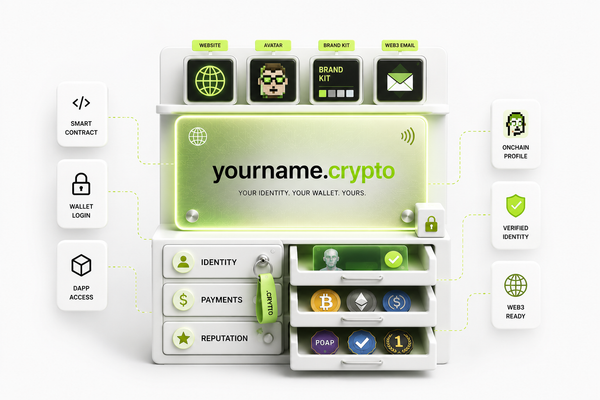
The design is meant to outlast any one platform. Unlike a traditional domain that only works in a browser address bar, a Polygon domain can double as a login, a payment address, and a public profile across different apps.
It doubles as a digital identity card. You can link social accounts, display NFTs you own, and show off achievements all attached to one name instead of scattered across separate profiles.
The user experience keeps improving as Polygon's transaction speeds and costs continue to get better.
The Bottom Line
Polygon brings together solid technology, a genuine focus on usability, and an early bet on NFTs that's made it a serious player in the blockchain world. Hosting a full website on a Polygon domain still takes some technical workarounds, and that's unlikely to change until browsers add native support for blockchain naming systems. In the meantime, redirection and IPFS get you most of the way there.
It's also fair to stay a little skeptical. Competition among Web3 domain providers is real, regulatory questions around crypto haven't gone away, and as Reddit's avatar program showed even big-name corporate experiments in this space can get shut down. None of that erases what Polygon has built, but it's worth weighing against the hype.
So, is a Polygon domain worth it for you? If you're already active in Web3, it's a relatively cheap way to get a single, portable identity instead of juggling wallet addresses across every app you use. If you're just dipping a toe in, it's a low-stakes way to see what the fuss is about just go in with realistic expectations about what it can and can't do today.