13 Strategies to Protect Your web3 Domain Name from Cyber Threats
Web3 security matters. Safeguard your domain with these 13 crucial strategies and stay protected in the evolving decentralized landscape.

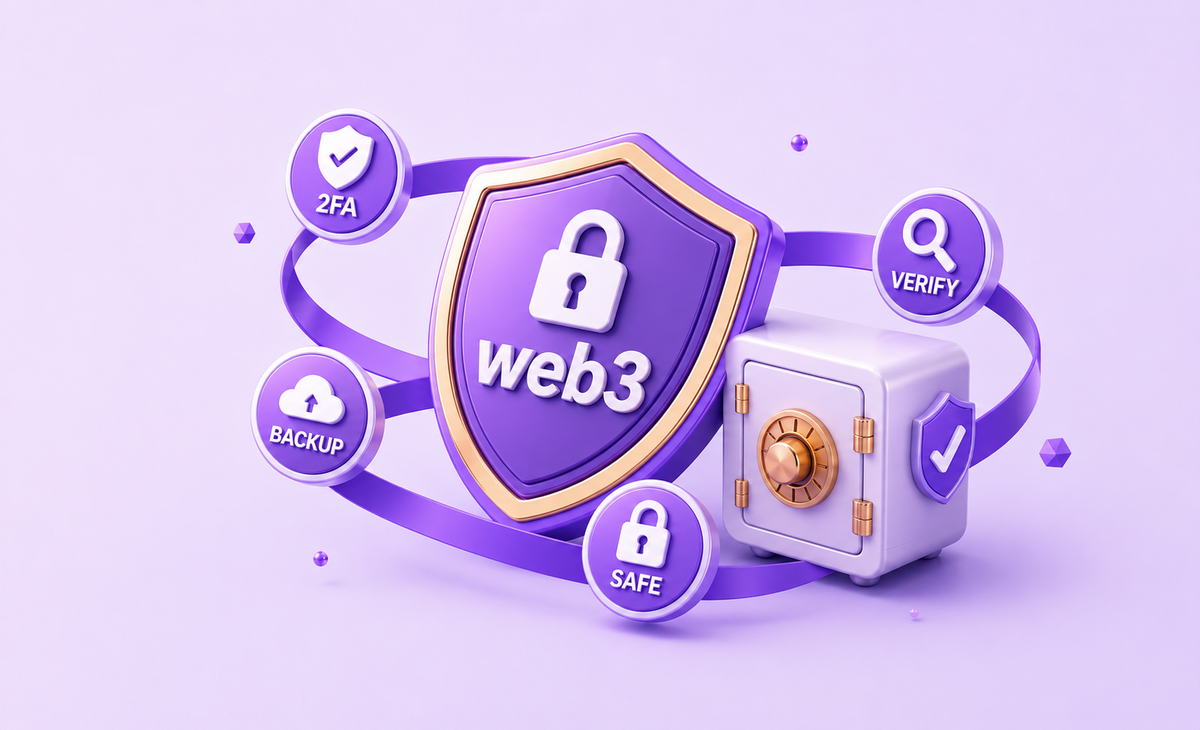
Web3 is often pitched as the next stage of the internet built on blockchain technology and promising more security, transparency, and decentralization than what we have today. There's real substance behind that pitch: better privacy, more autonomy over your own data, and stronger resistance to censorship. But Web3 is also still young, and that immaturity comes with its own set of security headaches. This piece digs into where those risks actually show up and what you can do about them, with a particular focus on one issue that's easy to overlook: domain squatting.
What Is Domain Squatting?
Domain squatting is the practice of registering, buying, or using a domain name specifically to cash in on someone else's trademark or brand. The usual playbook: a squatter grabs a name tied to a known brand or public figure, then either sits on it hoping the rightful owner will pay an inflated price to get it back, or uses it to mislead people in the meantime. Either way, the victim is often left choosing between an expensive buyout or a drawn-out legal fight.
Why Domain Squatting Gets More Complicated in Web3
In the traditional domain world, a registrar like GoDaddy or a registry like Verisign sits in the middle of every transfer. That middleman is also your recourse: if someone squats on your trademark, ICANN's dispute process or the registrar itself can step in and force a resolution.
Web3 domains don't work that way. Ownership is enforced entirely through self-executing smart contract code, and control sits with whoever holds the wallet that owns the domain's NFT full stop. There's no customer support line to call and no central authority who can simply hand the name back to its "rightful" owner. If someone squats on a Web3 domain tied to your brand or your name, neither ICANN nor a traditional registrar has any jurisdiction to intervene. That's a real trade-off: the same decentralization that makes Web3 domains censorship-resistant also removes the conventional safety net for trademark disputes.
The Bigger Risks Baked Into Web3
Beyond domain squatting specifically, there's a category of risk that's bigger than any one user and largely outside any individual's control:
- Market-wide swings. Crypto markets are volatile, and since most Web3 applications run on top of one blockchain or another, a downturn in that market can ripple into the apps built on it.
- Unfavorable regulation. New laws targeting crypto or Web3 broadly can have knock-on effects for decentralized applications that had nothing to do with whatever prompted the regulation in the first place.
- Centralized choke points. Ironically, a lot of "decentralized" infrastructure still depends on centralized services somewhere in the stack node providers, for instance which can throttle traffic, get taken down, or get censored.
- Technical failures. Node operators can be unreliable, and networks can come under direct attack.
To be fair, major networks like Bitcoin and Ethereum have weathered plenty of stress tests over the years and held up reasonably well from a technical standpoint. These systemic risks aren't going away, though they're baked into the nature of blockchain and crypto, and by extension, into Web3 itself. The good news is that plenty of the risk that's actually relevant to you day-to-day is well within your control, which is where the rest of this piece is focused.
How to Push Back Against Domain Squatters
Without a centralized authority to lean on, protecting your intellectual property in Web3 comes down to a different toolkit, built around four kinds of leverage:
- Compelling compliance using whatever direct pressure or platform rules are available to push for the right outcome.
- Practical leverage using tactics outside the legal system to negotiate a resolution.
- Financial leverage using money, whether that's a fair buyout offer or financial pressure, to incentivize cooperation.
- Legal leverage pursuing trademark or other legal claims through conventional courts, since Web3 ownership doesn't put you outside the reach of real-world law.
Here's a detail that surprises a lot of people: Web3 is not the anonymous free-for-all it's sometimes made out to be. A wallet address might look like a meaningless string of characters, but with enough on-chain and off-chain investigation, identifying the person behind it is often very achievable. Squatters frequently leave a trail block explorer activity, Discord and forum posts, linked social media accounts, and sometimes even a discoverable email address that gives you real leverage to negotiate with, or to build a legal case around.
How to Actually Secure Your Web3 Domain and Identity
Web3 hands you a lot more autonomy than the old web did, but that autonomy comes with more personal responsibility too. Here's where to focus.
Use a wallet you trust. Store your private keys somewhere secure, whether that's a reputable software wallet or, for larger holdings, a hardware wallet. Hardware wallets keep your keys in an offline, physically isolated device, which meaningfully cuts down the risk of remote hacking compared to keeping everything in a browser extension.
Choose your identity provider carefully. If you're using a service to manage your digital identity or credentials for accessing dApps, look closely at what data that provider can see and how they handle it. MetaMask remains one of the most widely used options here; whichever you choose, treat it the same way you'd treat any service that has access to sensitive personal or financial information.
Encrypt your data and communications. Tools like IPFS for decentralized storage, Threshold Network (the privacy-focused project that grew out of NuCypher) for proxy re-encryption, and Signal for everyday encrypted messaging all help keep your information out of reach of anyone who shouldn't have it.
Use a VPN or a decentralized network. A solid VPN hides your IP address and browsing activity from prying eyes. If you want to go further, decentralized routing networks like Tor add multiple layers of encryption and relay your traffic through several independent nodes.
Turn on two-factor authentication. 2FA means a stolen password alone isn't enough to get into your accounts an attacker would also need your second factor, usually a code sent to a device only you control. It's a small bit of setup that meaningfully raises the bar for anyone trying to break in.
Protect your private keys and recovery phrase. If you're using a self-custody wallet rather than a centralized exchange, your private key (and the 12- or 24-word recovery phrase that can regenerate it) is the only thing standing between you and your assets. Treat it like the master password it effectively is never share it, and store it offline.
Keep your software up to date. Patches exist specifically to close known security holes, so don't let your wallet, browser, or operating system fall behind. This is one of the simplest, most overlooked ways attackers get in.
Consider a browser built with Web3 in mind. Browsers designed for the decentralized web often ship with built-in ad blocking, anti-tracking, and encryption features that cut down your exposure to malware and phishing as you browse dApps and Web3 sites.
Specialized Security Firms Worth Knowing
A handful of companies have built their entire business around hardening Web3 infrastructure:
- CertiK offers smart contract auditing, verification, and certification.
- PeckShield runs bug bounty programs alongside its security audits.
- Quantstamp uses formal verification methods to catch vulnerabilities in smart contracts before they go live.
- Trail of Bits focuses on blockchain security research and consulting.
- Immunefi runs a bug bounty marketplace connecting projects with security researchers.
If you're building anything in this space, working with firms like these rather than relying solely on an internal team meaningfully raises the odds of catching a problem before it costs you (or your users) real money.
Don't Skip the Audit
Before and after shipping new code, run it through a real security review. An outside auditor will often catch things an internal team misses simply because they're too close to the code. Skipping this step is one of the more common ways projects end up with a costly, public security incident. Regular audits, done consistently through the development cycle, let you keep shipping at a reasonable pace without quietly accumulating risk in the background.
Lock Down Your Domain
Most domain registrars (Web3 or otherwise) offer a "lock" feature that blocks unauthorized changes to your account, including your linked email and other sensitive settings. Without it, anyone who manages to get into your account could alter your security settings or transfer your domain outright, potentially exposing customer data tied to your linked accounts in the process. It's a simple toggle that's worth turning on, and it's worth pairing with regular checks on your domain's key settings.
Watch Out for Phishing
Phishing remains one of the most common ways people lose access to their wallets or accounts a fake email or message with a link to a site that looks legitimate but isn't. Before clicking anything in an unsolicited message, take a moment to verify both the sender and the destination. A few extra seconds of skepticism is a lot cheaper than recovering from a drained wallet.
Stay Curious
Web3 moves fast, and the best defense is staying reasonably current on what's changing. Follow reputable sources covering Web3 security and privacy, understand the specific risks tied to whatever tools or platforms you're using, and make decisions based on your actual needs rather than hype.
Final Thoughts
Good Web3 security is part technical (encryption, hardware wallets, audits) and part behavioral (spotting phishing attempts, not oversharing your seed phrase, staying skeptical of unsolicited messages). None of this eliminates risk entirely, but doing your homework before investing in any crypto or NFT project, sticking with reputable exchanges and wallets, understanding what you're actually agreeing to in a DeFi protocol, guarding your private keys carefully, and reporting suspicious activity when you see it will put you well ahead of most people navigating this space.