The Psychology Behind a Memorable Crypto Domain Name
One of the first steps towards establishing your digital identity is choosing a catchy domain name for your business. In the crypto industry, having a memorable and creative domain name can make all the difference. Whether you're starting a new token project, launching a secure wallet service, or pr

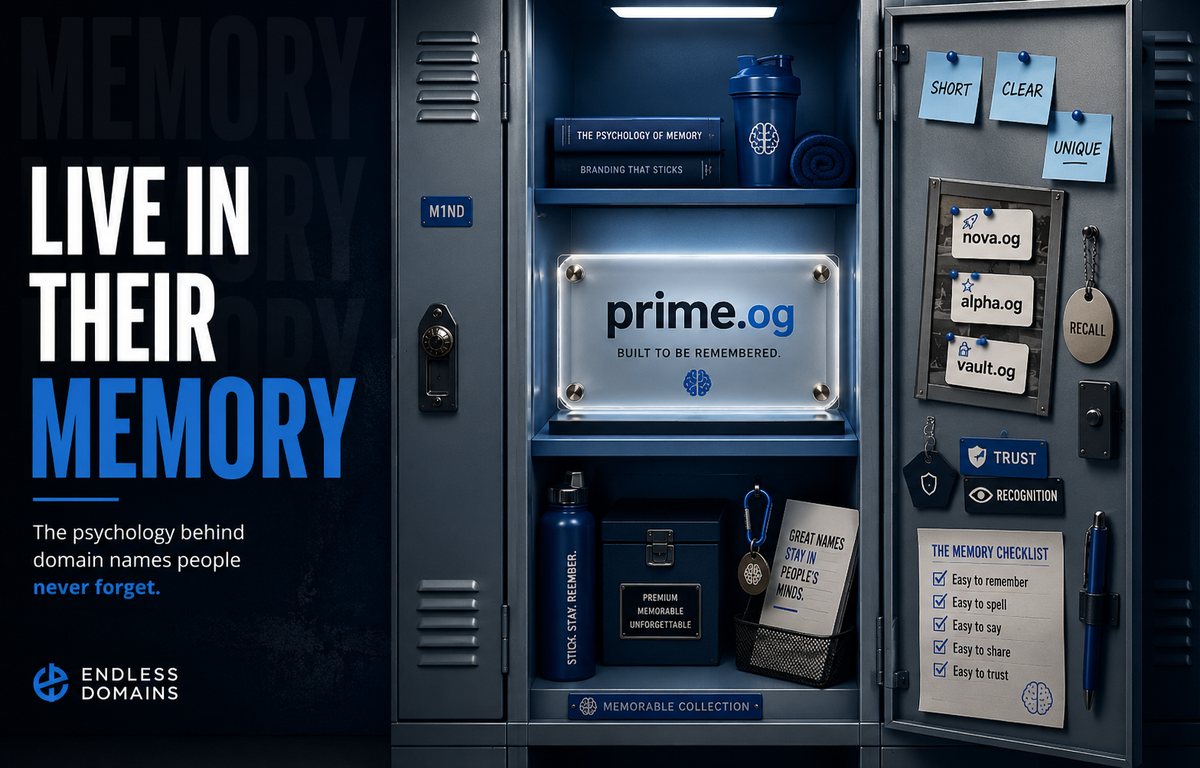
Think about the domain names that have lodged themselves permanently in your memory. Google. Amazon. Twitter. None of these names have an obvious literal connection to what the company does and yet they're instantly recognizable to billions of people. That's not an accident. It's the result of deliberate choices about sound, rhythm, memorability, and brand association that tap into how human memory actually works.
Now bring that question into crypto. As blockchain-based domains proliferate .eth, .sol, .crypto, .nft, .polygon, and dozens of others the names people register are becoming increasingly important. Not just as functional addresses, but as brand identities, community signals, and long-term digital assets. A forgettable crypto domain is a missed opportunity. A memorable one is a competitive advantage.
This blog explores the psychology of why certain names stick in our minds while others disappear, how to apply those principles when choosing a crypto domain, and what additional factors you need to consider beyond pure memorability.
A Quick Refresher: What Are Crypto Domains?
Before getting into the psychology, it's worth being clear about what we're actually talking about because the term "crypto domain" gets used loosely in ways that can confuse people new to the space.
A crypto domain is a blockchain-based address issued as a Non-Fungible Token (NFT) that you own outright rather than rent from a centralized registrar. Unlike traditional domain names which require annual renewal fees, are subject to registrar policies, and can theoretically be revoked or suspended crypto domains are recorded on a public blockchain and remain under your complete control indefinitely after a single purchase.
The ownership model is fundamentally different from anything the traditional domain world offers. Your crypto domain lives in your wallet. Nobody can take it from you without your private key. There are no renewal notices to miss, no registrar terms of service that can result in suspension, and no central authority with override capabilities.
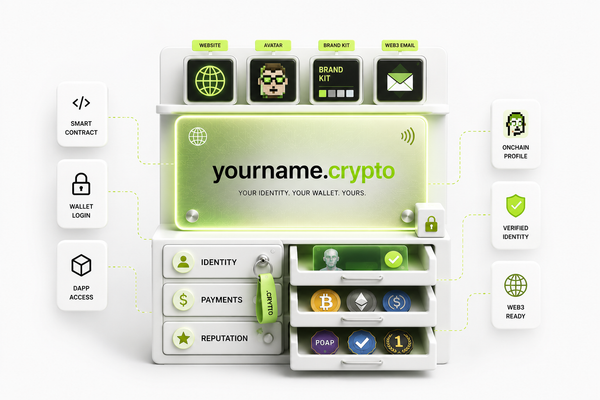
Functionally, crypto domains can serve multiple purposes simultaneously: as the address for a decentralized website hosted on IPFS or Arweave, as a human-readable substitute for a long cryptocurrency wallet address, as a decentralized identity profile linking to social media accounts and NFT collections, as a proof of on-chain ownership, and as a login credential across Web3 applications.
The adoption trajectory is clear. By early 2022, over 500,000 crypto domains had already been registered and that number has grown significantly since, driven by both genuine utility demand and investment interest in premium names. The quality of the name you register matters more now than it ever has before.
Why We Remember Certain Names and Forget Others
Human memory isn't a filing cabinet where everything gets stored with equal accessibility. It's a selective, associative system that prioritizes certain kinds of information and discards others. Understanding how that system works is the foundation of choosing a domain name that people will actually remember.
Attention comes first, and it's a scarce resource.
In any crowded information environment and the internet is the most crowded information environment in human history your name has a fraction of a second to register before someone moves on. Names that trigger curiosity, recognition, or an emotional response get held. Names that don't get discarded immediately.
The cognitive science here is well established: novelty triggers attention. Our brains are hardwired to notice things that deviate from the expected which is why a domain name that does something unexpected with language is more likely to be remembered than one that follows a completely predictable pattern.
Wordplay, alliteration, unexpected juxtapositions, and clever references all create mild novelty that prompts the brain to pay a little extra attention. That extra attention is the difference between a name that lodges in memory and one that evaporates.
Cognitive ease determines whether attention converts to memory.
Once you've captured attention, the second battle is cognitive ease how effortlessly the brain can process and store the name. The research on this is consistent: information that's easier to process is easier to remember. Short words, simple pronunciation, familiar sounds, and clear rhythms all reduce the cognitive load of remembering a name.
This is why the most valuable traditional domain names are almost always short, single-word, or two-syllable combinations. Google, Amazon, Apple all of them fit the pattern of being easy to say, easy to spell, and easy to retrieve from memory. Long, hyphenated, or phonetically awkward names fight against cognitive ease at every step.
For crypto domains specifically, this principle argues strongly for brevity. A three or four character domain is harder to get and costs more for exactly this reason the market already understands the premium on short, easy names. But even for longer names, favoring simple syllable structures and clear pronunciation will always outperform clever constructions that look interesting on paper but are awkward to say out loud.
Emotional resonance creates lasting memory.
The third factor in memorability is emotion. We remember things that made us feel something curiosity, humor, excitement, surprise, warmth, far more reliably than things that were merely informative. A domain name that triggers even a mild positive emotional response has a significant memory advantage over a purely descriptive or functional name.
This is why humor, playfulness, and personality in domain names tend to outperform their more serious, literal counterparts. A name that makes someone smile, even briefly, creates an emotional tag in memory that makes it easier to retrieve later. That's worth engineering deliberately rather than leaving to chance.
Knowing Your Audience: The Most Important Variable in Domain Name Psychology
No domain name works in isolation it works within a specific context, for a specific audience, in a specific community. The psychology of memorability is always audience-dependent, which means the first question in choosing a domain name isn't "what sounds good?" It's "what resonates with the people I'm trying to reach?"
For crypto-native users: This audience has its own vocabulary, its own cultural references, its own humor, and its own in-group signals. Domain names that reference well-known protocols, DeFi mechanisms, crypto memes, or community landmarks will register instantly and positively with this audience in ways that would be meaningless to an outsider. If you're building for people who know what "HODL" means, who've heard of the "flippening," and who understand what "gas fees" are, your domain can speak that language fluently.
For mainstream newcomers: The crypto space's greatest growth opportunity is the massive audience that hasn't yet entered the ecosystem people who are curious about digital assets, interested in Web3 applications, or encountering blockchain technology for the first time. For this audience, crypto-insider references can feel exclusionary or confusing. A welcoming, approachable name that doesn't assume prior knowledge creates a better first impression and a lower barrier to engagement.
For global audiences: Language and culture create significant variation in how names are perceived. A name that's clever and positive in English might have a distracting or negative connotation in another language. If your project has or aspires to an international user base, checking your domain name against major language communities before registering is worth the effort. The last thing you want is to discover after launch that your carefully chosen domain name means something unfortunate in Portuguese or Mandarin.
For your specific project type: The psychology of appropriate domain names differs across project categories. A DeFi protocol that wants to convey security and reliability needs a different kind of name than a play-to-earn game that needs to convey fun and adventure. An NFT marketplace for high-end digital art needs a different register than a meme token community hub. Before brainstorming names, be very specific about your project's identity and what emotional associations you want your domain to trigger in your target audience.
Brand Identity and Domain Name Alignment
A domain name doesn't just need to be memorable in isolation it needs to be consistent with and reinforcing of your broader brand identity. Misalignment between what your project does and what your domain name suggests creates cognitive dissonance that undermines trust and recognition
Your domain should embody your project's core values. If your project is built around security and trustworthiness, your domain name should evoke those qualities either directly through semantic content or indirectly through the associations it triggers. If your project is built around accessibility and inclusion, your domain should feel welcoming rather than intimidating. The name is the first element of your brand that most people encounter. Make sure it sets up the right expectations for everything that follows.
Consistency across platforms compounds recognition. The most valuable thing you can do with a strong domain name is use it consistently everywhere your website, your social media profiles, your community spaces, your marketing materials, your presentations. Every consistent use reinforces the memory trace the name creates, and over time that consistency builds the kind of instant recognition that makes strong brands so powerful. Inconsistency different variations of your name in different contexts dilutes that recognition and forces your audience to do extra work to connect the dots.
A memorable domain builds lasting trust. In the Web3 space, where new projects appear and disappear constantly and skepticism about longevity is reasonable, a well-chosen domain name signals commitment. It says you've thought carefully about your brand identity, you plan to be around for the long term, and you're serious enough about your project to invest in getting the name right. That signal matters to users, investors, and partners who are evaluating whether your project is worth engaging with.
Practical Brainstorming Strategies for Your Crypto Domain
Theory is useful, but you need to actually generate candidate names. Here are the strategies that work best.
Start with your project's core concept and work outward. What is the single most important thing your project does? What problem does it solve? What feeling do you want users to associate with it? Start by generating as many words and phrases related to those core concepts as you can don't filter at this stage, just generate. You'll refine later.
Experiment with wordplay and linguistic creativity. Puns, portmanteaus, alliteration, rhyme, and unexpected word combinations can produce names that are both memorable and distinctive. Some of the best brand names in history are the result of exactly this kind of linguistic experimentation. The constraint of crypto domain naming working within the conventions of Web3 naming while still standing out actually makes this kind of creativity more necessary, not less.
Mine the crypto cultural landscape for resonant references. For crypto-native audiences, references to shared cultural touchstones can create immediate recognition and community belonging. Elements of blockchain history, popular protocols, community memes, and ecosystem milestones are all fair game. Just be careful about references that might feel dated quickly longevity matters in a domain name.
Use the people you're building for as a creative resource. Your community often has better naming intuition about what resonates with them than any individual founder does. Running a naming contest or soliciting suggestions through social media and community channels accomplishes two things: it generates creative input that might not occur to you working alone, and it builds community investment in the name before launch. When people feel they contributed to a name, they have a stake in its success.
Test your finalists before committing. A name that sounds great in your head might not land the same way with real people. Before registering, share your top candidates with a representative sample of your target audience and pay attention to the reactions. Does the name generate curiosity? Is it easy to recall after hearing it once? Is it easy to spell correctly? Does it trigger the right associations? The answers to these questions are more valuable than any individual opinion about which name is "best."
The Startup Dilemma: Relevance vs. Creativity
There's a real tension in domain name strategy for new crypto projects particularly those entering competitive spaces where being discoverable matters for early growth.
The case for relevance is straightforward: if you're building a DeFi lending protocol and your domain name contains the word "lend" or "yield" or "finance," people searching for those terms are more likely to find you. Keyword-relevant names can contribute to search visibility and make your project's purpose immediately clear to newcomers.
The case for creativity is equally compelling and ultimately more powerful for long-term brand building. Google's name has nothing to do with search engines. Amazon's name has nothing to do with e-commerce. Apple's name has nothing to do with computers. Yet these are among the most recognizable brand names in human history, precisely because their distinctiveness made them memorable in a way that purely descriptive names never could be.
The resolution is a principle worth holding onto: a creative, memorable name that reflects your brand's values and personality is more valuable in the long run than a generic, keyword-heavy name that tells people exactly what you do but gives them no reason to remember you specifically.
This doesn't mean relevance is worthless. A name that's both creative and contains a relevant keyword is ideal. But when you have to choose between a descriptive-but-forgettable name and a creative-but-distinctive one, choose creativity. Descriptive names limit your brand's future possibilities as your project evolves. Creative names can grow with you.
Beyond Memorability: The Other Factors That Matter
A memorable name is necessary but not sufficient. Here are the additional considerations that round out a well-chosen crypto domain name.
Long-term relevance over short-term trendiness. The crypto space moves fast, and names that feel cutting-edge today can feel dated within a couple of years as the cultural landscape shifts. A name that references a specific trend, meme, or moment in crypto history might generate immediate recognition now but become a historical artifact that your project has outgrown. Aim for names that will be as relevant in five years as they are today.
Search engine visibility. Traditional SEO considerations apply to crypto domains in the context of how people search for information about your project. While a .eth or .crypto domain won't rank in Google the same way a .com domain does, the words in your domain name still affect how people search for you, how media covers you, and how your brand is represented in traditional search contexts. Incorporating a relevant keyword doesn't have to come at the expense of creativity sometimes the two align naturally.
Extension scarcity and value dynamics. Certain extensions have finite name availability by design or by market dynamics. Short .eth domains three characters cost $640 per year to register through ENS are priced at a premium because the market correctly values their scarcity. The extension you choose affects not just the identity signal your domain sends but also the long-term value dynamics of the asset you're registering. Consider whether the extension's scarcity and community positioning align with your goals.
Trademark and legal considerations. Before registering any domain name crypto or traditional check whether it conflicts with existing trademarks in your jurisdiction or in major markets you plan to operate in. Crypto domains are still subject to real-world legal frameworks, and a name that conflicts with an established brand's trademark can create expensive legal complications that undermine all the brand equity you've worked to build. A quick trademark search before committing to a name is a low-cost insurance policy against a high-cost headache later.
The Future of Web3 Domain Names
The trajectory of Web3 domains suggests that the names registered now will matter more over time, not less. Here's why.
As decentralization continues to progress, the traditional DNS system's dominance over internet naming and addressing will face increasing competition from blockchain-based alternatives. Web3 domains are positioned to become the identity layer of a new internet paradigm one where users control their own data, own their own addresses, and navigate a network that isn't governed by centralized authorities.
In that future, your crypto domain name isn't just your website address or your wallet shortcut. It's your permanent digital identity the handle through which you're known across applications, communities, and transactions. The quality of that identity, as expressed in the name you choose, will matter in the same way that strong personal branding matters in any professional context.
The era of incomprehensible alphanumeric blockchain addresses is already ending. The era of human-readable, user-owned, permanently registered Web3 identities is taking its place. The names at the heart of that transition the ones that are memorable, distinctive, well-chosen, and registered early will be the ones that matter most in the ecosystem that emerges.
Final Thoughts
Choosing a crypto domain name is a branding decision as much as a technical one. The psychological principles that make names memorable attention-grabbing novelty, cognitive ease, emotional resonance, and audience alignment apply to blockchain-based domains with exactly the same force they apply to traditional brand names.
The names that will be most valuable in the Web3 ecosystem are the ones that are short, memorable, audience-appropriate, brand-consistent, and creative enough to stand out from the generic noise that fills every expanding digital namespace. These names are being registered right now, in a window that won't stay open indefinitely.
The decentralized web has a long way to go before it's fully mainstream. But the infrastructure being built right now .eth domains, .sol domains, .polygon domains, .crypto domains, .arb domains, and endless domains emerging across different blockchain ecosystems is laying the foundation for what comes next. Your crypto domain name is the cornerstone of your identity in that infrastructure. Choose it like it matters because it does.