Risks and Rewards of Investing in Web3 Domains
Web3 domains are redefining digital ownership in the decentralized internet, serving as wallet addresses, NFT markers, and more. While they promise immense returns and functionality, they come with significant challenges. Dive into this blog to weigh the pros and cons of investing in this futuristic

The internet is changing and not just in small ways. We're standing at the edge of a new era called Web3, a decentralized version of the web where users, not corporations, hold the keys. At the heart of this shift are Web3 domains, a genuinely fascinating innovation that blends blockchain technology with the concept of digital real estate.
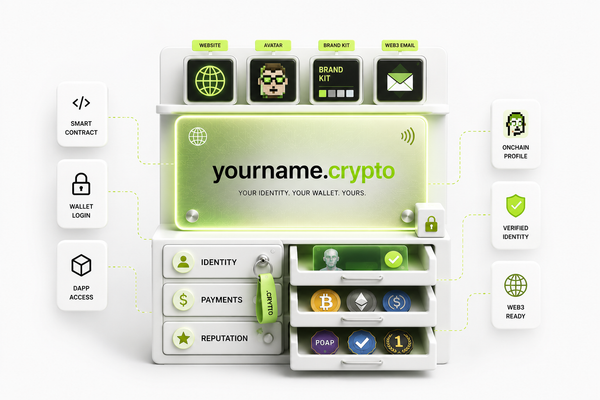
Domains like yourname.eth or yourbrand.Crypto isn't just website addresses. They're your identity in a decentralized world. They double as wallet addresses, NFT ownership markers, login credentials for decentralized apps, and more.
It's no surprise that investors are paying attention. Much like the early days of traditional domain investing, Web3 domains come with real promise and real risk. This blog breaks down both sides honestly, so you can decide whether this is an opportunity worth exploring.
What Are Web3 Domains?
Web3 domains are blockchain-based digital identities that go far beyond what a traditional domain name can do. Unlike conventional domains (think .com or .org), Web3 domains live on decentralized networks like Ethereum. You don't lease them, you own them outright.
A domain like yourname.eth, for example, can serve as your cryptocurrency wallet address, your login for decentralized applications (dApps), or even a portfolio to showcase your NFT collection. It's a single, human-readable handle that replaces the long, messy strings of numbers and letters typically associated with blockchain wallets.
The key distinction comes down to ownership and control. Traditional domains are managed by centralized organisations like ICANN. You pay annual renewal fees, and if the registrar changes its rules or you forget to renew, you could lose your domain overnight. Web3 domains don't work that way. Once you buy one, it's yours. No renewals, no middlemen, no risk of revocation. The ownership is recorded on the blockchain, making it transparent and tamper-proof.
In short, Web3 domains are digital real estate for the decentralized internet and like any real estate, their value depends heavily on location, timing, and demand.
Why Are Investors Turning to Web3 Domains?
Imagine owning a piece of the internet that nobody can take from you. That's a compelling pitch, and it's exactly why Web3 domains are generating so much investor interest.
The concept of true digital ownership is new. For the first time, a domain isn't something you rent annually; it's something you own permanently, like land. That sense of security resonates deeply, especially among people who've watched platforms change policies and pull the rug out from under creators and businesses.
Scarcity adds fuel to the fire. Premium Web3 domains think wallet.crypto or sports.eth are finite. There's only one of each, and the best ones are being snapped up fast. Some have already sold for eye-watering amounts. The domain beer.eth, for instance, sold for $95,000. That kind of sale shows that savvy early buyers are already cashing in.
Beyond resale value, the practical utility is real. Web3 domains make crypto transactions easier, build recognizable digital identities, and serve as entry points for decentralized websites and metaverse experiences. For businesses, owning brand.crypto is quickly becoming as important as owning brand.com was in the late 1990s.
The Rewards of Investing in Web3 Domains
1. High ROI Potential
The comparison to early internet domain investing isn't just hype, it's historically grounded. Generic domains like hotels.com or business.com once sold for millions of dollars after early investors grabbed them for next to nothing. Web3 domains are following a similar trajectory.
Beer.eth selling for $95,000 is just one example. As demand grows and the supply of premium names dwindles, well-chosen Web3 domains could deliver returns that rival or exceed traditional investments. That said, as with any speculative asset, timing and research matter enormously.
2. Deep Integration with the Web3 Ecosystem
Web3 domains aren't just collectables, they're functional tools. They replace long, unreadable wallet addresses with simple, memorable names (e.g., john.eth instead of a 42-character hex string). This alone makes them valuable for anyone regularly sending or receiving cryptocurrency.
For brands, the integration goes even further. Owning a recognizable domain in the decentralized web positions a business to thrive across dApps, NFT marketplaces, and virtual environments. As the metaverse becomes more commercially significant, having a memorable domain there will matter just as much as having a strong .com today.
3. True, Permanent Ownership
This one can't be overstated. With a Web3 domain, you're not renting digital space; you're owning it. There are no annual fees, no renewal deadlines, and no authority that can revoke your domain because of a policy change.
It's the difference between renting an apartment and buying a house. Both give you a place to live, but only one builds equity and gives you genuine control. For individuals and businesses tired of depending on centralized platforms, that kind of autonomy is incredibly appealing.
4. Passive Income Opportunities
Web3 domains can also generate income without being sold. Owners can rent their domains to businesses or individuals looking for a temporary presence, say, a luxury brand running a metaverse campaign might rent luxury.eth for a few months rather than buy it outright.
Domain parking is another avenue: linking a domain to content or services can generate advertising revenue or partnership income over time. These ongoing revenue streams make Web3 domains more than just a one-time investment.
5. Long-Term Adoption Potential
The dot-com boom of the 1990s seemed speculative to many at the time. Today, every business on earth needs a website. Web3 domains could follow the exact same path. As blockchain technology matures, dApps become more mainstream, and the metaverse grows into a real commercial space, the demand for Web3 domains is likely to grow right along with it.
Early adopters who position themselves now could find themselves holding some of the most valuable digital assets of the next decade.
The Risks of Investing in Web3 Domains
Let's be honest, this isn't a sure thing. Like any emerging market, Web3 domains come with a real set of risks that every investor needs to understand before putting money in.
1. Market Volatility
Web3 domains are closely tied to the cryptocurrency market, which is notoriously unpredictable. During a bull run, demand for domains surges and prices spike. During a bear market, the same domains can lose a significant portion of their value fast. If you're risk-averse, this kind of volatility can be deeply uncomfortable.
2. Lack of Regulation
Web3's decentralized structure is both its biggest strength and its most glaring weakness. Without a governing body like ICANN, there's no clear framework to handle disputes, prevent fraud, or protect buyers from bad actors. Some investors have purchased domains only to later discover they were sold by unauthorized parties.
Intellectual property issues are another landmine. Buying something like apple.eth might seem clever until a team of corporate lawyers shows up. Without defined legal standards, the line between smart investing and infringement can get blurry fast.
3. Uncertain Mainstream Adoption
Web3 is still early. Really early. Despite the excitement, mainstream adoption isn't guaranteed. It depends on overcoming real technical hurdles, building more user-friendly applications, and shifting public awareness at scale. If Web3 technology fails to gain significant traction beyond early adopters, the value of these domains could stagnate or collapse entirely.
Investing in Web3 domains is, at least in part, a bet on the future of decentralization itself.
4. Competition and Oversaturation
The best premium domains are already gone or priced out of reach for most investors. Newer entrants are left competing for less desirable names in a growing crowd. On top of that, the constant introduction of new blockchain naming systems and domain extensions risks diluting the market if there are dozens of alternatives, standing out becomes much harder.
5. Technical and Security Risks
Web3 domains are secured by private keys. Lose your key, and you lose your domain permanently. There's no "Forgot My Password" button and no support team to call. It's the digital equivalent of losing the deed to your house.
And while blockchain technology is secure by design, it isn't invulnerable. Smart contract bugs, exploits, and hacks are real risks. If a vulnerability is discovered on the platform where your domain is stored, the consequences can be financially devastating.
6. Low Liquidity
Unlike traditional domains, which can be listed and sold through well-established marketplaces, Web3 domain trading is still a young market. Finding a buyer for a non-premium domain can take time and sometimes requires accepting a steep discount to make the sale happen. For investors looking to get in and out quickly, this illiquidity is a serious drawback.
How to Minimize Your Risk
Risks don't mean you should stay away they mean you should go in smart. Here's how to do that:
Do your homework. Before buying any domain, research the platform offering it. Ethereum Name Service (ENS) and Unstoppable Domains are two of the most reputable providers. Investigate the domain's potential use cases is it broadly appealing, or is it too niche to attract buyers down the line?
Start small. The hype around Web3 can make you want to go all-in, but a measured first investment protects you while you learn how the market works. You can always scale up once you're more confident.
Diversify. Web3 domains should be one piece of a broader portfolio, not the whole thing. Balancing them with other assets including traditional investments spreads your risk and improves your odds of overall financial stability.
Secure your investments. Use a reputable hardware wallet to store your private keys, and back them up in multiple safe locations. Losing your private key is an irreversible mistake that no amount of money can fix.
Stay informed. The Web3 landscape shifts fast. Following industry news and engaging with communities keeps you ahead of emerging trends, risks, and opportunities.
Future Outlook: Are Web3 Domains the Next Big Thing?
The honest answer? Probably but the timeline is uncertain.
The parallels to the early internet are hard to ignore. In the late 1990s, most people didn't think they'd ever need a website. Today, you can't run a serious business without one. Web3 domains could follow that exact arc going from niche curiosity to fundamental necessity.
What makes this era different is the technology converging around Web3. Blockchain is maturing rapidly. AI is finding its way into decentralized applications. The metaverse, while still developing, is attracting serious investment from major players. If and when tech giants like Google or Microsoft make significant moves deeper into the Web3 space, it could trigger the kind of mainstream trust and adoption that transforms this market overnight.
The integration potential is enormous. Imagine a single Web3 domain that serves as your wallet, your decentralized login, your metaverse avatar ID, and a secure data-sharing tool all in one. That's not science fiction; that's the direction this technology is pointing.
Is it guaranteed? No. But the potential is real, and the people who move early in transformational markets tend to do very well.
Final Thoughts
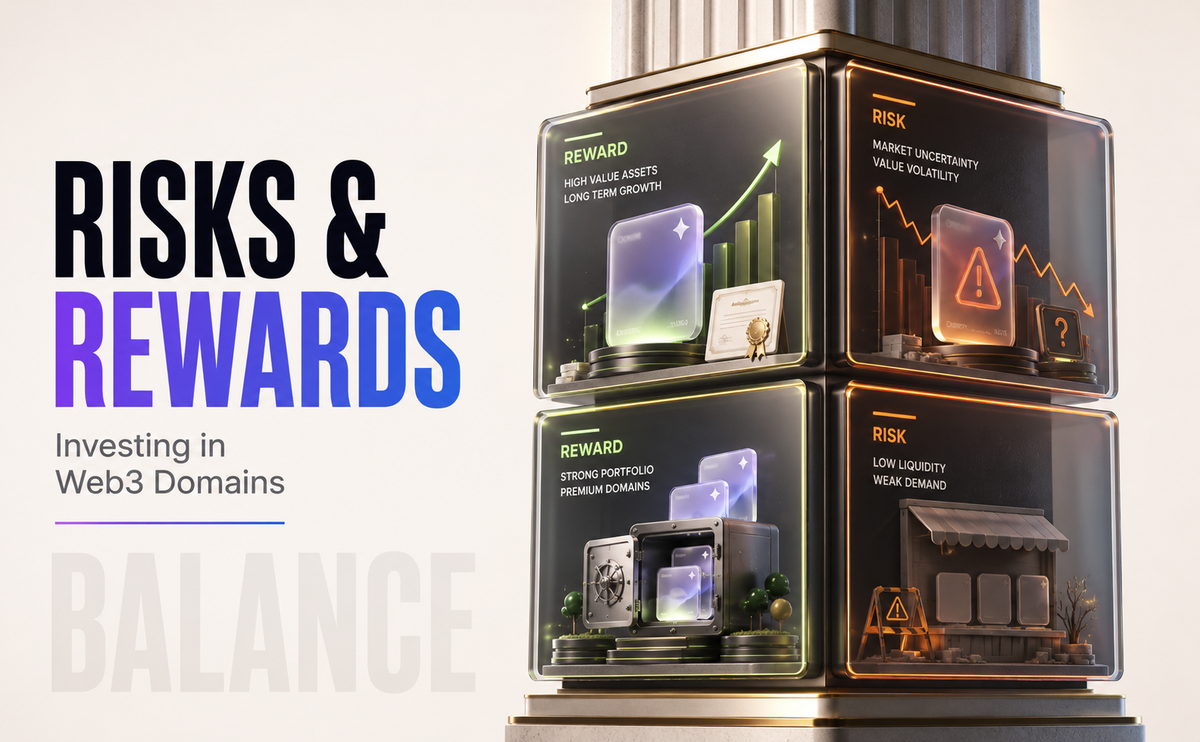
Investing in Web3 domains is genuinely exciting and genuinely risky. The potential rewards are real: high returns for early movers, true digital ownership, practical utility in a growing ecosystem, and a front-row seat to what could be the next major evolution of the internet.
But the risks are just as real: market volatility, regulatory uncertainty, security vulnerabilities, and the very real possibility that mainstream adoption takes longer than expected or doesn't happen at all.
The smartest approach is to go in informed, start conservatively, diversify your exposure, and stay engaged with how the space evolves. If you do that, Web3 domains aren't just a speculative bet they're a thoughtful stake in what the future of the internet might look like.
And that's a bet worth at least understanding, even if you haven't decided whether to make it yet.