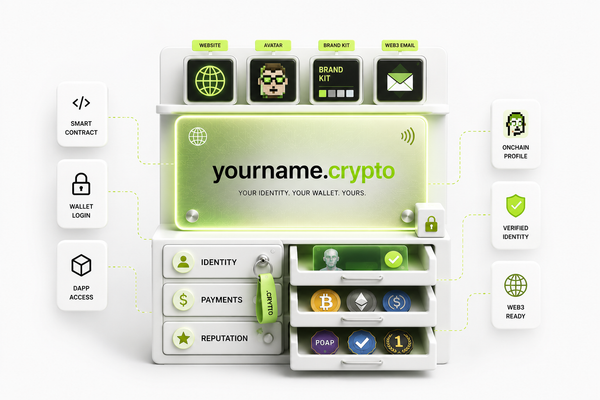
Unlocking the Future: How to Secure Your Web3 Domain Today
Web3 is here. Are you ready? Learn how to stay safe and thrive in this new digital era.

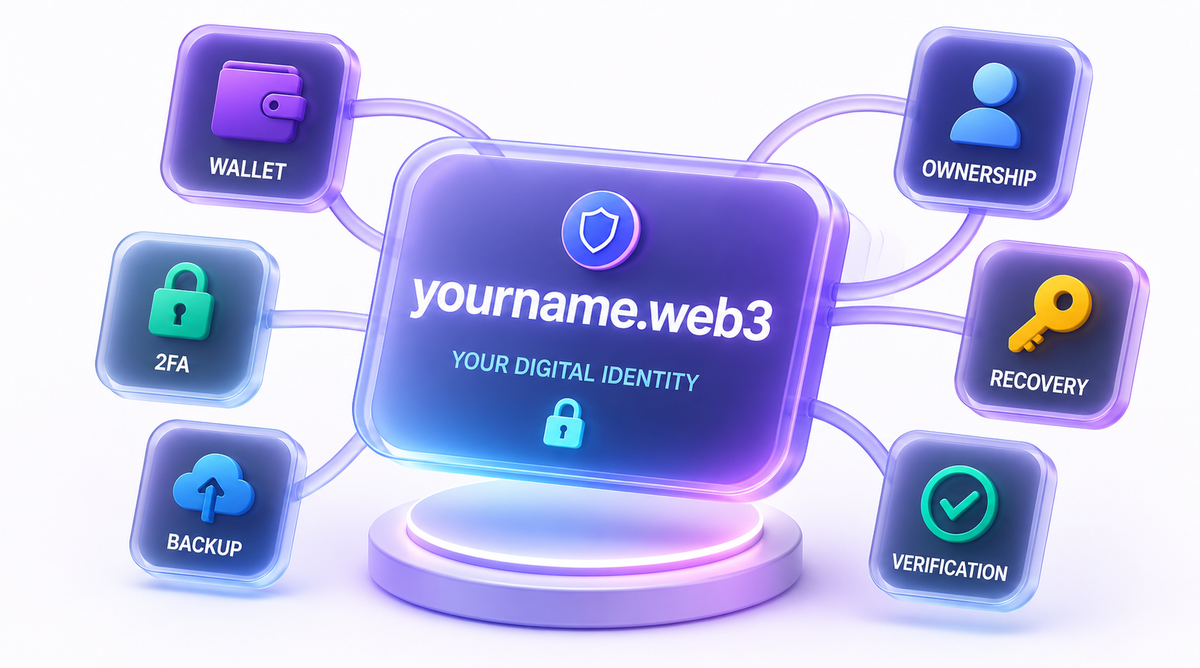
The internet has gone through some pretty dramatic reinventions over the past few decades. We went from static web pages to social media platforms to the app-driven world we live in today. Now, the next shift is already underway and it goes by the name Web3.
If you've been hearing this term thrown around and aren't entirely sure what it means for you or your business, you're not alone. Web3 can sound abstract, almost futuristic. But its implications are very real, very practical, and worth understanding sooner rather than later.
So What Exactly Is Web3?
Web3 represents the next generation of the internet, built on the foundation of blockchain technology and decentralization. To understand why that matters, it helps to think about what came before it.
Web2 the version of the internet most of us grew up with handed enormous power to a small number of technology giants. Google, Meta, Amazon, and a handful of other corporations became the gatekeepers of our data, our content, and our digital identities. Most users accepted this trade-off without a second thought, exchanging privacy for convenience.
Web3 challenges that model entirely. Instead of data flowing through centralized servers owned by tech companies, it gets distributed across decentralized networks. That means no single corporation controls the information and theoretically, no single entity can exploit or sell it without your knowledge.
The technologies driving this shift include cryptocurrencies, decentralized applications (dApps), and smart contracts. Together, they form an ecosystem designed around transparency, user empowerment, and a tamper-resistant record of every transaction. The goal, simply put, is an internet that works for people rather than corporations.
How Web3 Is Already Changing Business
This isn't a technology that's still years away from touching your industry. Companies across virtually every sector are already experimenting with or fully implementing Web3 solutions. Here's a look at what that actually looks like in practice:
Enhanced Security and Trust
One of the most immediately compelling benefits of Web3 for businesses is what it does for security. Traditional centralized systems have a fundamental weakness: if a hacker breaches one central database, they can access everything stored in it. Decentralized networks don't work that way. Data gets distributed across numerous nodes, meaning there's no single point of vulnerability to exploit. For industries like financial services and healthcare where a single breach can be catastrophic this is a significant leap forward.
Beyond security, blockchain's built-in transparency changes the trust equation between businesses and their customers. Every transaction gets recorded on an immutable ledger that anyone can verify. That kind of accountability is particularly powerful in supply chain management, where more and more consumers want to know exactly where their products come from and whether they were sourced ethically.
Real-World Examples From Familiar Companies
The businesses already putting Web3 to work aren't scrappy startups they're household names:
IBM has integrated blockchain technology into its core operations to improve data integrity and streamline internal processes.
Walmart uses blockchain to make its supply chain far more transparent, enabling the company to trace a product back to its origin in seconds rather than days a capability that proved enormously valuable during food safety investigations.
Nike is exploring digital assets and NFT-based products, opening up entirely new revenue streams while deepening customer engagement in creative ways.
Visa is actively researching cryptocurrency transactions and decentralized finance, positioning itself to remain relevant as payment technology evolves rapidly.
Starbucks has incorporated blockchain into its loyalty rewards program, giving customers more control over their own data and how their rewards are managed.
Maersk, one of the world's largest shipping companies, developed TradeLens a blockchain platform that provides real-time visibility into global trade, cuts through mountains of paperwork, and dramatically reduces the potential for fraud.
The common thread here isn't just innovation for its own sake. These companies are solving specific, costly business problems using Web3 tools.
The Cybersecurity Architecture Behind Web3
Part of what makes Web3 genuinely different from what came before is the way security is baked into the architecture itself, rather than bolted on as an afterthought. Here's a breakdown of the key features that make Web3 inherently more secure:
Decentralization eliminates the single points of failure that make centralized systems vulnerable. When data is spread across thousands of nodes, taking down the entire network requires compromising all of them simultaneously a much harder target to hit.
Cryptography uses sophisticated mathematical algorithms to encrypt data and authenticate transactions. Information remains confidential and accessible only to those who are actually authorized to see it.
Immutable ledgers mean that once data is recorded on a blockchain, it cannot be altered or deleted. This creates a permanent, verifiable audit trail that's extremely difficult to manipulate.
Smart contracts are self-executing programs that automatically carry out transactions when specific conditions are met. By removing the human middleman, they reduce the opportunities for errors, manipulation, and fraud.
Identity and Access Management (IAM) controls who can see what information, verifying identities and restricting access to sensitive data at a granular level.
The Zero Trust model operates on a simple but powerful principle: never trust, always verify. Even users who are already inside a system must continuously authenticate themselves, minimizing the risk that a compromised account can roam freely through your network.
Tokenization converts ownership rights into digital tokens stored securely on the blockchain. This protects sensitive asset information from exposure during transactions.
Privacy-enhancing technologies, including techniques like zk-SNARKs (zero-knowledge proofs), allow users to complete transactions without revealing any personally identifying information a genuine breakthrough for financial privacy.
Two-factor authentication (2FA) adds a second layer of identity verification on top of passwords, making unauthorized access significantly harder to pull off.
Permissioned blockchains give organizations direct control over who can participate in their network, adding another layer of protection for private transactions.
Together, these features create a security environment that's fundamentally more robust than anything Web2 could offer.
But Web3 Isn't Risk-Free Here's What to Watch Out For
It would be easy, given all of the above, to conclude that Web3 is simply secure by default. It isn't. Like any technology, it introduces its own set of risks and understanding them is essential for anyone considering a move into this space.
Smart Contract Vulnerabilities
Smart contracts are only as good as the code they're written in. Bugs in that code can be exploited to drain funds or gain unauthorized access to systems. Because smart contracts often execute automatically and irreversibly, the damage can happen fast. Regular, professional audits of smart contract code are non-negotiable.
Phishing Attacks
The sophistication of blockchain technology doesn't make its users immune to old-fashioned social engineering. Phishing attacks targeting cryptocurrency wallet holders through fake emails, fraudulent websites, or impersonated support channels remain extremely common and increasingly convincing. User education is one of the best defenses.
Front-Running
In decentralized finance environments, it's possible for bad actors to observe pending transactions and insert their own transactions ahead of them to gain an unfair financial advantage. This undermines the fairness that DeFi platforms are supposed to deliver.
Sybil Attacks
A Sybil attack happens when someone floods a decentralized network with fake identities to gain disproportionate influence or disrupt normal operations. Strong identity management protocols are the primary defense.
51% Attacks
If any single party ever gains control of more than half of a blockchain network's computing power, they can manipulate how transactions are validated. Keeping mining power sufficiently distributed is critical for maintaining blockchain integrity.
DeFi Exploits
Decentralized finance platforms are still relatively new, and many have had serious security vulnerabilities discovered sometimes only after significant financial losses. Continuous security assessments are essential for any DeFi project.
Rug Pulls
This one is straightforward and ugly: the development team behind a crypto project simply takes all the invested funds and disappears. Transparency, verifiable identities, and community oversight are the best safeguards against this kind of fraud.
Privacy Risks
Blockchain transactions are public by design, which means that with the right tools, it's sometimes possible to connect transaction data back to real identities. Privacy-enhancing technologies help, but this remains an active area of concern.
Network Congestion
High-demand periods on popular blockchains can slow transaction speeds dramatically and drive up fees. As Web3 scales, solving this problem becomes increasingly important.
Regulatory Uncertainty
Web3 regulation is evolving fast and varies significantly by country. Businesses operating in the DeFi or cryptocurrency space need to stay closely attuned to legal developments to avoid compliance pitfalls.
Practical Steps to Stay Secure in Web3
Knowing the risks is half the battle. The other half is putting concrete protections in place. Here's what a sound Web3 security strategy looks like:
Run regular security audits. For any project involving smart contracts or dApps, periodic code reviews by qualified security professionals are essential. Don't treat an audit as a one-time event the threat landscape evolves constantly.
Turn on two-factor authentication everywhere. For crypto wallets, exchange accounts, and any platform where assets are at stake, 2FA is the minimum acceptable standard. Treat it as mandatory, not optional.
Use a hardware wallet for significant crypto holdings. Software wallets connected to the internet are inherently more vulnerable than hardware wallets that keep your private keys offline. For any meaningful amount of crypto assets, a hardware wallet is worth the investment.
Educate your team continuously. Technical safeguards only go so far. Human error remains the single biggest vulnerability in any security system. Regular training on phishing recognition, private key management, and Web3-specific threats keeps your team from becoming the weakest link.
Adopt decentralized identity solutions. Rather than managing user identities through a central database a prime target for hackers decentralized identity tools give individuals control over their own credentials. Microsoft's ION project, built on the Bitcoin blockchain, is one practical example already in use.
Keep everything updated. Outdated software is an open invitation to attackers. Make sure that all Web3-related tools, wallets, and platforms are running their latest versions.
Verify everything before you transact. Double-check wallet addresses before sending cryptocurrency. Review smart contract actions carefully. Use only platforms with established security reputations.
Monitor for anomalies in real time. Tools like Etherscan allow you to track wallet and smart contract activity and get alerted to anything that looks out of place. The faster you can detect unauthorized activity, the faster you can respond.
Use encrypted communication channels. Sensitive discussions about transactions, private keys, or security strategies should happen over encrypted messaging platforms or secure email not regular email or unprotected group chats.
Build a strong access control system. Multi-signature wallets require more than one party to authorize a transaction, which adds a meaningful safeguard for company funds. IAM solutions help ensure that access to sensitive systems is tightly controlled and auditable.
Have an incident response plan ready before you need it. Know in advance what steps you'll take if something goes wrong which systems to isolate, who to notify, and how to preserve evidence for a post-incident review.
Participate in bug bounty programs. Many Web3 projects invite outside security researchers to identify vulnerabilities in exchange for rewards. Either participating in or hosting such programs can surface security issues before bad actors find them first.
Diversify your holdings. Spreading assets across multiple wallets, blockchains, and platforms reduces your exposure if any single one is compromised. This is especially important in the volatile Web3 environment, where risks can materialize quickly and without warning.
Final Thoughts
Web3 Domains represents a genuine shift in how the internet works and more importantly, in who it works for. For businesses, the opportunities are significant: stronger security, greater transparency, smarter automation through smart contracts, and the ability to build trust with customers in ways that simply weren't possible before.
But none of that comes automatically. Moving into the Web3 space requires a thoughtful, well-prepared security strategy. Smart contracts need to be audited. Teams need to be educated. Monitoring systems need to be in place. And leadership needs to stay current as both the technology and the regulatory landscape continue to evolve.
The businesses that take this seriously now that treat Web3 security as a foundation rather than an afterthought are the ones most likely to benefit from everything this technology has to offer.