Solana Name Service and .sol Domains: Your Complete Guide to Getting Started
The platform offers cryptocurrency holders an interface to register a distinct ".sol" domain and link it to a wallet address called Solana Name Service (SNS).

Remember the early days of the internet, when navigating to a website meant typing in a string of numbers an IP address just to get where you wanted to go? The domain name system fixed that problem by giving those numerical addresses human-readable names. Suddenly, instead of memorizing 216.58.194.46, you just typed google.com.
Crypto is going through the same evolution right now, and Solana is leading the charge.
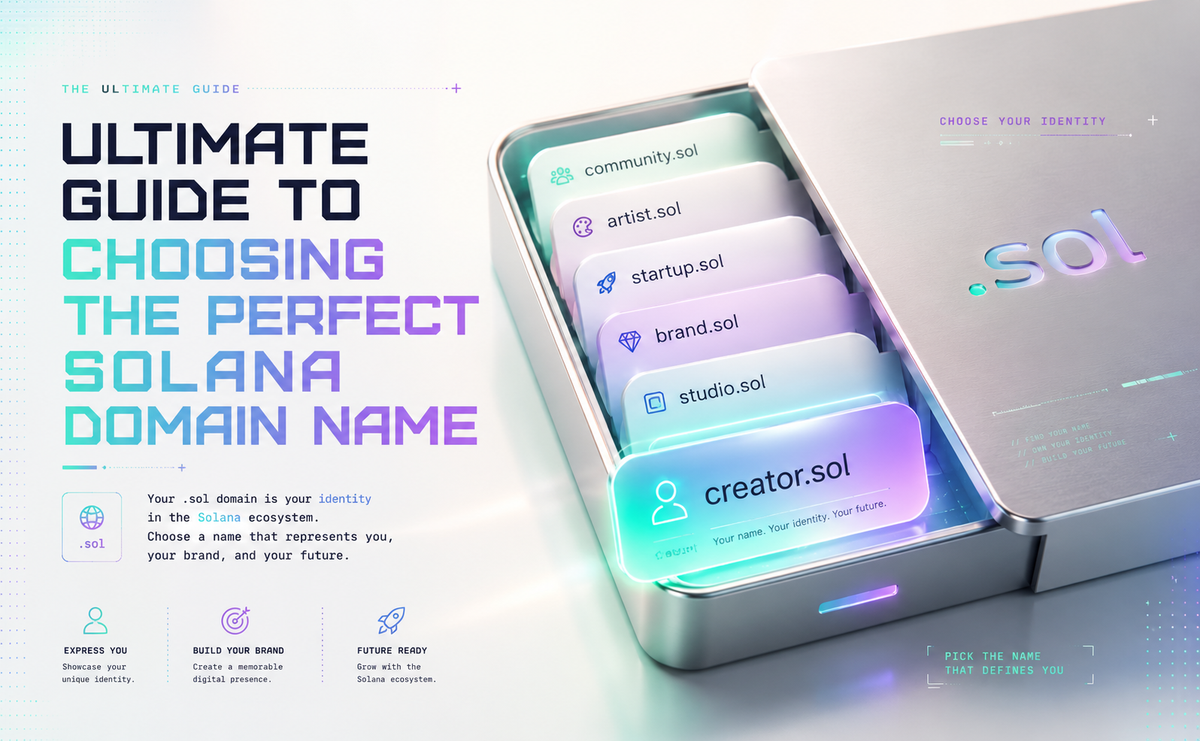
The Solana Name Service (SNS) built by Bonfida lets anyone replace their long, unwieldy Solana wallet address with a clean, memorable .sol domain. Instead of sharing something like 7xKXtg2CW87d97TXJSDpbD5jBkheTqA83TZRuJosgAsU every time someone needs to send you SOL or an NFT, you share yourname.sol. Simple, personal, and far less likely to result in a costly typo.
This guide covers everything you need to know: how SNS works, what wallets support it, how to register your .sol domain step by step, and why it's worth doing.
Understanding the Solana Blockchain
Before diving into domains specifically, it helps to understand what makes Solana worth building on in the first place.
Solana is a high-performance blockchain designed from the ground up to handle both cryptocurrency transactions and decentralized applications (dApps) at serious scale. Where most blockchains struggle with slow transaction speeds and high fees as usage grows, Solana's architecture was built to solve those problems directly.
The numbers speak for themselves: Solana can process roughly 50,000 transactions per second, at a cost of about $0.00025 per transaction. For context, Ethereum the most widely used blockchain for decentralized applications currently processes between 15 and 45 transactions per second, with fees that can spike dramatically during periods of high demand.
That combination of speed and low cost makes Solana a genuinely practical platform for everyday cryptocurrency use not just for large transactions where fees are a minor consideration, but for frequent, small-scale interactions where cost and speed actually matter to regular users.
Solana Wallets: What You Need to Know
To use SNS and register a .sol domain, you need a Solana-compatible wallet. But not all wallets are created equal, and choosing the right one depends on how you use crypto and how much you prioritize security versus convenience.
Here's a breakdown of the main types.
Hardware Wallets
Hardware wallets are physical devices designed specifically to store cryptocurrency securely. They keep your private keys entirely offline meaning even if your computer is compromised, your assets remain safe. For anyone holding significant cryptocurrency holdings, a hardware wallet is the gold standard of security.
Ledger and Trezor are the two most well-known hardware wallet manufacturers, and both have Solana support. The trade-off is convenience: you need the physical device present to authorize transactions, which adds a step that purely software-based solutions don't require.
Software Wallets
Software wallets are applications you install on your phone or computer. They store your private keys digitally and give you direct access to your Solana holdings and the broader Solana ecosystem including NFT marketplaces, DeFi platforms, and decentralized applications.
Software wallets come in several forms: mobile apps, desktop applications, and browser extensions. Popular options for Solana include Phantom (arguably the most widely used Solana wallet, known for its clean interface), Solflare, Exodus, and Trust Wallet. For most everyday users, a software wallet offers the right balance of security and accessibility.
Web-Based Wallets
Web-based wallets operate through a browser without requiring any download or installation. They're the most immediately accessible option you can log in from any device with an internet connection. The downside is that because your private keys are stored online, web-based wallets carry a higher inherent security risk than hardware or software alternatives. They're fine for smaller amounts, but not ideal for storing significant holdings long-term.
How to Choose the Right Wallet for You
A few key factors should drive your decision:
Security features are non-negotiable. Whatever wallet you choose, look for two-factor authentication (2FA), strong encryption, and clear backup seed phrase options. Your seed phrase is the master key to your wallet store it somewhere physical and secure, never digitally.
User interface matters more than people admit. If a wallet is confusing to navigate, you're more likely to make mistakes. The best wallet for you is one you actually understand and feel comfortable using. Phantom, in particular, has earned a strong reputation for being approachable for users at all experience levels.
Compatibility with dApps and platforms determines what you can actually do with your wallet beyond just holding tokens. If you're planning to use NFT marketplaces, DeFi protocols, or decentralized exchanges built on Solana, make sure your wallet integrates with those platforms. Phantom and Solflare both have strong compatibility across the Solana ecosystem.
For SNS specifically the service you need to register a .sol domain wallets from Phantom, Solflare, Trust Wallet, and Coin98 are all fully supported. Any of these will work for domain registration.
What Does a .sol Domain Actually Do?
Before walking through the registration process, it's worth being clear about what you're actually getting when you register a .sol domain.
At its most basic, a .sol domain is a human-readable alias for your Solana wallet address. When someone sends you SOL, an NFT, or a smart contract interaction, they can type yourname.sol instead of your 44-character public key. The Solana Name Service resolves that domain to your wallet address automatically the same way that typing google.com in your browser resolves to Google's actual server address.
But SNS goes beyond simple wallet aliasing. It's a smart contract-managed, decentralized registry meaning it operates without any central authority controlling it. Your .sol domain is linked to your wallet as a permanent, owned asset. Nobody can revoke it, suspend it, or charge you annual renewal fees to keep it. Once registered, it's yours indefinitely.
Developers can also integrate SNS directly into decentralized applications, making .sol domains a functional piece of infrastructure rather than just a cosmetic label. Users exploring the blockchain through compatible wallets and dApps can look up and interact with .sol domain holders the same way you'd look up a contact in your phone.
One pricing detail worth knowing upfront: shorter domain names cost more. Domains with fewer than five characters are priced at a premium, and single-character names are extremely rare and priced accordingly. For most users, a standard domain of five or more characters starts at $20 in registration fees, paid in USDC, plus a small SOL gas fee.
How to Register Your .sol Domain: Step by Step
The process is more straightforward than it might seem. Here's exactly how to do it.
Step 1: Go to the Bonfida naming service.
Head to naming.bonfida.org you can also get there by searching "Solana Name Service" in any browser. This is the official SNS registration platform, built and maintained by Bonfida.
Step 2: Connect your Solana wallet.
In the upper right corner of the page, click "Connect Wallet." The site will automatically detect any compatible wallets you have installed. Select yours, enter your password when prompted, and authorize the connection. This allows SNS to interact with your wallet for the registration transaction.
Step 3: Search for the domain you want.
Use the search bar to check availability. If your first choice is already taken, you have two paths forward: buy it directly from the current owner if they've listed it for sale, or submit an offer and wait to see if they accept. The offer route takes longer but opens up every registered domain as a potential acquisition not just the ones actively listed. Be patient if you go this route; the owner decides on their own timeline.
Step 4: Add your domain to the cart.
Found an available domain you like? Click "Add to Cart." You can add multiple domains in a single session one wallet can hold as many .sol domains as you want. Click "Continue to Cart" when you're ready to review your selections.
Step 5: Choose your storage size.
This step trips up a lot of first-time buyers, so pay attention. Each domain comes with a default storage allocation of 1kB, which is sufficient for the vast majority of users. If you have advanced use cases in mind like hosting a decentralized website via IPFS you can upgrade to 10kB by clicking "Edit" next to the storage option.
Here's the critical part: this decision is permanent. You cannot increase your storage allocation after registration. If you're not sure whether you'll need more than 1kB, think it through now. More storage means a slightly higher registration fee and potential future costs, but it's better to have the capacity if you need it.
Step 6: Complete the purchase.
The standard registration cost is 20 USDC plus approximately 0.008 SOL in gas fees for a 1kB domain. If you don't have enough crypto in your wallet, you can purchase it with regular money through your exchange, execute a token swap, or transfer funds from another wallet.
Before finalizing, review your order one more time. Then click "Complete Purchase" your wallet will prompt you to confirm the transaction. Once confirmed, the domain is yours.
You can verify ownership on the Bonfida site immediately after purchase. You can also find your domain on Solscan or any Solana block explorer by looking up your wallet address and navigating to the "Domains" tab.
Why Bother? The Real Benefits of a .sol Domain
If you're still on the fence about whether registering a .sol domain is worth the $20, here's the honest case for it.
It makes crypto transactions dramatically easier. If you send or receive cryptocurrency regularly, you already know the anxiety of double and triple-checking wallet addresses before hitting send. A .sol domain eliminates that friction entirely. Shorter, readable addresses mean fewer mistakes and in a world where transactions can't be reversed, that matters.
It's built on one of the fastest blockchains in existence. Your .sol domain resolves on a network that processes transactions at a speed and cost that no major competitor currently matches. That underlying performance isn't just a technical footnote it directly affects the user experience of everything built on Solana, including your domain.
You own it completely and permanently. No renewal fees. No expiration dates. No registrar that can suspend your domain for any reason. Once registered, your .sol domain lives in your wallet as a permanent digital asset. That's a fundamentally different relationship with your online identity than anything the traditional web offers.
Your privacy stays intact. Unlike traditional domain registration where your personal details end up in public WHOIS databases SNS keeps your information private. Your domain is linked to your wallet address on the blockchain, not to a name, address, or phone number in a public directory.
It gives you a real presence in the Web3 ecosystem. For businesses and creators building in the Web3 space, a .sol domain isn't just a convenience feature it's a signal. It says you're a real participant in the Solana ecosystem, not just a curious observer. It makes your brand searchable and recognizable within the decentralized web, and it integrates natively with the dApps and platforms your audience is already using.
Developers can build with it. The SNS infrastructure is designed for integration. Developers building Solana-based applications and wallets can incorporate .sol domain resolution directly into their products, making the ecosystem more accessible and connected over time.
A Few Things to Keep in Mind
No honest assessment skips the caveats, so here are a few worth knowing:
SNS is still maturing. Not every Solana wallet and dApp supports .sol domains natively yet, though adoption is growing steadily. You may occasionally encounter platforms where your .sol domain doesn't resolve automatically.
Shorter names go fast and cost more. If you have a brand or personal name you want to secure, don't wait. The most valuable .sol domains are being registered right now, and premium short names will only get more expensive as the ecosystem grows.
The Solana network has experienced outages in the past. While stability has improved significantly, your domain's functionality is tied to the network's health. This is worth knowing, though for most practical purposes it's a minor consideration.
Final Thoughts
A .sol domain is one of the most practical, low-cost steps you can take to establish your identity in the Solana ecosystem. At $20 for permanent ownership no renewals, no expiration, and no central authority looking over your shoulder it's an easy decision for anyone who's already active on Solana.
But it's more than just a wallet shortcut. It's a stake in the decentralized web, a building block for how people will navigate blockchain-based services as Web3 matures, and a signal that you're taking your presence in this ecosystem seriously.
The days of copying and pasting 44-character wallet addresses are numbered. The infrastructure replacing them is being built right now and a .sol domain puts you squarely inside that future.