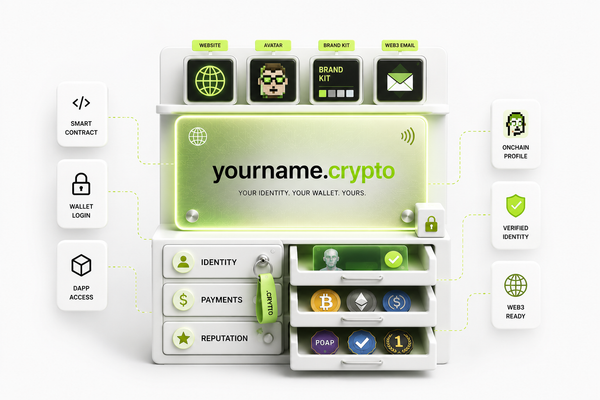
How to Use Your Domain Name As Wallet Address
Tired of long crypto addresses? Use your domain name! Discover how to make crypto transactions easier and more personal.

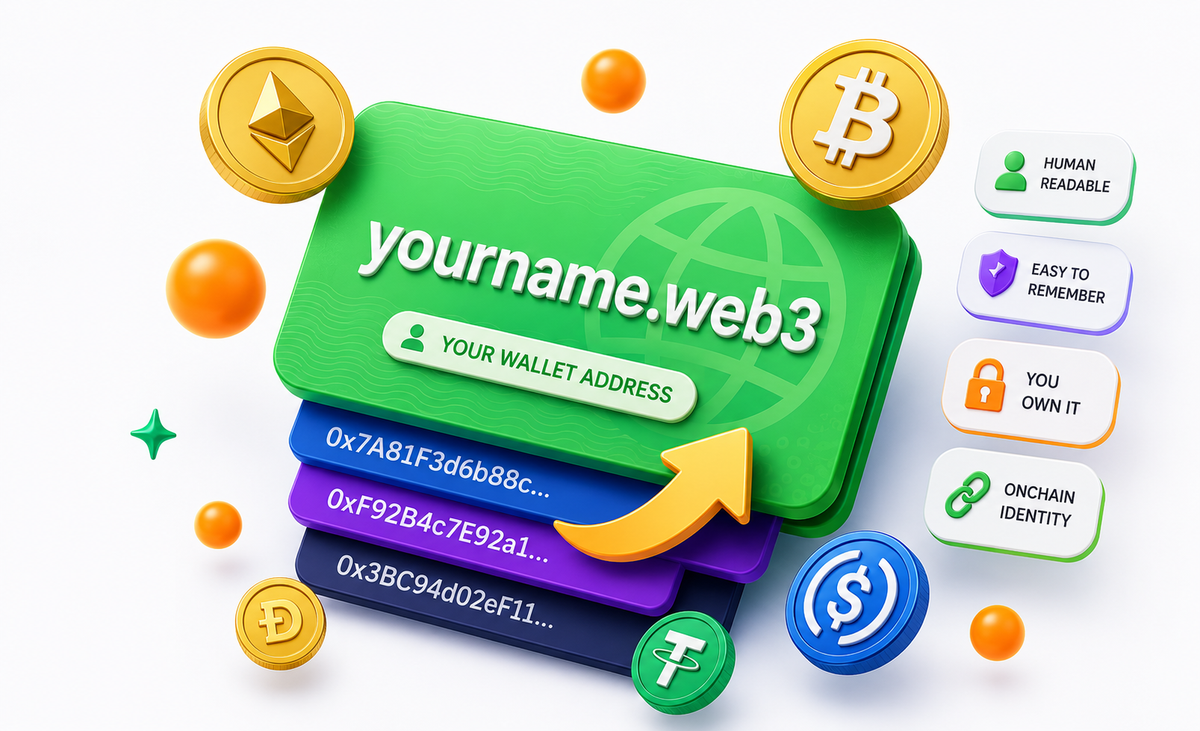
If you've ever tried to send someone cryptocurrency for the first time, you know the moment of mild panic that comes with staring at a wallet address. It looks something like this: "0x742d35Cc6634C0532925a3b844Bc454e4438f44e." You count the characters, double-check the first few digits, triple-check the last few, and still feel a little nervous before hitting send.
Now imagine replacing that entire string with something like "yourbusiness.crypto" or "yourname.eth." Clean, memorable, and impossible to mistype if you already know the name. That's exactly what domain-based wallet addresses make possible and it's one of the more quietly useful innovations to come out of the Web3 space in recent years.
This guide covers everything you need to know: what cryptocurrency wallets and domain names actually are in this context, which domain systems are leading the way in Web3, how to set up your own domain as a wallet address step by step, and the real advantages of making the switch.
What Is a Cryptocurrency Wallet?
Before getting into domain names, it's worth making sure the foundation is solid.
A cryptocurrency wallet is a digital tool that lets you store, send, and receive cryptocurrencies. Despite the name, it doesn't actually "hold" your crypto the way a physical wallet holds cash. What it actually stores are your private keys the cryptographic credentials that prove you own the assets associated with your blockchain address and authorize you to move them.
Wallets come in several forms. Software wallets include browser extensions like MetaMask, mobile apps, and desktop applications. Hardware wallets are physical devices think USB drives with security chips that keep your private keys offline and out of reach of hackers. Each has its own trade-offs between convenience and security, and the right choice depends on how actively you're transacting and how much you're protecting.
What all wallets have in common is this: they give you a way to interact with your digital assets on the blockchain, monitor your balances, and send or receive funds. The address associated with your wallet is the identifier that other people use to send you cryptocurrency which is exactly where domain names come into the picture.
What Does a Domain Name Have to Do With Cryptocurrency?
In the traditional internet world, a domain name is simply a human-readable address for a website. In the cryptocurrency and Web3 world, domain names serve several overlapping purposes and understanding all of them helps clarify why this technology matters.
As wallet addresses. This is the application we'll focus on most in this guide. Instead of sharing a long, error-prone string of characters as your wallet address, you can associate a domain name with that address and share the domain instead. Anyone who wants to send you crypto just types in your domain. The underlying system handles the translation.
As website identities. Cryptocurrency projects, blockchain companies, and decentralized applications all operate websites under domain names, just like any other business online. The domain is how users find information about the project, access applications, and engage with the team.
As part of the decentralized web. In the Web3 ecosystem, domain names take on an additional dimension. Blockchain-based domain names give users genuine ownership and control over their online identity without depending on centralized registrars or authorities that can revoke access or respond to government pressure.
As branding tools. For cryptocurrency projects and crypto-native businesses, a memorable domain name carries the same brand weight it does for any other company. It's often the first thing a potential user or investor sees, and it shapes their initial impression of the project's credibility and professionalism.
All of these roles overlap in practice. A well-chosen Web3 domain can simultaneously function as your wallet address, your decentralized website address, your digital identity across platforms, and a key piece of your brand.
The Leading Domain Name Systems in the Web3 Landscape
The Web3 domain space has grown considerably over the past few years. Here are the most established and widely adopted blockchain-based domain systems worth knowing about:
Unstoppable Domains is one of the most recognizable names in the space. It lets users buy, sell, and manage domain names across multiple blockchain networks, including Ethereum and Binance Smart Chain. Unstoppable Domains offers a wide range of extensions including .crypto, .nft, .wallet, .blockchain, and .zil, among others. One of its standout features is the one-time purchase model you buy the domain once and own it outright, with no annual renewal fees.
Ethereum Name Service (ENS) is the longest-standing and most deeply integrated decentralized domain system in the Ethereum ecosystem. ENS domains end in .eth and can be linked to Ethereum wallet addresses, decentralized websites, and applications. If you've seen someone identified as "vitalik.eth" or "yourbrand.eth," that's ENS at work. It's widely supported across wallets, browsers, and dApps, making it the most practically useful option for anyone primarily operating in the Ethereum ecosystem.
Handshake takes a different approach, aiming to decentralize the internet's root naming system itself rather than just building on top of it. It's a permissionless protocol compatible with the existing DNS infrastructure, where users can register domains ending in .hs or .shake. The focus is on creating a more secure, censorship-resistant alternative to the traditional domain root a more ambitious project than most, but one with a dedicated following in the decentralized web community.
Crypto Name Service (CNS) supports multiple blockchain networks and offers domain extensions including .cns and .crypto. It's another solid option for users who want blockchain-based domains with multi-chain compatibility.
NFT Domains as a broader category have emerged alongside the rise of non-fungible tokens. Domain names themselves have become tokenized assets bought, sold, and transferred on blockchain marketplaces just like any other NFT. Extensions like .nft and .eth fall into this category, and the market for premium NFT domain names has grown considerably as more investors recognize their value as digital real estate.
The Web3 domain landscape continues to evolve, and new platforms will likely emerge as the ecosystem matures. Before committing to a particular provider, it's always worth checking current user reviews, supported networks, and integration capabilities.
How to Set Up Your Domain Name as a Wallet Address
The process is more approachable than it might sound, especially if you break it down into clear steps. Here's how to get it done:
Step 1: Choose your domain name.
Start by deciding what name you want to use. Ideally, it should be easy to remember, relevant to your personal brand or business, and straightforward to spell. Think about how it will look when you share it with clients, collaborators, or your social media audience. "yourname.eth" or "yourbrand.crypto" are both clean, professional options.
Step 2: Purchase the domain.
Head to a reputable blockchain domain marketplace Endless Domains, Unstoppable Domains, or ENS are all solid starting points. Search for your preferred name, check what extensions are available, and complete the purchase. Unlike traditional domains, many Web3 domain providers offer one-time pricing with no annual renewals, so read the fee structure carefully before buying.
Step 3: Choose a compatible cryptocurrency wallet.
You'll need a wallet that supports custom addresses or can be integrated with blockchain domain systems. MetaMask is the most widely used option for Ethereum-based domains and works seamlessly with ENS. Make sure whatever wallet you choose is reputable, actively maintained, and compatible with the domain system you've selected.
Step 4: Link your domain to your wallet address.
This is the core step. Within your domain provider's platform, navigate to the domain management settings and add the cryptocurrency wallet address you want the domain to point to. Most platforms support multiple cryptocurrencies, so you can often link a single domain to different wallet addresses for Bitcoin, Ethereum, and other tokens simultaneously.
Step 5: Configure DNS records if needed.
Depending on your setup and what you want the domain to do particularly if you also want it to resolve to a website you may need to configure DNS records through your domain provider's control panel. This typically involves adding TXT or CNAME records that connect your domain to the right address or content. Your domain provider's documentation will walk you through the specific settings required.
Step 6: Allow time for propagation.
Changes to domain settings don't take effect instantly. DNS propagation can take anywhere from a few minutes to 48 hours, depending on the network and the specific changes made. During this window, your domain-based wallet address may not work reliably, so plan accordingly and don't use it for urgent transactions until everything has settled.
Step 7: Test everything before going live.
Once propagation is complete, send a small test transaction to your new domain-based wallet address. Confirm that the funds arrive correctly in your wallet. This step is non-negotiable always verify the setup works before sharing your domain address publicly or using it for any significant transaction.
Step 8: Start sharing your domain address.
Update your website, social media profiles, email signature, business cards, and any other touchpoints where people might need to send you cryptocurrency. The whole value of a domain-based wallet address is its memorability and ease of use, so make sure it's visible and easy to find.
Step 9: Stay on top of maintenance.
Periodically review your domain settings and wallet connection to make sure everything is still correctly configured. If you ever change your primary wallet or switch to a different address, update your domain settings promptly. Also keep your wallet software up to date and enable two-factor authentication wherever it's available.
Why Bother? The Real Advantages of Domain-Based Wallet Addresses
At this point, you might be wondering whether this is genuinely useful or just a nice-to-have for tech enthusiasts. Here's an honest rundown of the benefits and they're more practical than they might initially seem.
It eliminates a major source of transaction errors. Cryptocurrency transactions are irreversible. If you send funds to the wrong address, there's no customer service number to call and no way to get them back. Long wallet addresses are notoriously easy to mistype or misread. A familiar, human-readable domain name drastically reduces that risk.
It's dramatically more memorable. "Send payment to yourbrand.crypto" is something a client can actually remember. "Send payment to 0x742d35Cc6634C0532925a3b844Bc454e4438f44e" is not. For anyone receiving payments regularly, this difference is significant.
It adds a layer of professionalism. A domain-based wallet address signals that you take your presence in the crypto space seriously. For freelancers, content creators, and businesses that want to accept cryptocurrency payments, it's the equivalent of having a professional email address rather than a generic one it just reads better.
It reinforces your brand identity. Your domain address becomes part of your brand in the crypto community. It's consistent, recognizable, and tied to your name or business in a way that a random string of characters never could be. Over time, it becomes something people associate specifically with you.
It makes marketing simpler. When you run a campaign that involves a call to action around crypto payments, "send to yourbrand.crypto" fits cleanly into a headline, a social post, or a promotional email. A traditional wallet address doesn't.
It supports decentralized identity. Owning a domain that doubles as your wallet address gives you a piece of the decentralized web that belongs to you not to a corporation, not to a registrar, not to a platform that can change its terms of service tomorrow. That alignment with the core values of Web3 is meaningful for users who care about digital sovereignty.
It works consistently across platforms. A well-configured domain-based wallet address functions the same way whether someone is sending you funds through a mobile wallet, a desktop application, or a browser extension. That consistency simplifies things for everyone involved.
A Few Things to Keep in Mind
Domain-based wallet addresses are genuinely useful, but they're not a replacement for sound security practices. A memorable domain name doesn't make your underlying wallet any more or less secure what it does is reduce the chance of human error on the sender's end. You still need to protect your private keys, enable two-factor authentication wherever possible, use reputable and actively maintained wallet software, and stay current on developments in the crypto security landscape.
Also worth noting: the Web3 ecosystem moves fast. Domain systems that are dominant today may face competition from new entrants tomorrow, and the browser and application support for specific domain extensions continues to evolve. Staying informed about the platforms you're using is part of operating responsibly in this space.
Final Thoughts
Using a domain name as your cryptocurrency wallet address is one of those innovations that seems small on the surface but makes a genuine difference in practice. It makes transactions less error-prone, easier to share, more professional in appearance, and more consistent with the broader vision of a user-owned, decentralized web.
If you're actively involved in the cryptocurrency space whether as a trader, a content creator, a freelancer accepting crypto payments, or a business building in the Web3 ecosystem setting up a domain-based wallet address is a worthwhile investment of an hour or two. The setup is straightforward, the ongoing maintenance is minimal, and the day-to-day benefits are real.
The crypto space is still early enough that getting these basics right now puts you ahead of where most participants will be in a few years. A clean, memorable domain address is a small thing but in a space where first impressions and ease of use matter enormously, small things add up.