Why .wallet Domains are Key to Improving Security in Cryptocurrency Transactions
.wallet domains: Secure your crypto, simplify transactions. The future of Web3 identity and secure digital asset management.

Here's a scenario most crypto users know all too well.
You're about to send Ethereum to someone. They paste their wallet address into the chat a 42-character string of random letters and numbers that looks something like 0x4bF8c72e1a3d9F45b2… and you have to copy it, paste it into your wallet app, and then nervously double-check every character before hitting send. One wrong digit and the funds are gone. Not delayed, not recoverable just gone.
This is the reality of crypto transactions today, and it's a problem that's keeping a lot of people on the sidelines. The technology behind cryptocurrency is genuinely powerful, but the user experience around sending and receiving it? Still pretty rough.
That's exactly the problem .wallet domains are designed to solve and they're doing it in a way that doesn't require users to understand blockchain infrastructure to benefit from it. Instead of a cryptic string of characters, you just send funds to yourname.wallet. Simple, readable, and a lot harder to get wrong.
Let's break down why this matters, how it works, and where it's all heading.
The Real Problems With Crypto Transactions Today
Before getting into the solution, it's worth spending a minute on why the current system is so problematic. Because the issues go deeper than just inconvenience.
Long Addresses Create Real Financial Risk
Ethereum wallet addresses are typically 40-plus alphanumeric characters long. That format is technically necessary for the network to function but from a human usability standpoint, it's a disaster waiting to happen.
The brutal reality of blockchain transactions is that they're irreversible. There's no "undo" button, no customer support line to call, no fraud department that can reverse a mistaken transfer. If you send funds to the wrong address even by a single mistyped character that money is gone. Permanently.
For experienced crypto users, this is a known risk they manage carefully. For newer users, it's a source of genuine anxiety. And even the most experienced users aren't immune to copy-paste errors or a moment of inattention.
Phishing Attacks Are Getting Smarter
Phishing in crypto doesn't look like it used to. Attackers have gotten sophisticated building convincing replicas of legitimate platforms, sending emails that look like they're from exchanges you actually use, and creating fake wallet interfaces designed to capture your credentials or redirect your transactions.
The core exploit is simple: when wallet addresses are long, random strings of characters, users have no reliable way to visually verify whether an address is legitimate. Everything looks the same to the human eye. That's a vulnerability attackers exploit constantly.
Address Manipulation Is a Real Threat Most People Don't Know About
There's an attack vector called "clipboard hijacking" that doesn't get nearly enough attention. Here's how it works: malware running silently on your computer monitors your clipboard. The moment you copy a wallet address, it replaces it with the attacker's address. You paste what you think is the right address, send the funds, and the money goes somewhere you never intended.
Because wallet addresses are so long and look so similar, most users don't catch it. They see a string of characters, assume it's what they copied, and send. The blockchain confirms the transaction, and the funds are gone.
The Whole Experience Is Still Too Intimidating for Most People
Cryptocurrency adoption has grown enormously, but it's still held back by a user experience that rewards technical confidence and punishes mistakes without mercy. For the millions of people who are curious about crypto but haven't fully committed, the complexity of wallet addresses is a genuine barrier. There's no forgiving interface, no familiar naming convention, no way to look at a wallet address and immediately know it belongs to who you think it belongs to.
So What Exactly Is a .wallet Domain?
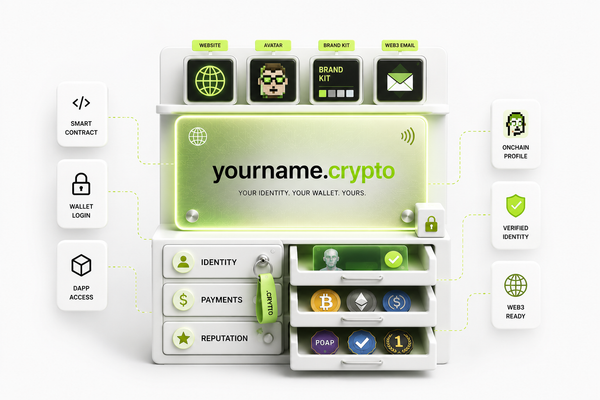
A .wallet domain is a human-readable name something like sarah.wallet or yourbusiness.wallet that maps directly to a cryptocurrency wallet address on the blockchain.
Think of it like a contact name in your phone. You don't memorize your friends' phone numbers anymore you just search for their name. A .wallet domain does the same thing for crypto. Instead of entering a 40-character address, you type a name. The blockchain handles the translation behind the scenes.
These domains are available through providers like Unstoppable Domains, and once you register one, you can link it to your existing wallet whether that's Ethereum, Bitcoin, or any number of other supported cryptocurrencies. From that point on, anyone who wants to send you crypto can use your .wallet domain instead of your wallet address.
What makes this different from a simple nickname or alias is that it's stored on the blockchain itself. That means it's decentralized no company or registrar controls it, and no one can take it from you. It's also immutable and publicly verifiable, which has important implications for security.
How .wallet Domains Actually Improve Security
They Eliminate the Human Error Problem at the Source
The most straightforward security benefit is the simplest one: when you replace a 42-character string with a short, readable name, the opportunity for input error drops dramatically. There's a huge difference between typing 0x4bF8c72e1a3d9F45b2CC8d7e4F1a5B63c9e2D718 and typing john.wallet. One of those is something a human being can reliably get right. The other, statistically, is not.
For a technology where errors are permanent and irreversible, reducing the opportunity for those errors isn't a nice-to-have it's fundamental to making the system trustworthy for everyday use.
They Make Phishing Attacks Much Harder to Pull Off
When you're sending funds to sarah.wallet, you can visually verify that name in a way you simply cannot with a hex string. It's familiar, it's tied to an identity, and it's easy to notice when something is off. Receiving an email asking you to send funds to sarahh.wallet or sarah-wallet.wallet is far more obviously suspicious than receiving one with a slightly altered hex address a difference most users would never catch.
This isn't a complete defense against phishing, but it significantly raises the bar for attackers. The more recognizable and verifiable wallet identities become, the harder it is to impersonate them convincingly.
They Neutralize Clipboard Hijacking
Remember the clipboard hijacking attack described earlier? .wallet domains largely neutralize it not by detecting malware, but by removing the behavior that makes the attack work in the first place.
If you're sending to john.wallet, you type that name. You don't copy and paste a 40-character address from somewhere else. There's nothing for clipboard-monitoring malware to intercept and replace, because the risky behavior copying and pasting an unverifiable string simply isn't part of the transaction anymore.
Blockchain Verification Means Ownership Is Transparent and Tamper-Proof
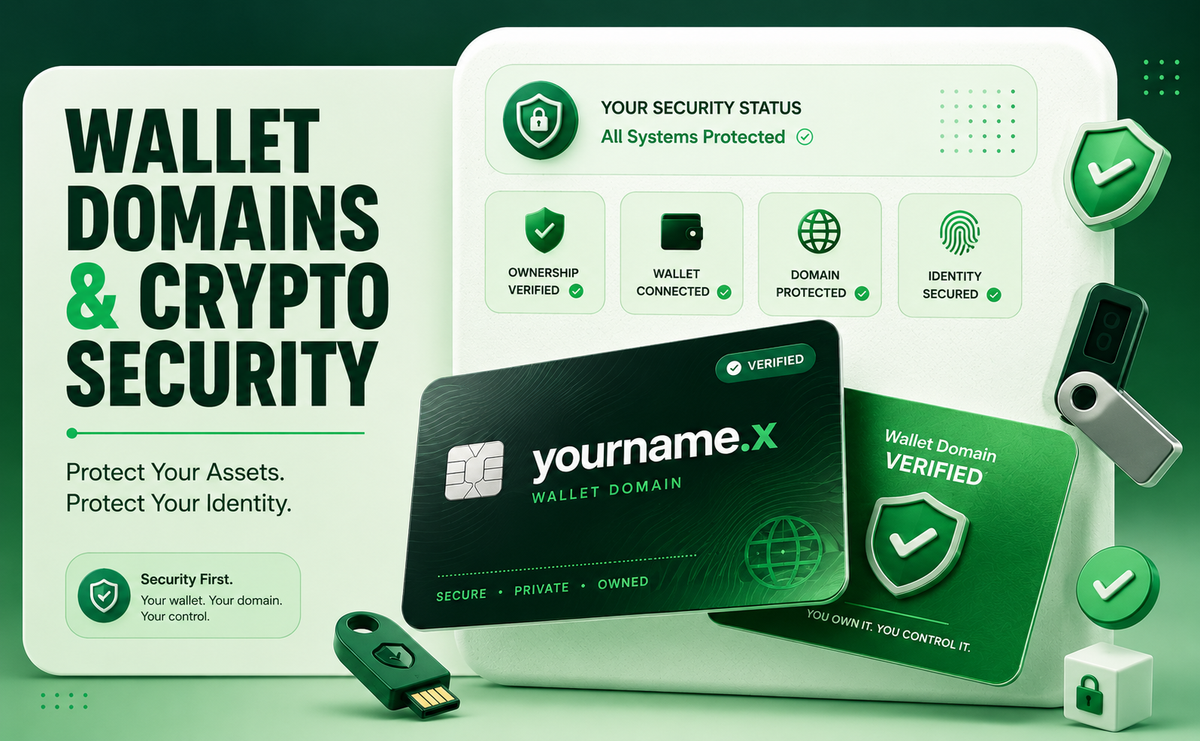
Every .wallet domain is recorded on a decentralized blockchain ledger. That means ownership is publicly verifiable anyone can confirm who controls a given domain. There's no ambiguity, no room for unauthorized transfers without the owner's private key, and no central authority that could be compromised or manipulated to reassign a domain.
This kind of transparent, verifiable ownership is a meaningful upgrade over traditional systems, where domain ownership records are held by registrars and can theoretically be changed by people other than the owner.
Beyond Security: The Everyday Usability Wins
Security is the headline benefit, but .wallet domains also just make the daily experience of using crypto significantly better.
Faster transactions. When you're not carefully copying, pasting, and triple-checking a 40-character address, sending crypto takes a lot less time and cognitive energy. Transactions that used to feel high-stakes become routine.
Professional credibility. For businesses and creators accepting crypto payments, a .wallet domain is the difference between handing someone a business card and handing them a random string of characters. payments.yourbusiness.wallet tells people exactly what they're dealing with and communicates a level of professionalism that a raw wallet address simply can't.
Works with the wallets you already use. .wallet domains integrate with major wallets including MetaMask, Trust Wallet, and Coinbase Wallet, which means users don't have to switch platforms or change their workflow. The domain just becomes an alias for their existing address.
One identity across multiple assets. Rather than managing separate addresses for Ethereum, Bitcoin, and other cryptocurrencies, users can link multiple wallets to a single .wallet domain. One name, multiple currencies a meaningful simplification for anyone who holds several different assets.
Where .wallet Domains Fit in the Bigger Web3 Picture
The growth of .wallet domains isn't happening in isolation. It's part of a broader shift in how Web3 infrastructure is being built away from systems that require technical expertise to navigate and toward ones that actually work for regular people.
DeFi integration is expanding. As .wallet domains become more common, they're increasingly being used to interact directly with decentralized finance platforms lending protocols, staking services, automated payment systems. Linking a .wallet domain to a smart contract enables cleaner, more automated financial workflows without the friction of managing raw addresses.
The NFT market is benefiting too. For collectors and creators who are active across multiple NFT platforms, a .wallet domain provides a unified identity. Rather than tracking different wallet addresses across OpenSea, Blur, and other marketplaces, everything connects through a single, recognizable name.
Major platforms are taking notice. Exchanges and wallets including Binance, Coinbase, and MetaMask have begun integrating support for these domains, which is a strong signal that the industry sees them as part of the infrastructure going forward not just a niche feature for early adopters.
The Bigger Picture: What Wide Adoption Could Mean
Here's what gets interesting when you zoom out. Right now, crypto's security problems are largely user-side problems human error, phishing susceptibility, lack of verifiability. .wallet domains address all of those things at once, with a solution that doesn't require users to change their behavior dramatically or develop new technical skills.
If .wallet domains achieve the kind of adoption that seems increasingly plausible given integrations with major platforms, growing Web3 infrastructure, and rising mainstream interest in cryptocurrency the downstream effects on the overall safety of the crypto ecosystem could be substantial. Fewer lost funds due to input errors. Fewer successful phishing campaigns. Harder clipboard-hijacking attacks. More verifiable, trustworthy transaction identities.
None of that requires the underlying blockchain technology to change. It just requires replacing the current naming convention one that was designed for machines with one that works for humans.
Final Thoughts
Cryptocurrency has a trust problem not in the technology itself, but in the user experience around it. People lose funds to avoidable errors, fall victim to phishing attacks that exploit the opacity of wallet addresses, and stay on the sidelines because the whole process feels too risky to engage with confidently.
.wallet domains don't fix every problem in the crypto space, but they fix several of the most common and costly ones in an elegantly simple way. A short, personalized, blockchain-verified name is just easier to use correctly than a 40-character hex string and in a system where mistakes are permanent, "easier to use correctly" is exactly the same thing as "more secure."
For anyone actively using crypto, working in the Web3 space, or building products for decentralized finance, .wallet domains are worth paying close attention to. The shift from raw addresses to human-readable identities feels less like a nice upgrade and more like something the ecosystem should have had from the start.