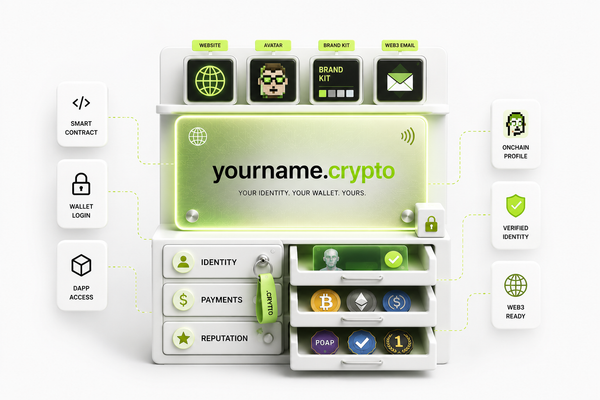
Web3 Domains: What They Are and Why They Matter
Web3 domains: More than just addresses. See how they're revolutionizing online identity and transactions across the decentralized web.

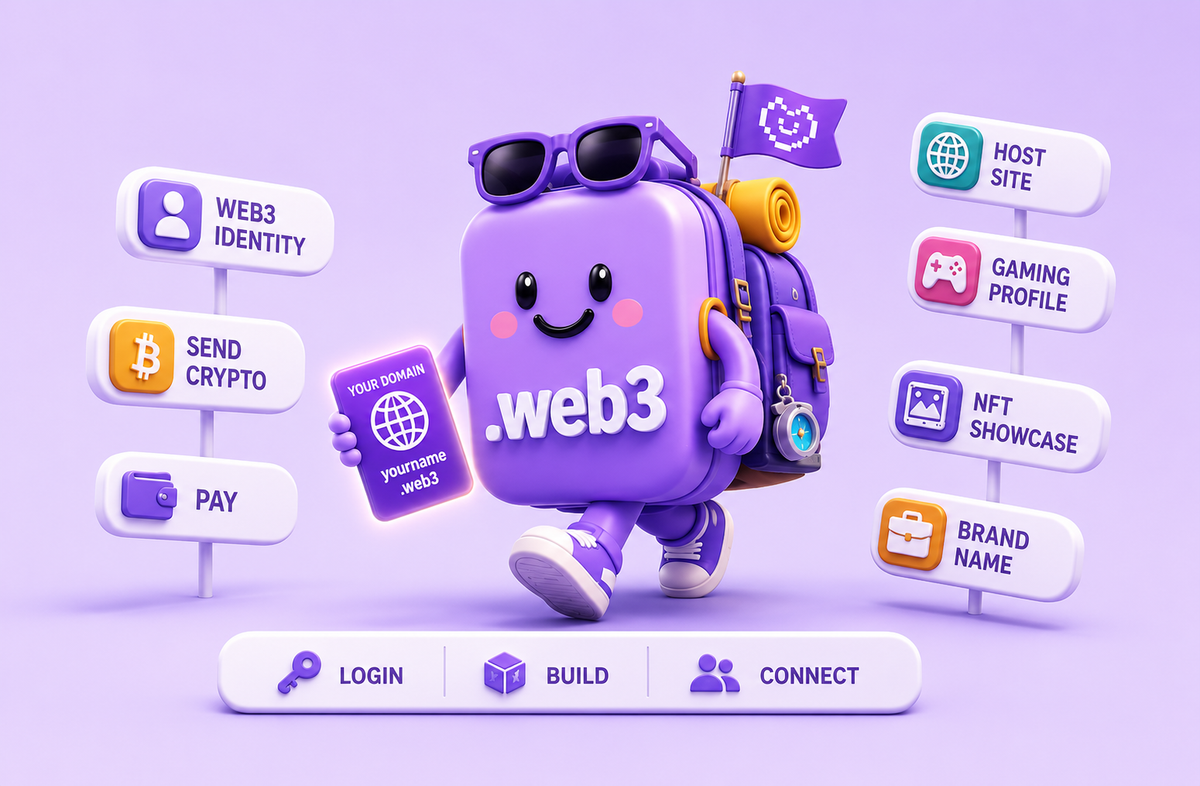
Web3 domains are quietly reshaping how we interact, transact, and build identity online. Also known as blockchain domains, they're unique addresses stored on public blockchains like Ethereum rather than in a centralized registry.
The big difference from a traditional domain (think .com or .net) is who's actually in charge of it. A .com is managed by a centralized registrar that can suspend it, transfer it, or fail to renew it on your behalf. A Web3 domain is yours outright permanent, censorship-resistant, and usable across a growing range of decentralized applications.
The Building Blocks of a Web3 Domain
Web 3.0 the loose shorthand for this next stage of the internet is built around the idea that people shouldn't just consume and create content, but actually own pieces of the infrastructure underneath it. A handful of major companies have experimented with this idea over the past few years, with mixed results: Shopify still actively supports Web3 commerce tools for merchants who want to mint or sell NFTs, while early movers like Meta and Nike rolled out ambitious NFT platforms in 2022 only to wind them down a few years later once the broader market cooled off. It's a useful reminder that "Web3 adoption" isn't a straight line some pieces of the infrastructure are sticking around, others aren't.
Here's what actually makes a Web3 domain work, mechanically speaking:
1. Blockchain as the foundation. Web3 domains are minted as NFTs on a public blockchain Ethereum being the most common, though plenty are now minted on Polygon and other chains as well. That blockchain functions as the permanent, tamper-resistant ledger of who owns what.
2. Domain extensions that signal "Web3." Instead of .com or .net, you'll see suffixes like .crypto, .nft, .dao, .zil, and .eth. Each one usually comes from a different registrar, and the features and pricing can vary quite a bit between them.
3. Smart contracts handle ownership. The transfer, management, and configuration of a Web3 domain is governed by self-executing code on the blockchain. That's what lets you securely hand off ownership, link the domain to a crypto wallet address, or update its records, all without needing a registrar's permission.
4. Decentralized storage for the content itself. Websites tied to a Web3 domain are often hosted on networks like IPFS (the InterPlanetary File System) rather than a single server. Spreading the content across many independent nodes means there's no single point of failure to take the site down.
5. A crypto wallet to manage it all. You'll need a wallet that supports NFTs and domain functionality MetaMask, Trust Wallet, and Coinbase Wallet are common choices. These aren't Bitcoin-specific wallets; they're built to handle Ethereum and other smart-contract chains, which is where most Web3 domains actually live.
6. Registrars and marketplaces. Services like Unstoppable Domains and the Ethereum Name Service (ENS) handle the actual minting and registration, while secondary marketplaces let people buy, sell, and trade domains after the fact. Many of these tools plug directly into the wallets mentioned above.
What Are People Actually Using Web3 Domains For?
The theory is interesting, but the real test is whether any of this solves a problem people actually have. Here's where Web3 domains are showing up in practice.
Making Crypto Payments Less Painful
Wallet addresses are long, ugly strings of characters that nobody wants to type or double-check by eye. Web3 domains swap that for a simple, memorable name that resolves to your wallet across multiple blockchains. That has a few knock-on effects: it lowers the barrier for newcomers who'd otherwise be intimidated by copying and pasting a 40-character address, it makes blockchain payments feel more like sending an email, and it gives dApps a cleaner, more human way to handle transfers.
Building a Foundation for the Metaverse
As more blockchain-based networks connect to each other, a Web3 domain becomes more than just an address it becomes a portable identity that follows you between platforms. You can link your NFTs, in-game items, and social profiles to one domain, creating a consistent presence as you move between social spaces, games, marketplaces, and virtual events. Some proof-of-stake networks, including Ethereum and Avalanche, also let users earn rewards for helping secure the network, which is a separate but related piece of the broader Web3 puzzle.
Powering DeFi (Decentralized Finance)
DeFi applications most of them still built on Ethereum aim to recreate financial services like lending, saving, and trading without a bank or middleman sitting in between, replacing that trust with code and collateral instead. Web3 domains help here in a couple of ways: they give DeFi projects a recognizable, ownable brand in a crowded space, and they open the door to more direct peer-to-peer trading that doesn't rely on a traditional order book. Longer term, that kind of infrastructure could support more transparent governance, decentralized identity verification, and new approaches to credit scoring that don't depend on a traditional credit bureau.
Identifying DAOs (Decentralized Autonomous Organizations)
A DAO is essentially a community-run organization where smart contracts not a board of directors set the rules and execute decisions. A Web3 domain gives a DAO a recognizable identity members can rally around (a climate-focused DAO might register "greenfuture.dao," for instance), makes it easier for members to find voting platforms and active proposals, and when linked directly to the DAO's treasury lets anyone track funds and transactions in real time, which helps keep the organization honest about its finances.
Blockchain Gaming
Blockchain games let players genuinely own their in-game items rather than just renting them from a publisher, usually by representing weapons, skins, or characters as NFTs. That ownership model also opens the door to moving assets between games, selling them on secondary markets for real money, and earning income through play in some titles. It's one of the more concrete examples of "owning a piece of the internet" actually playing out in a product people use for fun.
Building a Portable Online Identity
A Web3 domain can act as a single, user-owned anchor point for everything tied to your digital identity: credentials, accomplishments, social activity, and more, all controlled by you rather than scattered across platforms that each have their own login. That gives you fine-grained control over what gets shared. You could, for example, give a lender cryptographic proof that you meet a lending requirement without disclosing your full net worth, or prove past employment without revealing your entire work history. It also chips away at a long-standing problem: large platforms have built enormous businesses around harvesting and reselling personal data, and a model where users actually own their own data, and choose what to share, cuts a lot of that out of the equation.
Verifying Education Credentials
Diplomas, certificates, and smaller credentials could all live in one portable, verifiable record tied to a Web3 domain instead of being scattered across transcripts and institutional databases. That would make verifying a degree or requesting a transcript far less of an administrative headache for both students and schools, and it would let credentials travel internationally without the usual friction which opens the door to more cross-border collaboration and easier access to lifelong learning.
Why This Matters
These use cases matter less as a tech demo and more as a test of whether Web3 domains solve problems people actually have. From DeFi to gaming to the broader idea of a portable digital identity, the common thread is addressing real inefficiencies around asset ownership, data sharing, and financial transactions that have built up over decades of centralized infrastructure. None of this guarantees mainstream adoption plenty of corporate Web3 experiments have already come and gone but the use cases that are sticking around tend to be the ones solving an actual, specific problem rather than chasing a trend. That's probably the most honest way to think about where Web3 domains go from here.