Using Web3 Domains to Build Custom DeFi Dashboards in 2025
Web3 domains simplify DeFi dashboards and offer secure, customized crypto management. Explore Endless Domains’ role in advancing blockchain innovation.

Anyone who has spent meaningful time in decentralized finance knows that the experience, for all its financial innovation, can be genuinely difficult to navigate. You're juggling multiple wallets across different blockchain networks, copying and pasting long strings of alphanumeric characters into transaction fields, monitoring positions across different protocols through separate interfaces, and hoping at every step that you haven't made a small error with large financial consequences.
The technology underlying DeFi is sophisticated and genuinely transformative. The user experience, in many cases, has not kept pace.
Custom DeFi dashboards are one of the more practical responses to this gap. By consolidating portfolio tracking, yield farming monitoring, staking management, and trading into a single interface, they reduce the cognitive load of managing a complex DeFi position. And when Web3 domains are integrated into those dashboards, the experience improves further still, replacing the raw wallet addresses that create so much friction with human-readable names that are easier to use, easier to verify, and significantly less prone to costly errors.
This blog covers what custom DeFi dashboards are, how Web3 domains enhance them, how to build one, and where the space is heading in 2025.
What Custom DeFi Dashboards Actually Do
A custom DeFi dashboard is a personalized interface that brings together the various activities and positions a user manages across decentralized finance protocols. Instead of logging into Aave to check lending positions, then switching to Uniswap to monitor liquidity pools, then opening a separate tool to track yield farming rewards across multiple chains, a well-designed dashboard consolidates all of that into a single view.
The practical value is straightforward. Portfolio management becomes easier when you can see all your assets across different blockchains in real time without switching between interfaces. Yield optimization is more effective when staking rewards and farming profits are visible in one place. Trading is more convenient when you can access pairs and execute swaps without navigating away from your central dashboard.
The challenge that most DeFi interfaces share is the wallet address problem. Blockchain addresses are long, complex, and unforgiving. A single transposed character in a wallet address can send funds to the wrong destination permanently, with no mechanism for recovery. For users managing significant positions across multiple wallets and chains, the cumulative anxiety of dealing with these addresses in every transaction is a real barrier to effective portfolio management.
Web3 domains address this problem directly, and their integration into custom dashboards is one of the most practical improvements available to DeFi users right now.
How Web3 Domains Transform the DeFi Dashboard Experience
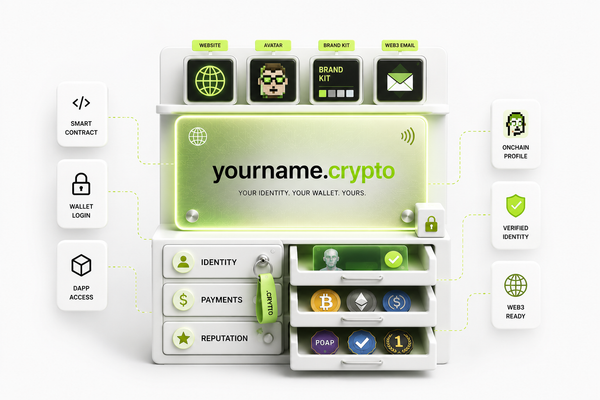
The core function of a Web3 domain in a DeFi context is simple: it replaces a wallet address like 0x4e2d...7f9c with something like yourname.crypto or yourbrand.wallet. That substitution has implications that go well beyond cosmetic improvement.
Simplified access is the most immediate benefit. When a user links their Web3 domain to their DeFi dashboard, logging in and conducting transactions becomes as straightforward as using a recognizable name rather than copying and pasting a long address. For newcomers to DeFi who find the raw wallet address experience intimidating, this reduction in friction is meaningful. For experienced users who manage multiple positions and execute frequent transactions, it's a genuine efficiency improvement that adds up over time.
Enhanced security is the more significant benefit. A major category of errors and losses in DeFi comes from address mistakes, either typos during manual entry or copying the wrong address from a clipboard. When transactions are routed through a verified, domain-linked address, the risk of this kind of error drops substantially. The domain provides a recognizable, human-verifiable identifier that users can confirm before completing a transaction, rather than checking a long string of characters that's easy to misread.
Phishing attacks, which often rely on directing users to addresses that look superficially similar to legitimate ones, become harder to execute when the transaction destination is a readable, blockchain-verified domain name rather than an address that's nearly impossible to verify at a glance.
Multi-chain compatibility is another area where Web3 domains add real value. Most serious DeFi participants operate across multiple blockchain networks, and managing separate wallet identities for each chain adds complexity. A single Web3 domain can serve as a unified identifier across multiple chains, enabling users to interact with Ethereum, Binance Smart Chain, Polygon, and other networks through one consistent, recognizable identity rather than maintaining separate addresses for each.
Decentralized identity integration extends the value of Web3 domains beyond simple wallet address replacement. A domain can be linked to credentials, reputation scores, NFT holdings, and other identity attributes that make it a richer identifier within the DeFi ecosystem. Platforms like Zerion and Zapper are already allowing domain-linked accounts to manage multi-chain portfolios seamlessly, and the range of applications is expanding as more protocols integrate Web3 domain support.
For businesses operating in DeFi, the branding implications are also worth noting. A company managing client funds or conducting trades under a domain like mycompany.crypto presents a more credible, professional identity than a raw wallet address does. In an ecosystem where trust is hard-won and easy to lose, that clarity of identity matters.
How to Build a Custom DeFi Dashboard with Web3 Domains
Building a custom DeFi dashboard that integrates Web3 domains is more accessible than it might sound. Here's a practical walkthrough of the process.
Step one is acquiring your Web3 domain through Endless Domains. The platform offers a straightforward registration process for a range of blockchain domain extensions, including .crypto, .bitget, and .wallet. You visit EndlessDomains.io, explore the available options, choose a name that reflects your identity or brand, and complete the purchase through crypto or fiat payment. With your domain secured, you have the foundation for a recognizable, professional presence in decentralized finance.
Step two is linking your domain to your preferred blockchain wallet. Using configuration tools available through platforms like Unstoppable Domains or ENS, you assign your domain to wallet addresses on the blockchains you use most actively, whether Ethereum, Binance Smart Chain, Polygon, or others. Once this link is established, your domain name functions as the address for transactions on those networks, replacing the raw address in any context where the domain is recognized.
Step three is integrating your domain with the DeFi platforms you use. Most major protocols, including Uniswap, Aave, and PancakeSwap provide APIs and SDKs that allow you to connect your Web3 domain for secure authentication and data integration. Your domain becomes the gateway for logging in and managing transactions across these platforms, simplifying access and creating a consistent identity across your DeFi activity.
Step four is customizing the dashboard with the specific functionality you need. Blockchain analytics tools like Dune Analytics and Glassnode can be integrated to add real-time portfolio tracking, market insights, and yield data. Smart contracts linked to your domain can automate specific functions like staking reward collection or liquidity pool monitoring. This is where the dashboard becomes genuinely personalized, tailored to your specific portfolio composition and investment strategy rather than being a generic interface that works acceptably for everyone but optimally for nobody.
The Key Benefits in Practice
Looking at the benefits of Web3 domain-integrated DeFi dashboards from a user perspective makes their practical value clearer.
Wallet management becomes dramatically less stressful. Instead of maintaining a directory of wallet addresses and verifying each one carefully before every transaction, you work with names you recognize. Sending or receiving crypto through yourname.crypto rather than through a 42-character address string reduces both the cognitive load and the error risk of frequent DeFi transactions.
Security improves in ways that go beyond reduced address errors. Blockchain encryption through the Web3 domain layer protects transactions from phishing attacks. Decentralized identity integration means you maintain control over your personal information without depending on centralized systems that can be breached or misused. And the blockchain record of domain ownership provides transparent, verifiable proof of identity that centralized authentication systems can't match for reliability.
Personalization is more than a cosmetic benefit. A dashboard that reflects your specific portfolio composition, investment strategy, and interface preferences is a more effective tool than a generic one. Web3 domains enable that customization at the identity layer, giving businesses a distinctive branded presence and individual users an interface that feels like it was built for them rather than for a generic DeFi participant.
Cross-platform usability matters increasingly as the DeFi ecosystem diversifies. The ability to use a single Web3 domain as your consistent identifier across Ethereum, Binance Smart Chain, Polygon, and other networks, and across protocols including Uniswap, Aave, and Curve Finance, reduces the fragmentation that makes comprehensive DeFi portfolio management so complex. One identity, one dashboard, many protocols.
Where This Is Heading in 2025
Several trends are shaping the evolution of Web3 domain-integrated DeFi dashboards in ways worth understanding now.
AI-powered analytics are becoming increasingly central to how sophisticated DeFi participants manage their portfolios. AI algorithms that analyze market trends, assess portfolio risk, and generate predictive recommendations can transform a dashboard from a passive monitoring tool into an active decision-support system. Web3 domains serve as the entry point to these personalized AI-driven dashboards, with the domain linking a user's identity and history to the analytics infrastructure that powers the insights. Automated portfolio rebalancing and yield optimization based on real-time market analysis are moving from experimental features to standard expectations.
Multi-chain integration is becoming more important as the blockchain ecosystem expands. The future of DeFi isn't going to be a single dominant chain. It's going to be an interconnected ecosystem of networks, each with its own strengths, and participants who want to access the best opportunities will need to move fluidly across them. Web3 domains that function as consistent identifiers across multiple chains, enabling unified asset management without separate addresses for each network, are essential infrastructure for this multi-chain future.
Decentralized identity systems are maturing into a foundational layer of the Web3 ecosystem. As more DeFi platforms adopt DID-based authentication, the ability to log in and verify identity across protocols using a single Web3 domain becomes a standard capability rather than an advanced feature. The privacy and security benefits of this model, where users control their identity data rather than entrusting it to centralized platforms, will drive adoption as users become more aware of what centralized authentication costs them.
NFT integration in DeFi dashboards is growing as the boundary between fungible and non-fungible assets blurs. Users who hold both token-based DeFi positions and NFT-based assets increasingly want to manage both through a single interface. Web3 domains enable personalized dashboards that accommodate this combination, giving users a unified view of their complete digital asset portfolio.
Getting Started with Endless Domains
For DeFi participants ready to build a domain-integrated dashboard, Endless Domains provides the starting point. The platform's range of blockchain domain extensions, straightforward registration process, and integration support with major wallets and DeFi ecosystems make it an accessible entry point regardless of your technical background.
The process of securing a domain, linking it to your wallets, and integrating it with your primary DeFi platforms can be completed in a few focused hours. The dashboard customization that builds on that foundation is an ongoing process that evolves as your portfolio and strategy develop.
Final Thoughts
DeFi is genuinely powerful, and the financial opportunities it offers are real. But the friction of raw wallet addresses, fragmented interfaces, and complex multi-chain management has been a persistent barrier to making the most of those opportunities.
Custom DeFi dashboards with Web3 domain integration address that friction at its source. They make transactions simpler and less error-prone. They consolidate multi-chain portfolio management into a coherent view. They provide a consistent, professional identity across the DeFi ecosystem. And they create the foundation for AI-powered analytics, decentralized identity management, and multi-chain interoperability that will define the next generation of DeFi tools.
The infrastructure to build this kind of dashboard is available now. Endless Domains makes securing the Web3 domain that anchors it straightforward. The question is simply whether you're ready to invest in a DeFi experience that actually works as well as the technology underlying it deserves.