Are Web3 Domains the Future of SaaS Products in 2025?
In 2025, Web3 domains will revolutionize SaaS products by enabling decentralized hosting, blockchain-powered authentication, and enhanced security. This will create a more seamless, efficient, and trust-driven digital ecosystem.

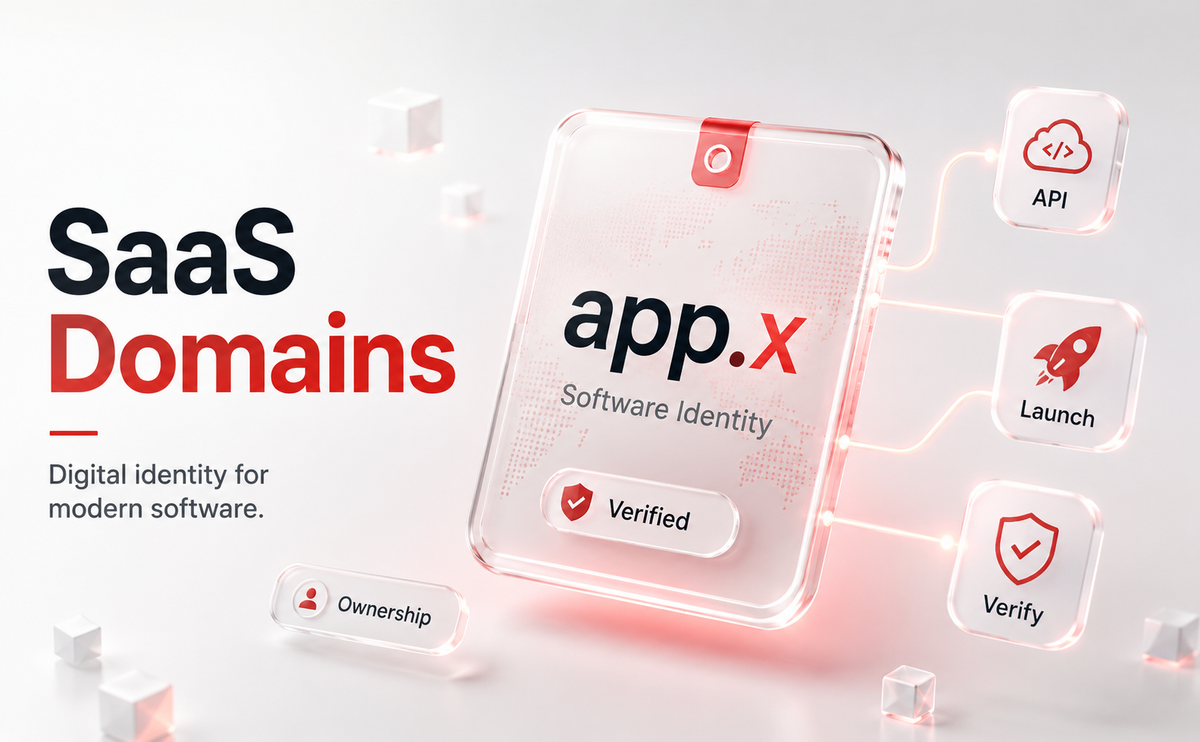
Software-as-a-Service has become so embedded in how businesses operate that most people don't think twice about it. You open a browser, log into a cloud-based tool, and get to work. The fact that your data lives on someone else's server, that your access depends on a subscription that can be modified at any time, and that the entire experience is controlled by a company whose interests may not always align with yours, all of that tends to fade into the background until something goes wrong.
And things do go wrong. The 2021 AWS outage took down significant portions of the internet along with it, affecting millions of users who had no recourse except to wait. The 2020 SolarWinds attack compromised thousands of businesses and government agencies through a centralized SaaS provider's vulnerability. Adobe's shift to Creative Cloud subscription pricing left longtime customers with no option for permanent ownership of software they'd relied on for years.
These aren't isolated incidents. They're symptoms of a structural problem with how SaaS has been built: centralized infrastructure creates centralized points of failure, and users at the end of that chain have very little control.
Web3 domains are part of a broader shift that's beginning to address these problems at the architectural level. By enabling decentralized hosting, blockchain-based authentication, and user-controlled data ownership, they're opening up a genuinely different model for how cloud software can work. In 2025, that model is moving from theoretical to practical across a growing range of SaaS categories. This blog explains how.
The Real Problems With How SaaS Works Today
Before looking at what Web3 domains offer, it's worth being specific about what the current model gets wrong, because the problems are more significant than most everyday users realize.
Centralized control is the foundational issue. When a SaaS platform runs on AWS, Google Cloud, or Microsoft Azure, the reliability of your access to that platform is directly tied to the reliability of those providers. When they go down, you go down with them. When they face regulatory pressure to restrict access to certain applications or content, that pressure flows directly to you. And when SaaS providers decide to change their pricing or their terms of service, you're left choosing between accepting the new terms or losing access to tools your business depends on.
This isn't a hypothetical risk. AWS outages have caused widespread disruption across industries. Regulatory pressure has led platforms to restrict or remove content. And pricing changes have left businesses scrambling to absorb unexpected cost increases or find alternatives on short notice.
Security vulnerabilities are the second major structural problem. Centralized databases that store sensitive user and business data are inherently attractive targets for attackers. The more valuable the data and the more users sharing a single infrastructure, the higher the incentive for malicious actors to find a way in. The SolarWinds breach demonstrated how comprehensively a single point of compromise can affect an entire ecosystem of connected organizations.
Beyond active attacks, there are the quieter concerns about data privacy. User data collected by SaaS platforms is sometimes shared, sold, or leveraged for advertising in ways that aren't fully transparent to users. Compliance with privacy regulations like GDPR and CCPA adds complexity without fully resolving the underlying tension between the data collection that SaaS business models depend on and the privacy expectations of users.
Lack of data ownership is the third problem, and in some ways the most philosophically significant. In a traditional SaaS subscription model, you don't own the software, and you don't own your data. You're renting access to both. If the provider shuts down, your data may go with it. If the subscription price becomes unaffordable, you lose access to tools and the information stored within them. The convenience of SaaS comes with a dependency that most users underestimate until they experience its consequences directly.
How Web3 Domains Change the SaaS Equation
Web3 domains don't solve all of these problems overnight, but they introduce architectural changes that address each of them in meaningful ways.
Decentralized hosting is the most structurally significant change. Instead of running on centralized cloud infrastructure, SaaS applications built on Web3 principles can be hosted on decentralized storage networks like IPFS or Arweave. Data is distributed across multiple nodes rather than stored on a single server, which means there's no single point of failure. A government or regulator that wants to take down a piece of content has to deal with a distributed network rather than a single hosting company, which makes censorship significantly harder to execute. And service disruptions caused by cloud provider outages become a non-issue when the application isn't dependent on any single provider's infrastructure.
A productivity tool hosted on IPFS through a Web3 domain gives its users something they can't get from a traditionally hosted SaaS product: access that doesn't depend on any single company's continued operation and resilience against the kinds of disruptions that have affected centralized platforms repeatedly.
Web3 authentication addresses the security vulnerabilities that password-based login systems create. Traditional SaaS authentication relies on storing credentials somewhere, which means those credentials can be stolen, leaked, or compromised in a breach. Web3 authentication replaces this model with blockchain wallet-based login, where users authenticate through a cryptographic proof tied to their wallet rather than a username and password stored on a centralized server.
A CRM platform using Web3 authentication through .x or .wallet domains allows employees to log in via their blockchain wallets without any credential storage on centralized servers. There are no credentials to steal because there are no credentials being stored. The security model is fundamentally different and fundamentally more robust against the kinds of attacks that have compromised centralized authentication systems repeatedly.
User-controlled data and smart contract-based subscriptions address the ownership problem directly. When SaaS applications run on smart contract-based models, users can own their data and their access in a way that centralized subscription models don't allow. Subscriptions can be tokenized, enabling payment through blockchain-based transactions that don't depend on traditional payment processors and that can't be arbitrarily changed by the provider. And because data is stored in ways that give users genuine control, a SaaS provider shutting down doesn't necessarily mean users lose access to their information.
Where This Is Already Being Applied
The transition to Web3-enabled SaaS isn't hypothetical. Real products are already demonstrating what this model looks like in practice.
Decentralized productivity tools are among the most immediately relevant examples. Skiff Docs functions as a decentralized alternative to Google Docs, with documents encrypted and stored on IPFS. Users access their files through Web3 domains and maintain genuine ownership over their content in a way that Google Docs doesn't support. dTask brings a similar approach to project management, using smart contracts for task automation and decentralized team collaboration in a format comparable to Trello but without the centralized infrastructure dependency.
Businesses using these tools can host them on domain extensions like .dapp or .work, creating censorship-resistant access points and decentralized workspaces with Web3 domain identities that are genuinely theirs.
Blockchain-powered CRM systems address one of the most sensitive data management challenges in enterprise software. Platforms like SphereOne use blockchain for secure customer interactions and automated workflows that don't depend on the kind of centralized data storage that makes traditional CRM systems attractive targets for data breaches. KYC-Chain provides blockchain-based identity verification that allows businesses to verify customers without maintaining centralized repositories of sensitive personal information.
Companies building on this infrastructure can register .crm or .business domains to create decentralized CRM dashboards where customers interact through self-sovereign digital identities rather than traditional account credentials.
Web3 hosting solutions provide the infrastructure layer that makes everything else possible. Fleek enables developers to build and deploy decentralized websites on IPFS using Web3 domains, while ArDrive offers blockchain-based file storage with permanent, censorship-resistant hosting for SaaS applications. For SaaS providers looking to reduce their dependence on centralized cloud infrastructure, these platforms provide a practical path toward decentralization that doesn't require building everything from scratch.
The Challenges That Are Worth Being Honest About
Web3-based SaaS is promising, but it would be misleading to present it without acknowledging the real obstacles that still need to be worked through.
Adoption barriers are the most immediate challenge. Most businesses have established workflows built around centralized SaaS tools, and transitioning to Web3 alternatives requires not just technical change but cultural change. Staff need to learn new authentication methods, IT teams need to understand decentralized infrastructure, and decision-makers need to be convinced that the benefits justify the transition costs. The lack of widespread awareness about what Web3 domains actually offer makes this education challenge harder.
The most practical path forward for most organizations is a hybrid approach: beginning with targeted integrations, such as adding decentralized identity authentication or smart contract-based subscription management, while continuing to operate on familiar centralized infrastructure for functions where decentralization adds less immediate value.
Scalability is a genuine technical limitation of the current decentralized infrastructure. IPFS and Arweave offer compelling resilience and censorship resistance, but they don't yet match the speed and efficiency of AWS or Google Cloud for applications that require high-performance data retrieval. Blockchain transaction fees add cost that centralized cloud computing doesn't. Complex SaaS applications with demanding processing requirements can strain the capabilities of the current decentralized infrastructure.
Layer-2 scaling solutions like Polygon and Optimistic Rollups are making meaningful progress on transaction speed and cost. And hybrid cloud models that use Web3 storage for security-sensitive data while retaining centralized cloud infrastructure for performance-intensive operations provide a practical middle ground for SaaS providers making the transition gradually.
Regulatory uncertainty is the third significant challenge. Blockchain's core characteristic of data immutability creates real tension with privacy regulations like GDPR, which include the right to erasure. If data stored on a blockchain can't be deleted, then complying with GDPR deletion requests becomes technically complex. Web3 authentication methods also don't map cleanly onto traditional KYC compliance frameworks, which creates challenges for platforms operating in regulated industries.
Self-sovereign identity frameworks are emerging as a potential solution, allowing users to control their data and selectively disclose information for compliance purposes without storing sensitive information on centralized servers. Regulatory sandboxes in blockchain-friendly jurisdictions are giving providers space to experiment with compliance solutions while operating legally. These aren't fully resolved problems yet, but the direction of travel is toward solutions rather than deeper entrenchment.
What the Future of Web3-Enabled SaaS Looks Like
Three developments in particular are shaping where this goes next.
AI integration with decentralized infrastructure addresses one of the growing concerns about AI-powered SaaS products: the security and privacy implications of feeding sensitive data into centralized AI systems. When AI models operate on blockchain-based storage with Web3 domain-based authentication, the data they access is more secure, and the decisions they make are more transparent and auditable. A decentralized AI analytics platform using Web3 domains for user authentication and blockchain-based storage provides the kind of data integrity and security that centralized AI systems can't guarantee.
Tokenized subscription models represent a genuine innovation in how SaaS products are monetized. Smart contract-based access eliminates the need for third-party billing services and makes subscription terms transparent and automatically enforced. Token-based incentives could reward long-term subscribers in ways that traditional loyalty programs don't. And cryptocurrency-based payments eliminate the geographic restrictions that banking systems impose on access to SaaS products, making globally accessible software genuinely global in its payment model as well.
A design software platform that uses NFTs as subscription passes, granting access to premium features without requiring traditional banking infrastructure, is a concrete example of what this model looks like in practice.
Cross-chain compatibility is increasingly important as the blockchain ecosystem expands across Ethereum, Solana, Polygon, and other networks. SaaS products that can authenticate users and process transactions across multiple blockchain ecosystems without requiring users to choose a single chain will reach a significantly broader audience than those locked to a single network. Web3 domains that function as consistent identifiers across chains provide the infrastructure layer that makes this kind of cross-chain SaaS possible.
Getting Started
For SaaS businesses ready to begin integrating Web3 domain capabilities, the starting point doesn't have to be a complete architectural overhaul. Beginning with decentralized identity authentication, adding blockchain-based payment options for subscriptions, or migrating specific data functions to decentralized storage while maintaining centralized infrastructure for performance-intensive operations are all meaningful first steps that deliver real value without requiring a complete rebuild.
Platforms like Endless Domains provide the infrastructure for securing the Web3 domains that make this integration possible. The platform's range of blockchain domain options and straightforward registration process give SaaS providers a practical entry point into the Web3 domain ecosystem without the complexity that building decentralized infrastructure from scratch would require.
Final Thoughts
SaaS has transformed how businesses access and use software, but the centralized model it's built on creates real vulnerabilities in security, reliability, and user autonomy that are becoming harder to ignore. Web3 domains offer a path toward addressing those vulnerabilities through decentralized hosting, blockchain-based authentication, and user-controlled data and subscriptions.
The transition won't happen overnight. The technical challenges are real, the regulatory landscape is still developing, and the adoption curve requires meaningful investment in education and infrastructure change. But the direction is clear, and the tools to begin moving in that direction are available now.
The SaaS providers that start building Web3 capabilities into their products today will be the ones best positioned when decentralized infrastructure matures to the point where it's the obvious choice rather than the innovative alternative.