Will the NFT Domain Ever Rule the World?
Non-fungible tokens (NFTs) represent unique and highly valuable digital assets within the blockchain framework.

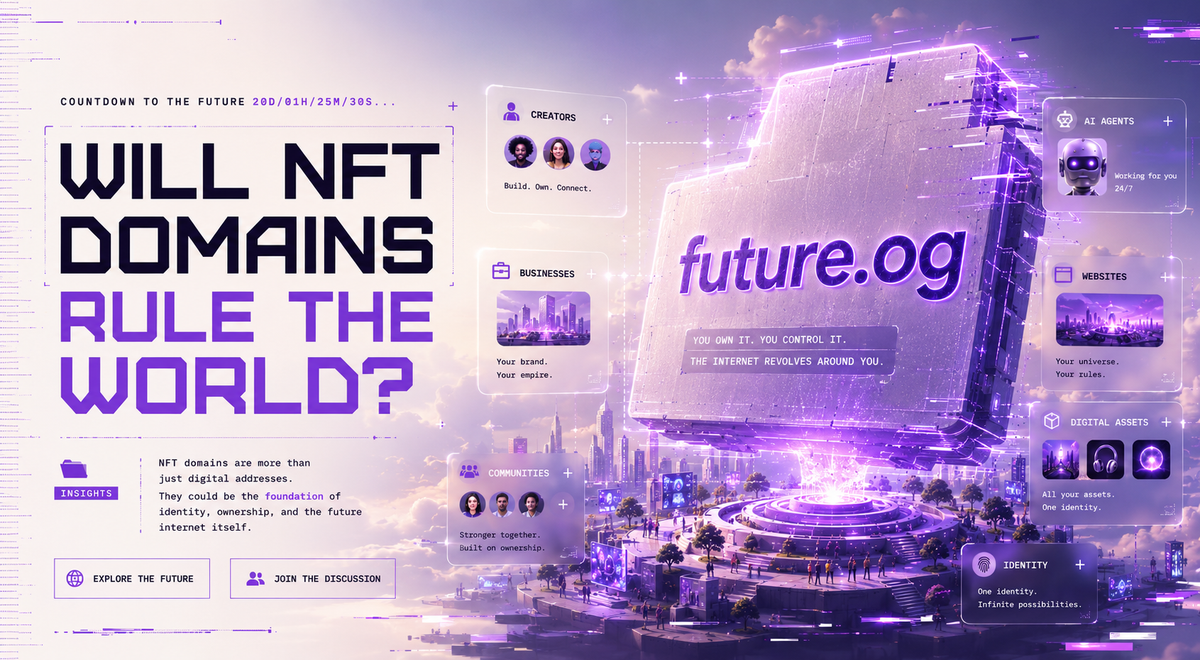
Could NFT domains actually change the way the internet works? A few years ago, that question would have sounded like pure hype. Today, it's one of the more legitimate conversations happening across the tech, art, finance, and gaming worlds simultaneously.
NFT domains sit at the intersection of blockchain technology, digital identity, and creative ownership and they're generating serious attention for good reason. To understand where they're headed, it helps to first understand what NFTs actually are, how they differ from other digital assets, and why their application to internet domains represents something genuinely new.
NFTs vs. Cryptocurrencies: What's the Actual Difference?
This is the question that trips most people up when they first encounter NFTs, so let's clear it up directly.
NFTs Non-Fungible Tokens are built on the same blockchain technology that powers cryptocurrencies like Bitcoin and Ethereum. But they work very differently. The key word is "fungible." A Bitcoin is fungible meaning one Bitcoin is identical in value and function to any other Bitcoin. You can swap them one-for-one without anything changing. Currency, by design, works this way.
NFTs are the opposite. Each one is unique. You can't trade one NFT for another NFT and call it an even exchange, because no two NFTs are the same. They can't be divided into smaller units the way Bitcoin can be broken down into satoshis. An NFT exists only as a whole, singular asset and that's precisely what gives it value in certain contexts.
Think of an NFT like a fingerprint. No two are alike, and the system can verify ownership instantly and irrefutably. Creators can embed information directly into an NFT an artist might include a digital signature, provenance details, or licensing terms right in the token's data. And because of how blockchain records work, the original creator is always identifiable, even after the NFT has changed hands multiple times. Ownership transfers, but the creator's identity and rights remain permanently attached to the record.
This combination uniqueness, verifiable ownership, and embedded creator attribution is what makes NFTs so different from anything that came before them in the digital world.
How NFTs Have Evolved: From Trading Cards to Real Estate
The NFT story has moved fast. What started as a niche experiment with digital trading cards and pixelated collectibles has expanded into one of the most disruptive forces in digital commerce.
In 2020, the NFT market generated over $250 million in total sales a number that seemed remarkable at the time. By August 2021, that figure had exploded to over $2.8 billion. At peak activity, some of the largest NFT marketplaces were completing around 470,000 wallet transactions within any given 30-day period. The scale of adoption, in a remarkably short time, is hard to overstate.
But the more interesting story isn't the numbers it's the breadth of what NFTs are now being applied to. Early NFTs were concentrated in digital art, sports collectibles, and GIF-based graphics. Today, NFTs have moved into music, film, fashion, virtual real estate, gaming, and even physical real estate transactions where blockchain records are used to verify ownership. Artists are using NFTs to sell directly to collectors without galleries taking a cut. Musicians are releasing albums as NFTs to capture royalties from every future resale. Sports leagues are selling officially licensed highlight clips as unique digital assets.
The through-line in all of these applications is the same: NFTs solve the problem of digital scarcity. Before them, any digital file could be copied infinitely. NFTs don't prevent copying but they establish verifiable original ownership, which is the thing that actually creates value.
How to Buy NFTs: A Practical Walkthrough
If you're new to NFTs, the purchasing process can feel intimidating. It doesn't have to be. Here's a clear, step-by-step breakdown of how it actually works.
Step 1: Set up a cryptocurrency exchange account and a digital wallet.
These are two separate things, and understanding the difference matters. A cryptocurrency exchange think Coinbase or Kraken is a platform where you can buy and sell cryptocurrencies using regular money (dollars, euros, etc.). A cryptocurrency wallet is where you actually store the keys that give you access to your digital assets.
Here's the important nuance: your wallet doesn't literally store your tokens. It stores the private keys that prove you own them on the blockchain. Without a wallet, you can't hold NFTs. Without an exchange account, you can't easily buy the cryptocurrency needed to purchase them. You need both.
Step 2: Purchase Ethereum.
The vast majority of NFTs are built on Ethereum-compatible blockchains, which means Ethereum (ETH) is the most commonly used currency for NFT transactions. Buy ETH through your exchange account. If cost is a concern, alternatives like Polygon (which is Ethereum-compatible but significantly cheaper to transact on) are worth exploring though Ethereum remains the default for most major marketplaces.
Step 3: Transfer your Ethereum to your digital wallet.
Once you've bought ETH on your exchange, move it to your cryptocurrency wallet. The exact process varies depending on which exchange and wallet you're using, but most platforms have clear instructions for this transfer. Double-check wallet addresses carefully blockchain transactions can't be reversed.
Step 4: Connect your wallet to an NFT marketplace.
Marketplaces are where the actual buying and selling happens. There are three main types:
Open marketplaces where anyone can mint, buy, or sell NFTs. These are the most accessible and include platforms like OpenSea and Rarible.
Curated marketplaces where artists must apply and be accepted before they can list work. These platforms tend to feature higher-quality, more exclusive offerings, but they're less accessible to new creators.
Brand-specific marketplaces operated by specific companies for their own NFT products. NBA Top Shot, for example, is a closed platform dedicated entirely to officially licensed basketball highlights.
Connect your wallet to whichever marketplace fits your goals, create an account, and you're ready to start browsing.
Step 5: Buy your NFT.
Purchasing is usually straightforward either a fixed price or an auction format. One important thing to understand before buying: purchasing an NFT doesn't automatically transfer copyright. Unless the seller explicitly includes copyright transfer in the terms, you're buying the token (the proof of ownership) not the underlying intellectual property rights. Read the terms carefully, especially for higher-value purchases.
NFT Domains Specifically: What They Are and Why They Matter
Now let's focus on a specific application of NFT technology that's reshaping the internet's infrastructure: NFT domains.
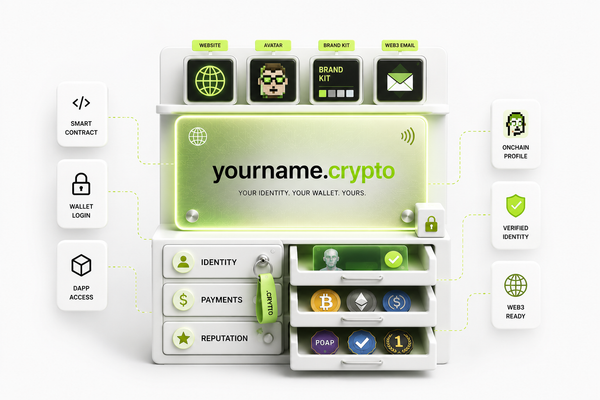
An NFT domain is a blockchain-based domain name that you own outright not rent, not license, but own stored in your crypto wallet as an NFT. Unlike traditional domains managed by centralized registrars like GoDaddy or Namecheap, NFT domains exist on decentralized networks where no single authority can take them from you, censor them, or require annual renewal payments.
The implications of this are significant:
True digital identity ownership. Your NFT domain is your identity on the decentralized web. It can serve simultaneously as your website address, your cryptocurrency wallet address, your decentralized login credential, and your verifiable online identity all under one human-readable name. Instead of a 42-character wallet address, you share yourname.crypto or yourbrand.eth.
New creative possibilities. For artists, creators, and brands, NFT domains open up entirely new avenues for digital expression and audience engagement. Decentralized websites hosted on NFT domains can integrate directly with NFT collections, token-gated content, community governance tools, and royalty-generating smart contracts in ways that traditional web infrastructure simply can't support.
A foundation for the decentralized web. NFT domains are one of the core building blocks of Web3 the vision of an internet where users own their data, their identity, and their digital presence rather than renting it from platform companies. As blockchain technology matures and more applications build on decentralized infrastructure, NFT domains become increasingly central to how people navigate and participate in that ecosystem.
Greater autonomy and control. On the traditional web, your domain can be suspended, your account can be deactivated, and your content can be removed by the platforms that host it. NFT domains operate outside of that centralized control structure. Your domain is governed by code, not by a company's terms of service.
The Challenges That Honest Conversations Have to Include
NFT domains are genuinely promising but the honest version of this conversation acknowledges the real obstacles that still need to be worked through.
Environmental concerns are legitimate. Blockchain networks particularly those that use Proof-of-Work consensus mechanisms consume significant amounts of energy. Critics have raised valid questions about the sustainability of this energy consumption at scale. It's worth noting that the industry is actively responding: Proof-of-Stake blockchains, which reach consensus through token ownership rather than energy-intensive mining, use a fraction of the energy of their Proof-of-Work counterparts. Ethereum itself completed its transition to Proof-of-Stake in 2022 a move that reduced its energy consumption by over 99%. This doesn't eliminate all environmental concerns, but it represents meaningful progress.
Regulatory clarity is still lacking. The NFT space is operating largely ahead of the regulatory frameworks designed to govern it. Questions about consumer protection, securities law, intellectual property rights, and anti-money laundering compliance are being worked out in real time sometimes through litigation rather than clear legislation. For anyone making significant investments in NFT domains, staying current with regulatory developments in your jurisdiction is genuinely important.
Intellectual property issues are real and underappreciated. Minting an NFT based on someone else's creative work without proper rights clearance is a form of copyright infringement full stop. The decentralized nature of NFT marketplaces has made it relatively easy to mint unauthorized NFTs, but "easy" doesn't mean "legal." Creators and buyers both need to understand the intellectual property implications of what they're buying and selling, and consulting a lawyer who specializes in blockchain and IP law is worth the investment for higher-stakes transactions.
Cultural sensitivity matters. As NFT domains and digital assets intersect with cultural heritage traditional art forms, indigenous symbols, historical artifacts questions of cultural appropriation become increasingly relevant. The NFT community is still working through what responsible engagement with these issues looks like. It's a conversation worth having openly rather than avoiding.
Taxes and NFT Domains: What You Need to Know
This section doesn't get enough attention in most NFT coverage, so let's be direct about it.
NFT domain transactions are taxable events in most jurisdictions. In the United States, the IRS treats NFTs as property which means buying, selling, and trading them can trigger capital gains tax obligations, just like selling stocks or real estate. The specifics depend on how long you held the asset (short-term vs. long-term capital gains) and the profit you realized.
Reporting requirements for NFT transactions are still evolving, and they differ from traditional asset reporting in some important ways. Record-keeping is essential track every transaction, including the date, the value in USD at the time of the transaction, and any fees paid. This information is critical for accurate tax reporting.
If you're actively trading or investing in NFT domains, working with a tax professional who understands cryptocurrency and digital asset taxation isn't optional it's genuinely necessary. The rules are changing quickly, and the penalties for non-compliance can be significant.
The Environmental Picture: A Balanced View
It's worth spending a moment on the carbon footprint question more specifically, because it tends to generate more heat than light in online discussions.
Two things can be true simultaneously: early blockchain systems had significant environmental costs, and the industry is making real progress in addressing them. Proof-of-Stake blockchains use dramatically less energy than Proof-of-Work systems. Some NFT marketplaces have committed to carbon neutrality by purchasing carbon credits or investing in renewable energy sources. Layer 2 solutions that process transactions off the main chain are reducing the computational overhead of individual NFT transactions.
The honest comparison isn't "NFTs vs. nothing" it's "NFTs vs. the existing systems they're replacing or supplementing." Traditional financial systems, physical art markets, and legacy record-keeping infrastructure all have their own environmental footprints. A balanced evaluation accounts for the full picture on both sides of that comparison.
Final Thoughts
NFT domains represent something real and meaningful in the evolution of the internet not just a speculative asset class, but a genuine infrastructure shift toward user-owned digital identity and decentralized online presence.
The creative possibilities are real. The ownership advantages are real. The financial opportunities are real. And so are the challenges: environmental concerns, regulatory uncertainty, intellectual property complexity, and tax obligations all deserve serious attention from anyone engaging with this space.
The NFT domain journey is genuinely just beginning. The technology is evolving, the regulatory landscape is developing, and the cultural conversation around what responsible participation looks like is still taking shape. The people who engage with it thoughtfully who stay informed, ask hard questions, and take the legal and ethical dimensions seriously are the ones best positioned to benefit from where it's heading.
The decentralized web has a long way to go before it's fully mainstream. But the infrastructure being built right now including NFT domains, .eth domains, .sol domains, and endless domains emerging across different blockchain ecosystems is laying the foundation for what comes next. And that foundation is more solid than it's ever been.