Yield Farming and Liquidity Mining: Understanding DeFi’s New Financial Instruments
DeFi's dynamic duo: Yield farming and liquidity mining explained. Unlock the potential of decentralized finance, but understand the risks.

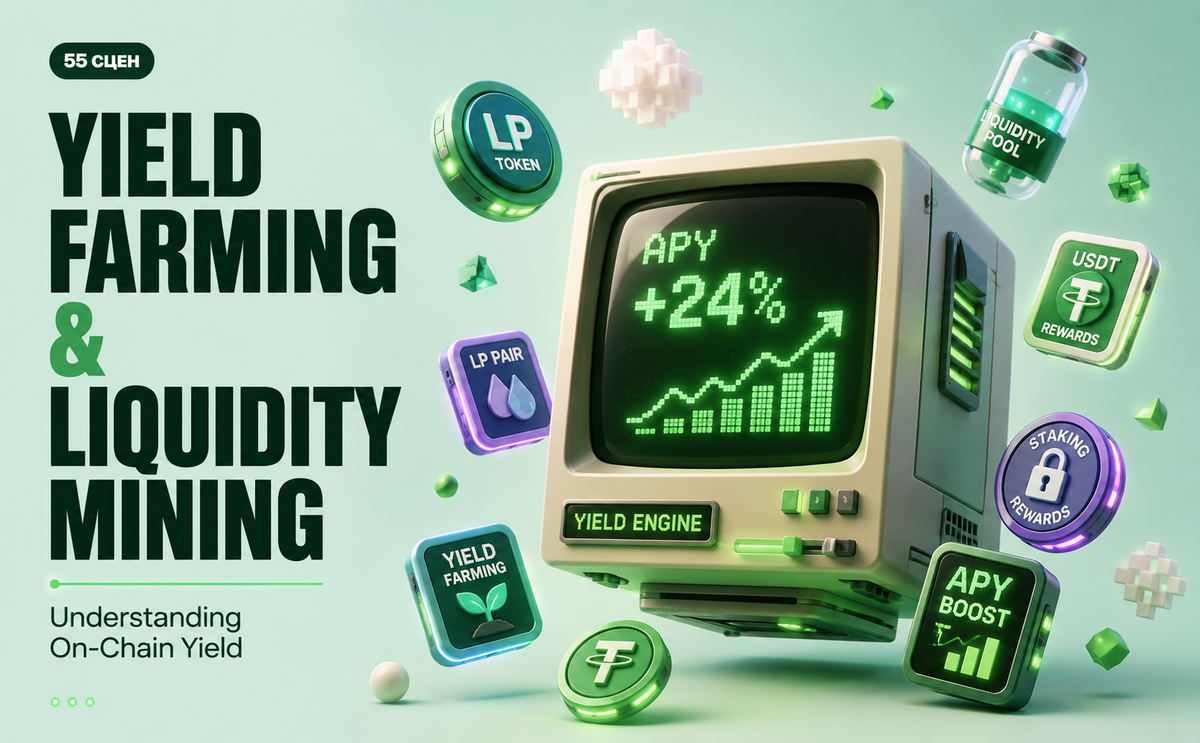
If you've spent any time in crypto circles over the past few years, you've almost certainly heard someone mention yield farming or liquidity mining usually in the same breath as eye-popping APY numbers that seem too good to be true. Sometimes they are. Sometimes they're not. But either way, understanding what these terms actually mean is worth your time, because these mechanisms are genuinely reshaping how people think about earning money in the digital economy.
Decentralized Finance DeFi, for short is the broader movement behind all of this. The basic idea is straightforward: instead of relying on banks and financial institutions to facilitate lending, borrowing, and trading, DeFi uses smart contracts on the blockchain to do it automatically, peer-to-peer, without intermediaries. No bank approval required. No headquarters in a major city. Just code running on a decentralized network.
Yield farming and liquidity mining sit at the heart of how that system functions and how it incentivizes people to participate. Let's break both of them down properly.
What Is Yield Farming?
Yield farming is essentially the practice of putting your crypto assets to work. Instead of letting your tokens sit idle in a wallet, you deposit them into a liquidity pool on a DeFi platform and that platform pays you a return for doing so.
Here's why it works the way it does. Decentralized exchanges (DEXs) and lending platforms don't operate the way traditional exchanges do. There's no central order book matching buyers and sellers. Instead, they rely on liquidity pools large reserves of cryptocurrency that users like you deposit to fund trades, loans, and other transactions. Without those pools, the platform can't function. So platforms pay users to fill them.
When you deposit assets into one of these pools, you become a liquidity provider. In exchange, you earn a yield typically paid in the platform's native token, a share of trading fees, or both. That yield is usually expressed as an annual percentage yield, or APY, which accounts for compound interest. The higher the APY, the higher the potential return but also, generally, the higher the risk.
The Main Ways People Yield Farm
There's no single playbook for yield farming. The most common approaches are:
Staking: You lock your tokens into a protocol for a set period and earn rewards based on how much you've staked and for how long. Think of it like a certificate of deposit, but for crypto.
Lending and borrowing platforms like Aave and Compound let you deposit assets into lending pools, which other users can borrow from. You earn interest on what you've lent out. Borrowers pay interest to access the funds. Both sides can earn governance tokens on top of the base yield.
Providing Liquidity to Trading Pairs On platforms like Uniswap and SushiSwap, you deposit two tokens in equal value (say, ETH and USDC) to create a trading pair. Every time someone trades that pair on the platform, you earn a percentage of the transaction fee. The more trading activity, the more you earn.
Each of these approaches carries its own risk-reward profile, which we'll get into later.
What Is Liquidity Mining?
Liquidity mining is closely related to yield farming close enough that the terms are often used interchangeably but there's a meaningful distinction worth understanding.
The difference comes down to what you're being rewarded with and why.
In liquidity mining, the primary reward isn't just a financial token it's a governance token. These are tokens that give holders actual voting rights within the platform. When you earn governance tokens through liquidity mining, you're not just getting paid; you're becoming a stakeholder in the platform's future.
That matters because DeFi platforms are, at least in theory, supposed to be governed by their users rather than by a central company. Governance token holders vote on things like fee structures, protocol upgrades, reward adjustments, and new features. The more tokens you hold, the more influence you have.
Governance Tokens in Practice
Two of the most well-known governance tokens are:
- COMP The governance token of Compound, one of the largest DeFi lending protocols. COMP holders can propose and vote on changes to how the protocol operates.
- AAVE The governance token of the Aave platform, giving holders a voice in protocol improvements, risk parameters, and new asset listings.
Both tokens have also demonstrated real monetary value, trading on open markets at significant prices which means liquidity mining can be financially rewarding in a way that goes beyond the base yield of depositing assets.
How Yield Farming and Liquidity Mining Work Together
In practice, these two mechanisms often run in parallel on the same platform. Here's how that typically plays out:
You deposit assets into a liquidity pool on a platform like Curve Finance or Balancer. In return, you earn:
- Yield a share of the trading fees or interest generated by the pool
- Governance tokens rewarded on top of the base yield as an incentive for participating
This dual-reward structure is intentional. Platforms need deep liquidity to function well, and offering both financial returns and governance influence is a powerful way to attract and retain liquidity providers. Curve Finance gives liquidity providers CRV governance tokens. Balancer rewards providers with BAL tokens alongside trading fees. The combination creates a compounding incentive the more you contribute, the more you earn across both dimensions.
For users willing to actively manage their positions, this opens up sophisticated strategies. Some experienced DeFi participants constantly move assets between platforms a practice called cross-platform yield farming chasing the highest returns available at any given moment. You might start on a lending platform like Aave to earn interest, then move liquidity to a DEX like Uniswap for higher trading fee returns, then shift again to a newer protocol offering especially attractive governance token incentives. It's a full-time strategy for some, though it comes with complexity and gas fee costs that can eat into returns.
The Rewards and They're Real
Let's be clear: the financial potential here is genuine. This isn't just hype.
High APYs. DeFi platforms regularly offer APYs that would be unthinkable in traditional finance. While a high-yield savings account might offer 4-5% annually, some DeFi pools advertise triple-digit APYs especially for newer or riskier platforms trying to attract liquidity. Even more established protocols routinely offer returns that outpace conventional investment vehicles.
Passive income on idle assets. Rather than holding tokens in a wallet doing nothing, yield farming puts those assets to work. The income is largely passive once you've deposited and set up your position, rewards accrue automatically.
Governance participation. For people who care about the direction of the platforms they use, liquidity mining is a way to earn a seat at the table literally. Your governance tokens represent real influence over how a protocol evolves.
Compounding. Many platforms allow you to reinvest earned tokens back into liquidity pools, compounding your returns over time. When done well, this can significantly accelerate earnings.
The Risks and They're Equally Real
Here's where we need to slow down and be honest. The same features that make yield farming attractive can make it genuinely dangerous. None of the following risks are theoretical all of them have caused real financial losses for real people.
Impermanent Loss
This is probably the most misunderstood risk in yield farming, and it catches a lot of people off guard.
When you deposit two tokens into a liquidity pool, you're exposed to impermanent loss if the price ratio between those tokens changes. Here's a simplified version of why: liquidity pools use automated pricing formulas that rebalance constantly. If one of your tokens goes up significantly in value, the pool automatically rebalances in a way that leaves you holding more of the token that didn't go up and less of the one that did. When you withdraw, you may walk away with less total value than if you'd simply held the tokens in your wallet even after accounting for the yield you earned.
The "impermanent" label can be misleading. The loss only becomes permanent when you withdraw while the price ratio is still diverged but in volatile markets, that's not a rare scenario.
Market Volatility
Crypto markets are volatile. You know this. But in the context of yield farming, volatility creates a specific kind of risk: the tokens you're earning as yield can lose significant value very quickly. You might earn 50% APY in a token that loses 70% of its market value during the same period. The math doesn't work out in your favor.
Smart Contract Vulnerabilities
Everything in DeFi runs on smart contracts self-executing code on the blockchain. When that code works correctly, it's powerful and efficient. When it has bugs or design flaws, it can be catastrophic. DeFi has seen numerous high-profile smart contract exploits, with hundreds of millions of dollars lost to hackers who found and exploited vulnerabilities in protocol code. This isn't a remote risk. It happens regularly, including on well-established platforms.
The best mitigation is using platforms that have undergone rigorous third-party security audits but even audited code isn't completely immune to exploits.
Governance Token Dilution
If a platform issues governance tokens too aggressively as liquidity mining rewards, the supply can outpace demand, eroding the value of each individual token. Early participants who accumulated large governance token holdings at low supply may find their position increasingly diluted both in monetary value and in voting influence as millions more tokens enter circulation.
Liquidity Pool Instability
Large liquidity providers sometimes called "whales" can destabilize a pool by suddenly withdrawing massive amounts of assets. This can cause significant price slippage, making it difficult for smaller participants to exit their positions without taking losses. The more concentrated the liquidity in a pool, the more vulnerable it is to this kind of instability.
Tax Complexity
This one surprises a lot of people who are new to DeFi. In most jurisdictions, earnings from yield farming and liquidity mining are taxable often as ordinary income at the time rewards are received, and potentially as capital gains when you sell or convert those tokens later.
The challenge is that DeFi platforms don't provide tidy tax documents. You're responsible for tracking every deposit, withdrawal, reward, and conversion across every platform you've used often across dozens of transactions with fluctuating token values. If you're yield farming seriously, getting proper tax software or professional accounting advice isn't optional; it's essential.
How to Approach This Smartly
None of the risks above are reasons to avoid yield farming and liquidity mining entirely. They're reasons to approach them with discipline and clear eyes. Here's what smart participation looks like:
Diversify across platforms and pools. Don't concentrate all your liquidity in one place. Spreading across multiple platforms limits the damage from any single exploit or platform failure.
Use audited, established platforms. Newer platforms often offer higher APYs to attract liquidity and often carry significantly higher smart contract risk. The extra yield rarely justifies the extra exposure, especially when you're getting started.
Understand impermanent loss before you deposit. Run the numbers on the specific token pair you're considering. There are free calculators online that can help you model impermanent loss scenarios based on price movement assumptions.
Don't chase unsustainably high APYs. Triple-digit APYs are usually a sign that a platform is minting tokens aggressively to attract liquidity. That works until the token value collapses or the protocol runs out of incentives. If the yield seems impossibly good, it probably is.
Keep records from day one. Every transaction. Every reward. Every token price at the time of receipt. You will need this for taxes, and reconstructing it retroactively is a nightmare.
Where Is This All Heading?
The current yield farming model has real sustainability questions. The high APYs that attract users are often funded by token inflation new tokens minted and distributed as rewards. As supply increases faster than demand, token prices can decline, which erodes the value of those returns. Some platforms are already grappling with this, experimenting with mechanisms like longer liquidity lock periods and algorithmic reward adjustments that respond dynamically to market conditions rather than following a fixed schedule.
The integration of DeFi with traditional finance is also worth watching. Institutional investors are beginning to explore DeFi protocols as a way to diversify and access new yield opportunities. That institutional attention brings both legitimacy and the potential for regulatory clarity which the DeFi space genuinely needs if it's going to achieve long-term mainstream adoption. Hybrid models that blend the efficiency of decentralized protocols with the regulatory compliance of traditional finance could define the next phase of the industry.
Final Thoughts
Yield farming and liquidity mining represent a genuinely new category of financial activity one that didn't exist five years ago and is already managing billions of dollars in assets. The mechanics are innovative, the returns can be substantial, and the governance model offers a vision of finance that's more user-controlled than anything traditional banking has offered.
But they're also complex, volatile, and unforgiving of mistakes. Impermanent loss, smart contract exploits, governance token dilution, tax obligations these aren't fine print. They're real considerations that have cost real people real money.
The right approach is the same one that works in any complex financial space: learn thoroughly before committing capital, start with amounts you can afford to lose, diversify your exposure, use established platforms, and stay engaged with how the space is evolving. DeFi is moving fast, and what's true today may shift significantly in six months.
For those willing to put in the work to understand it, though, the opportunities are genuinely interesting and the underlying technology is building something that looks increasingly like the foundation of a new financial system.