Web3 Domains Are Changing the Internet: Here's What That Means for Your Business
The advent of the decentralized finance (DeFi) platforms in the latter part of the 2010s signified a noteworthy advancement in Web3 domains.

Remember when having a website meant you'd "made it"? You bought a domain, set up hosting, and suddenly your business existed online. That model worked well for decades. But the internet is changing again and Web3 domains are at the center of that shift.
Let's break down what's actually happening, why it matters, and what businesses and startups stand to gain from it.
First, What Even Is a Web3 Domain?
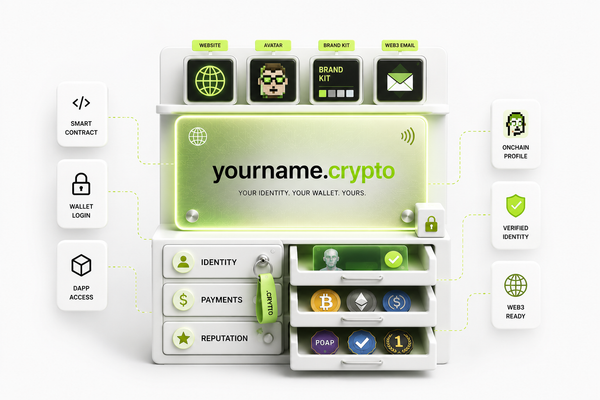
A Web3 domain sometimes called an NFT domain is essentially a next-generation internet address built on blockchain technology. Think of it like a regular domain name (yourcompany.com), except instead of being registered through a centralized authority like GoDaddy or Namecheap, it lives on a blockchain and is owned entirely by you.
No renewal fees. No risk of a registrar suspending your domain. No middleman.
Web3 domains work similarly to the traditional Domain Name System (DNS), but rather than pointing to a server IP address, they connect to a smart contract address on the Ethereum blockchain. Type a Web3 URL into a compatible browser or decentralized app, and it queries that smart contract directly giving you access to wallets, dApps, and decentralized services without going through any centralized gatekeeper.
That's a meaningful distinction. With a traditional domain, you're essentially renting space from a company. With a Web3 domain, you own it outright it's stored in your crypto wallet like any other digital asset.
How Did We Get Here?
To understand why Web3 domains matter, it helps to understand where they came from. The rise of decentralized finance (DeFi) in the late 2010s planted the seed. At the start of 2020, the total DeFi market cap was a modest $700 million. By the end of that same year, it had exploded to $15 billion a staggering leap that forced the broader tech world to take notice. DeFi proved that you could replicate core financial functions borrowing, lending, trading on a blockchain domains without a bank in sight.
That success opened the door to a bigger question: if finance can be decentralized, why not the entire internet infrastructure? Web3 domains are one answer to that question.
As the Web3 ecosystem matured, interoperability became increasingly important. Startups and developers needed a way to make decentralized services accessible to everyday users not just crypto insiders. Web3 domains filled that gap by giving human-readable names to otherwise complex blockchain addresses.
The Real-World Impact of Web3 Domains
Here's the thing: the impact of Web3 domains isn't just theoretical. It's already reshaping how businesses and users interact online.
Some analysts draw a comparison to the iPhone's effect on the telecom industry a single shift in how a technology is packaged and delivered that fundamentally changes user behavior and market dynamics. Web3 domains are doing something similar for blockchain. They're making decentralized technology approachable.
Globally, Web3 domains are facilitating smoother, more secure cryptocurrency transactions. Instead of copying and pasting a long hexadecimal wallet address (and hoping you didn't make a typo), users can simply send funds to something like "yourbusiness.eth." Clean, simple, and far less error-prone.
The potential market scale is significant, too. Experts believe Web3 infrastructure could help grow the global digital economy from its current $370 trillion valuation to $550 trillion a number that reflects just how much of human commerce and communication is moving online.
And developing markets like India are playing a central role in this growth. Indian Web3 startups raised $1.3 billion in investment in 2022 alone, a clear signal that this isn't a niche trend it's a global movement, and it's accelerating.
What Web3 Domains Mean for Startups
If you're building a startup especially in the blockchain, fintech, or crypto space Web3 domains offer a unique set of advantages that traditional domains simply can't match.
Better User Experience
Nobody wants to type out a 42-character Ethereum address. Web3 domains replace that with something memorable and brandable. For users, this dramatically lowers the friction of interacting with your product. For you, it increases engagement because people can actually find and remember you.
Brand Identity and Trust
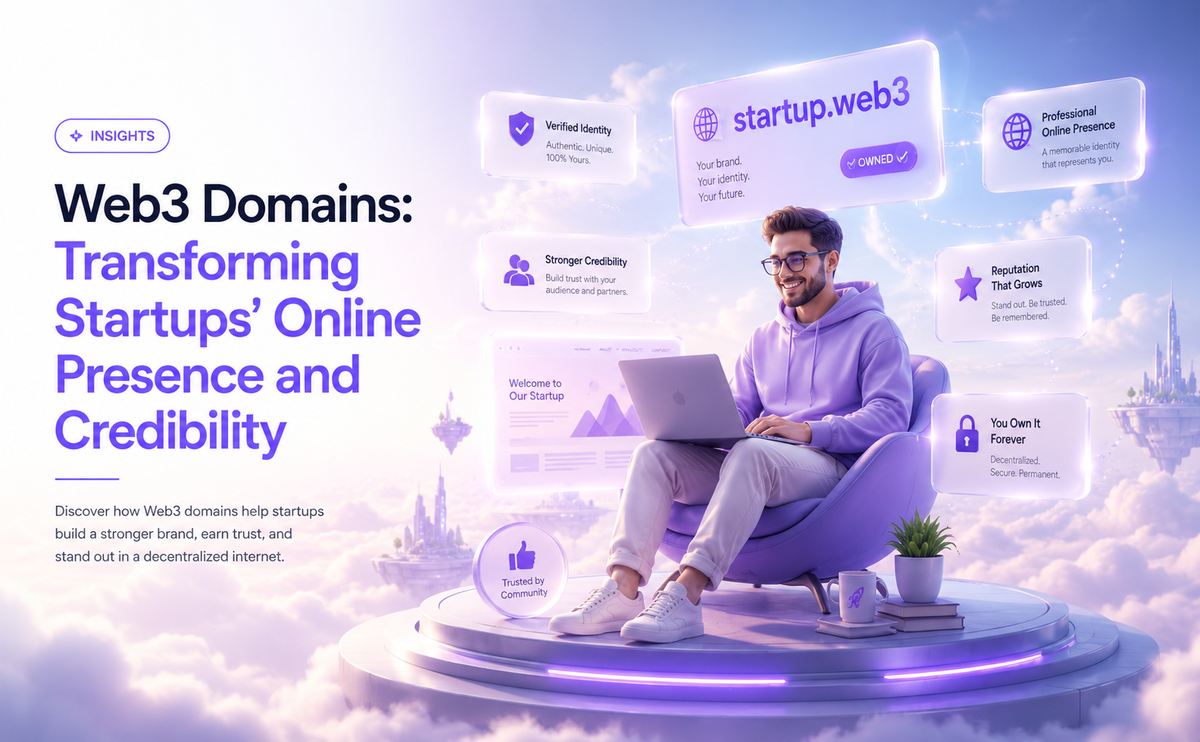
Linking your crypto wallet to a clean, human-readable Web3 domain signals professionalism and legitimacy. In a space where trust is hard-earned and scams are common, that matters more than you might think. A recognizable domain builds credibility in a way that a raw wallet address never could.
Smoother Transactions
For businesses that deal in cryptocurrency whether that's accepting payments, issuing tokens, or running a DeFi product Web3 domains simplify every transaction. Less friction in address-sharing means fewer errors and faster deals.
Global Reach, No Borders
Web3 domains work the same everywhere on the planet. There's no region-locking, no currency conversion required for the domain itself, and no dependence on local registrars. If your business operates globally or aspires to, this is a natural fit.
A Signal of Innovation
Adopting a Web3 domain tells the market something about who you are. It positions your company as forward-thinking and technically sophisticated qualities that attract both customers and investors in the blockchain space. In a crowded market, differentiation matters, and early adoption of emerging tech is one of the clearest ways to achieve it.
Built-In Security
Because your Web3 domain is tied to a blockchain wallet and governed by a smart contract, it's inherently more tamper-resistant than a traditional domain. There's no centralized server to hack, no registrar account to hijack. That added layer of security resonates with customers who are increasingly skeptical of centralized data management.
Opportunities for Established Brands
Web3 domains aren't just for startups. Established brands are beginning to explore how these domains can reshape their relationship with customers.
Richer, More Interactive Experiences
On a Web3 domain, a brand's website isn't just a static page it can be a fully decentralized, interactive environment. Imagine a fashion brand where customers can try on virtual products, vote on new designs, or co-create limited-edition collections. That level of community-driven engagement isn't easily replicated on traditional web infrastructure.
Genuine Data Ownership
One of the persistent frustrations for brands operating under Web2 infrastructure is that customer data is scattered across third-party platforms, each with its own terms of service and privacy policies. Web3 domains change this by putting data management directly in the hands of the brand. Since data lives on a decentralized, immutable blockchain, brands can be completely transparent about how it's collected and used a genuine advantage at a time when consumer trust in data handling is at an all-time low.
NFTs as Revenue and Loyalty Tools
Web3 domains open the door to NFT-based products in a natural way. Brands can create and sell limited-edition digital assets collectibles, virtual goods, exclusive artwork directly through their decentralized presence. These NFTs can also double as loyalty tokens, rewarding repeat customers with ownership stakes or access to exclusive experiences that competitors can't easily replicate.
Token-Based Loyalty Programs
Speaking of loyalty Web3 domains allow brands to issue their own tokens for use in customer rewards programs. These aren't just points that expire and disappear; they're tradeable assets with real value. Customers can swap, sell, or redeem them on blockchain marketplaces, making the loyalty program itself a product worth engaging with.
Peer-to-Peer Marketplaces
Brands can also build decentralized marketplaces directly into their Web3 domain infrastructure connecting buyers and sellers without taking a cut or relying on a third-party platform. Smart contracts handle the transaction rules automatically, reducing overhead and increasing transparency.
Final Thoughts
Web3 domains are still early-stage technology, and the ecosystem around them is evolving quickly. But the direction of travel is clear: decentralized internet infrastructure is gaining traction, and the businesses that understand it now will be better positioned as it becomes mainstream.
Whether you're a startup looking to stand out, a crypto project trying to improve user experience, or an established brand exploring new ways to connect with customers, Web3 domains offer a set of tools that didn't exist five years ago.
The internet has always rewarded early movers. Web3 is no different.